
Mitla and the stone mosaics of Oaxaca
Published on 09/23/2026 at 17:34 | Editorial responsibility: Rafael Müller, Editor-in-Chief AD HOC NEWS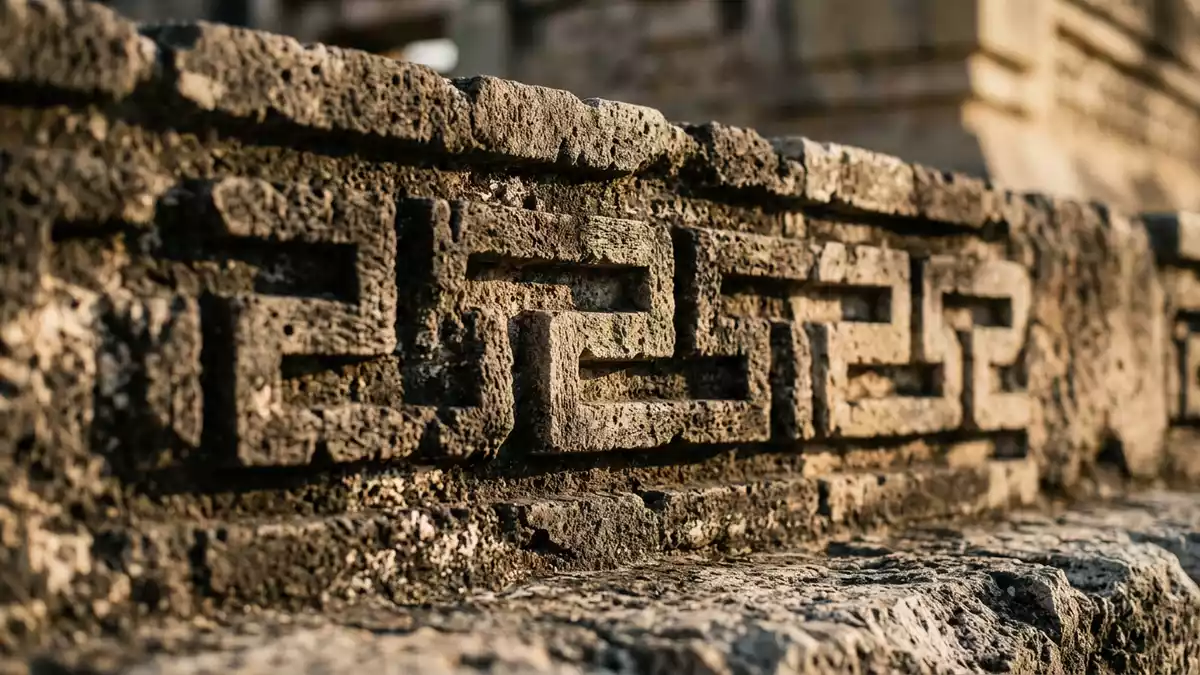
Mitla is an archaeological site in Oaxaca where walls become patterns of carefully fitted stone. Courtyards, halls and tombs belong to a Zapotec centre that reached its height around 1200, while the church of San Pablo stands beside the pre-Hispanic remains.
Mitla’s walls are built from geometric stonework
The site lies in San Pablo Villa de Mitla, at the eastern edge of Oaxaca’s Central Valleys. Its name comes from the Nahuatl Mictlán, while the Zapotec name Lyobáa refers to a resting place associated with the dead. Mitla’s ancient names preserve the connection between language, place and ritual.
Zapotec groups began settling the site around 200 AD. Mitla grew in importance after Monte Albán declined in the ninth century, and it reached its height around 1200. Its monumental remains belong to a long period extending from 200 to 1521.
Courtyards, halls and the Column Group
Five monumental groupings remain: the Northern Group, the Column Group, the Stream Group, the Adobe or Calvary Group and the Southern Group. Their courtyards are bordered by long halls, platforms and narrow rooms, creating a sequence of enclosed architectural spaces.
The walls use mud and stone cores covered with plaster or carefully cut trachyte. Small stones form stepped geometric fretwork around doorways and across façades. The patterns are not painted decoration; they are assembled from individual pieces fitted into the masonry. Mitla’s stone construction gives the ruins their distinctive surface.
The Hall of Columns belongs to the Column Group. Its columns are carved from single blocks of stone and stand inside a large hall. The same building combines structural elements with carved and geometric decoration.
Zapotec foundations and Mixtec influence
Mitla was a major centre of Zapotec culture before Mixtec influence became pronounced in the surviving architecture. Between about 900 and 1500, Mixtec groups held the site, while Zapotec traditions remained visible in its layout and ceremonial associations.
Cruciform tombs have been found beneath the Column Group and the Southern Group. Remains of red paint survive in parts of the ancient city, alongside fragments of mural decoration. The evidence links the stone surfaces with a painted architectural setting that is only partly preserved.
The Spanish reached Mitla in 1521. In Courtyard E, stones from ancient palaces were used in the construction of the church of San Pablo. The church remains beside pre-Hispanic structures, placing colonial and ancient architecture within the same view.
Visiting Mitla: what travellers from Western Europe should know
- Mitla lies in San Pablo Villa de Mitla, on the eastern edge of Oaxaca’s Central Valleys. Road access follows the route through the Tlacolula Valley from Oaxaca city.
- The archaeological zone contains courtyards, platforms, narrow rooms and stone surfaces. Visitors encounter uneven masonry, steps and exposed archaeological ground.
- The site is surrounded by the living town of San Pablo Villa de Mitla. The church of San Pablo stands beside the ancient architectural groups.
- The official language is Spanish and the currency is the Mexican peso.
- Entry requirements depend on your nationality; UK travellers can check the FCDO travel advice at gov.uk/foreign-travel-advice, Irish travellers the Department of Foreign Affairs at ireland.ie.
Searching for Mitla on social platforms
These links open searches for Mitla on each platform.Frequently asked questions about Mitla
Where is Mitla?
Mitla is in San Pablo Villa de Mitla, on the eastern edge of Oaxaca’s Central Valleys in southern Mexico.
What can visitors see at Mitla?
The archaeological zone contains monumental groups, courtyards, halls, columns, tombs and geometric stone mosaics. The church of San Pablo stands beside the ancient remains.
What makes Mitla distinctive?
Mitla is distinguished by its intricate fretwork made from fitted stone pieces. Its Zapotec foundations, Mixtec influence and colonial church occupy the same historic setting.


