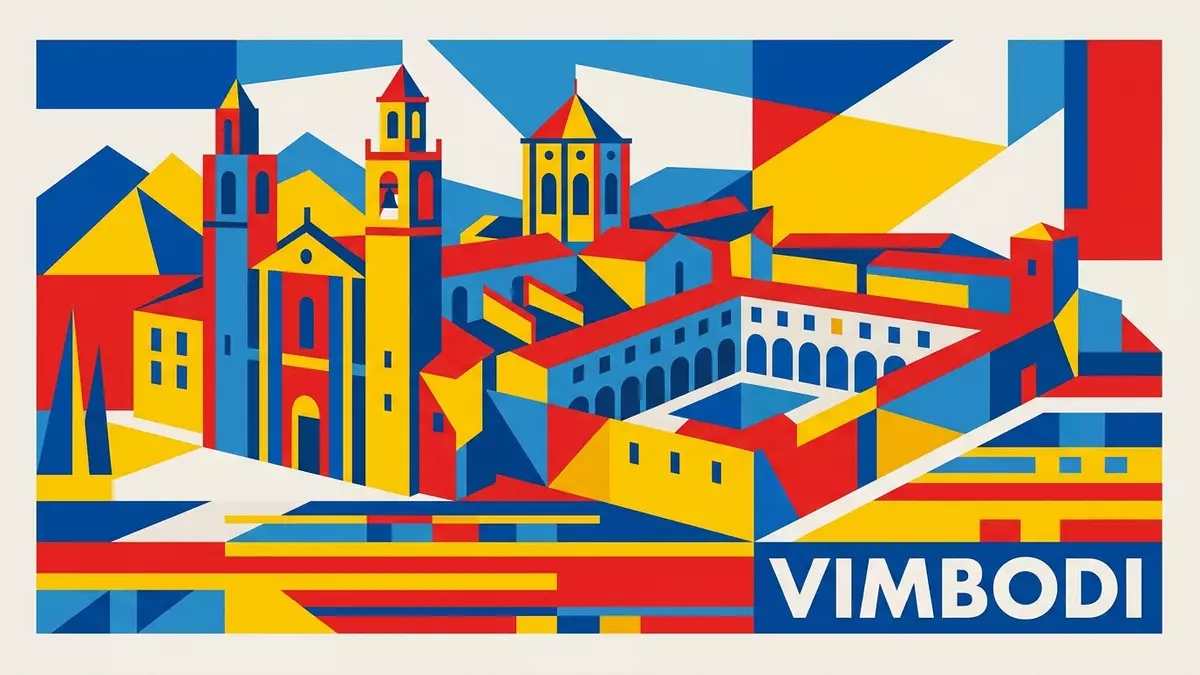
Monestir de Poblet and its stone cloisters in Vimbodi
Published on 08/10/2026 at 15:07 | Editorial responsibility: Rafael Müller, Editor-in-Chief AD HOC NEWS
Monestir de Poblet in Vimbodi is a Cistercian monastery built in stone, with cloisters, church, royal tombs and fortified walls gathered inside one enclosed complex. Founded in the twelfth century and closely linked to the Crown of Aragon, it remains one of the clearest monastic ensembles in Catalonia.
Poblet’s Cistercian stone complex
The monastery’s layout is immediately legible as a religious enclosure. Thick walls, arcades and a sequence of courts give the place a measured rhythm, while the church provides the vertical centre of gravity.
Stone dominates the whole site, from the main church to the domestic ranges that once organised monastic life. The surviving buildings preserve the sense of a working community rather than a single monument detached from its setting.
Royal graves and monastic authority
Poblet is especially known for its royal pantheon. Several kings of the Crown of Aragon are buried there, including Jaume I and Pere IV, which gives the monastery a political weight unusual for a house of monks.
That royal association is visible in the scale of the church and in the dignity of the burial spaces. The tombs turn the monastery into both a religious house and a dynastic memorial.
The monastery within Catalan history
The site belongs to the great Cistercian expansion of medieval Europe. Its foundation in the twelfth century places it within the period when the order spread a disciplined architectural language across many regions.
Later centuries brought damage and change, yet the monastery kept its identity as a monastic landscape. Its walls, cloisters and church still present a coherent image of medieval religious life in Catalonia.
Visiting Monestir de Poblet: what travellers from Western Europe should know
- The site lies near Vimbodi in Catalonia and is reached by road from nearby towns.
- Admission arrangements and opening hours are set by the site's operator and change with the season; the official website is the only binding source.
- Spring and early autumn are comfortable times to visit, with softer light across the stone ranges.
- The complex includes long walks through cloisters, uneven stone surfaces and stretches of open ground.
- On site, Catalan and Spanish are the main languages, and cashless payment is widely accepted in the surrounding area.
- Entry requirements depend on your nationality. UK travellers should check the FCDO travel advice at gov.uk/foreign-travel-advice; Irish travellers the Department of Foreign Affairs at ireland.ie; EU and EEA citizens their own national foreign ministry.
Searching for Monestir de Poblet on social platforms
These links open searches for Monestir de Poblet on each platform.
Frequently asked questions about Monestir de Poblet
Where is Monestir de Poblet?
It stands near Vimbodi in Catalonia, in north-eastern Spain. The monastery sits in a rural landscape rather than inside a city centre.
What should visitors expect?
Expect a large stone monastery with cloisters, a church and burial spaces. The walk through the complex involves uneven surfaces and a good amount of outdoor and indoor ground.
What makes it distinctive?
Its combination of Cistercian architecture, royal tombs and a fortified monastic enclosure gives it a strong historical identity. The presence of the buried kings of the Crown of Aragon adds a dynastic layer to the religious setting.