

Mount Aso keeps crater access closed on 16 October
Published on 10/18/2026 at 05:06 | Editorial responsibility: Rafael Müller, Editor-in-Chief AD HOC NEWS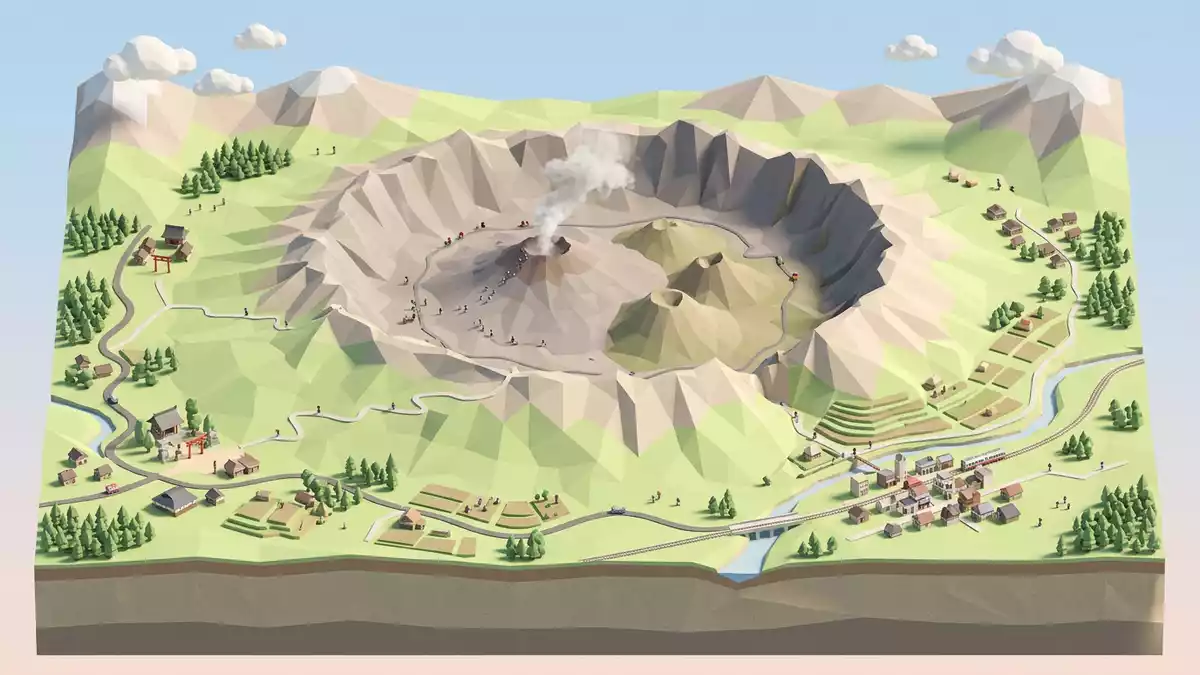
Mount Aso (Asosan) in Aso, Japan, remains under a crater-area restriction after the Japan Meteorological Agency issued its latest activity report on 16 October 2026. The warning keeps visitors away from approximately 1 km around Nakadake’s First Crater while the wider volcanic landscape remains the focus of the current travel update.
Mount Aso crater restriction continues after 16 October report
The agency said on 16 October 2026 that the Level 2 eruption warning and crater-area regulation were continuing. Its report covered activity from 9 October to 16 October and recorded white volcanic smoke rising as high as 1,000 metres above the crater rim.
The same report noted occasional increases in volcanic tremor. Sulphur dioxide emissions measured 1,200 tonnes per day on 14 October and 3,200 tonnes on 16 October, compared with 1,000 tonnes on 30 September. The agency said activity remained elevated and that an eruption affecting the area within approximately 1 km of the First Crater was possible. The 16 October activity report names Aso City and Minami-Aso Village among the municipalities subject to crater-area precautions.
Mount Aso’s Nakadake remains the restricted focus
The active centre of the complex is Nakadake, one of five principal peaks described by Japan’s Ministry of the Environment. The highest is Takadake at 1,592 metres, while Nakadake is the crater that ordinary visitors can normally approach by car or on foot.
The current warning changes the relationship between the mountain and its best-known viewing point. The official crater restriction notice states that the area within 1 km of the crater is off-limits. That means a visit to Aso can still involve the caldera, grasslands and visitor facilities, but not entry into the restricted crater zone. The mountain’s five-peak setting and the warning’s precise boundary give travellers a clearer distinction between the broader destination and the closed core.
Visiting Mount Aso: what travellers from Western Europe should know
- The current restriction was confirmed on 16 October 2026, and the area within approximately 1 km of Nakadake’s First Crater is off-limits.
- Crater access is restricted under Level 2 conditions. Follow the latest instructions from the Aso Volcano Disaster Prevention Council and local authorities before approaching the mountain.
- Mount Aso is in Aso, Kumamoto Prefecture, on Kyushu. The visitor landscape includes the five peaks of the Aso volcanic group, including Takadake and Nakadake.
- The terrain includes volcanic craters, ash-covered plains and grassland. Entry to Komezuka is prohibited to protect its vegetation and terrain, according to Japan’s Ministry of the Environment.
- Japan’s official language is Japanese and its national currency is the yen. Entry requirements depend on your nationality; UK travellers can check the FCDO travel advice at gov.uk/foreign-travel-advice, Irish travellers the Department of Foreign Affairs at ireland.ie.
Searching for Mount Aso on social platforms
These links open searches for Mount Aso on each platform.
Frequently asked questions about Mount Aso
What changed at Mount Aso on 16 October 2026?
The Japan Meteorological Agency reported continuing Level 2 restrictions, intermittent tremor and increased sulphur dioxide emissions on 16 October 2026.
Can visitors enter the Mount Aso crater area?
No. The official restriction notice prohibits entry within approximately 1 km of the crater while the current warning remains in force.
Where is Mount Aso and how do you get there?
Mount Aso is in Aso, Kumamoto Prefecture, on Kyushu in Japan. Access to the wider volcanic area must be separated from access to the restricted crater zone.


