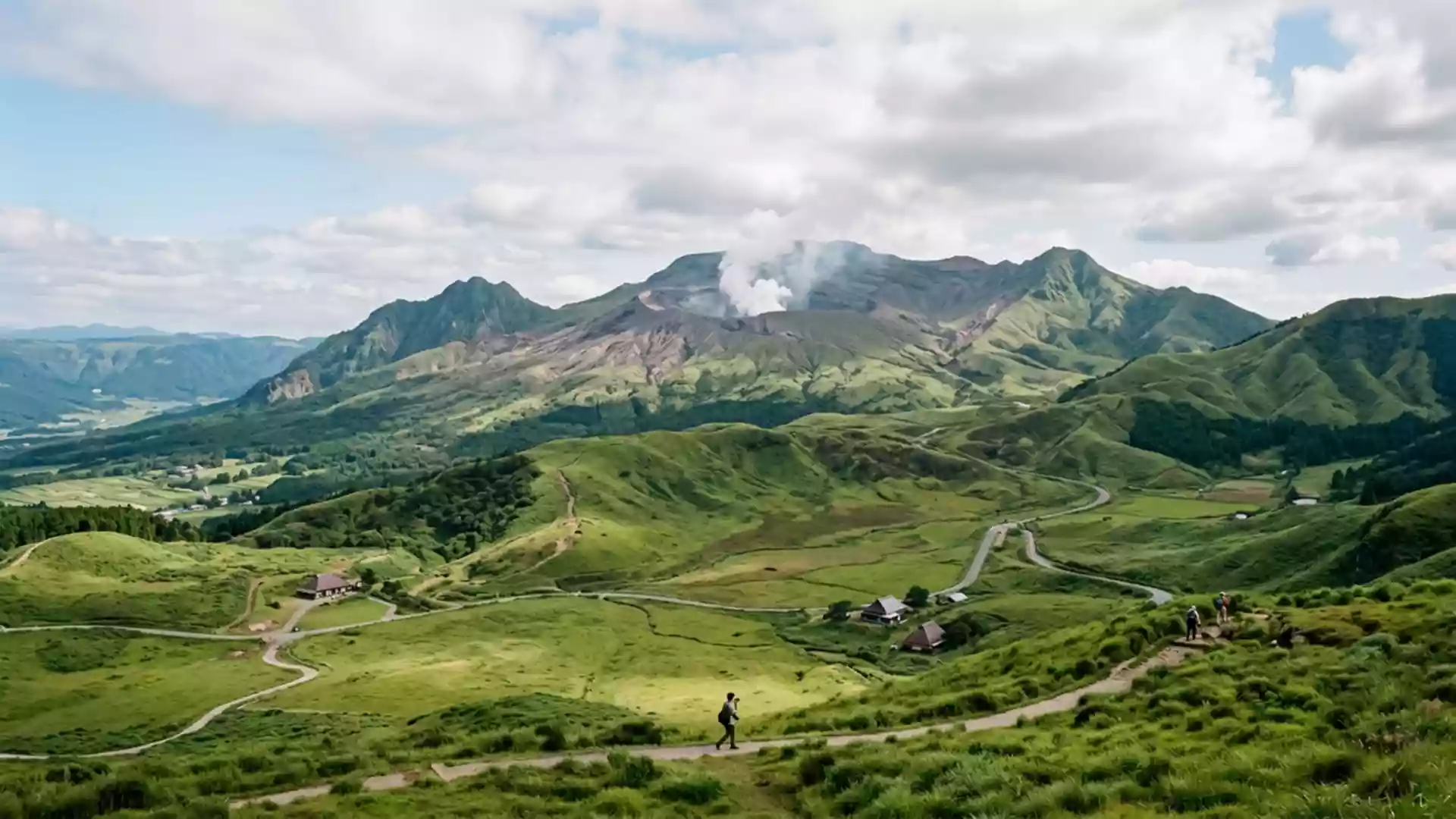
Mount Aso keeps crater restriction on 23 October
Published on 10/24/2026 at 18:52 | Editorial responsibility: Rafael Müller, Editor-in-Chief AD HOC NEWSRestriction and access at a volcano
- Japan Meteorological Agency continued Level 2 restrictions at Mount Aso on 23 October 2026.
- The official crater council keeps a 1 km exclusion zone around Nakadake First Crater.
- A 20 October survey recorded a grey pool and small mud eruptions inside Nakadake First Crater.
- Route 57 and Route 325 provide road approaches from the Aso Station intersection.
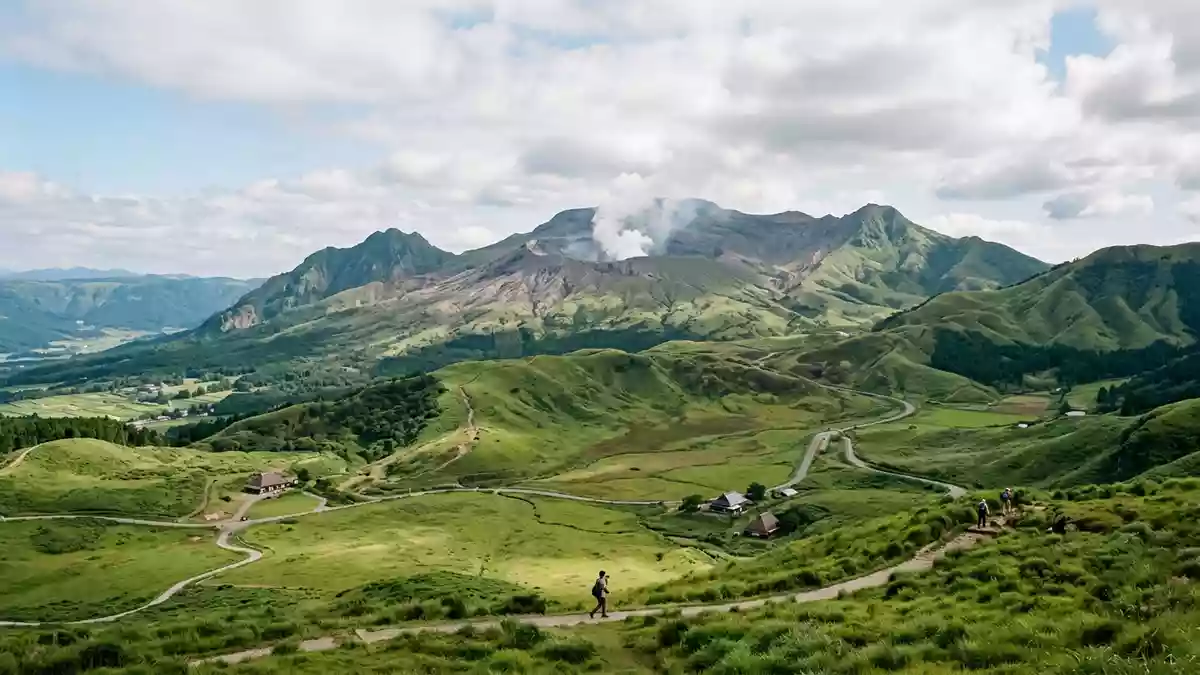
Mount Aso remains under a Level 2 crater restriction after the Japan Meteorological Agency issued its latest bulletin on 23 October 2026. The restriction affects the Nakadake First Crater area in Aso, Japan, while the wider volcanic landscape remains outside the one-kilometre exclusion zone.
The bulletin recorded continuing volcanic activity and gives travellers a clear change to their plans: crater viewing is not available within the restricted area. The mountain can still be approached only in line with current local instructions, and conditions may change as volcanic gas and other activity are monitored.
Level 2 restriction continues at Nakadake crater
The Japan Meteorological Agency’s 23 October information kept the volcanic alert at Level 2, defined as a crater-area restriction. The notice covers activity observed between 16 October and 23 October, and names Aso City and Minami-Aso Village among the municipalities subject to caution around the crater.
At Nakadake First Crater, white volcanic smoke rose as high as 600 metres above the crater rim. A field survey on 20 October found a grey pool covering roughly six-tenths of the crater floor, together with small mud eruptions and bursts of hot water several metres high.
The agency also reported that sulphur dioxide emissions rose to 3,200 tonnes per day on 16 October before falling to 1,200 tonnes on 19 October. It said volcanic tremors had sometimes increased, and warned that an eruption affecting the area within about 1 km of Nakadake First Crater remains possible. The 23 October volcanic bulletin carries the date, place and current warning.
The official crater restriction notice states that entry within approximately 1 km of the crater is prohibited. It also records that the alert was lowered from Level 3 to Level 2 on 1 September 2026, with access to the mountain-top plaza allowed after safety checks on 2 September.
What the restriction means for Mount Aso visitors
Mount Aso is an active volcanic area whose central crater group forms the focus of the current warning. The restriction is therefore more specific than a closure of the whole mountain: the prohibited zone is centred on Nakadake First Crater, while the official information identifies the affected municipalities rather than declaring every part of Aso inaccessible.
The Ministry of the Environment explains that Level 2 means visitors should refrain from approaching the crater. Its guidance links the level to the possibility that a small eruption could send volcanic cinders as far as 1 km, while the agency’s latest bulletin adds risks from ash, larger rocks and volcanic gas.
This makes the 23 October update relevant to the coming weeks, not only to visitors arriving on the bulletin date. The date of the update and the one-kilometre limit define what a traveller can expect near the active crater, while the survey findings explain why the access rule remains in place.
The same ministry describes sulphur dioxide near Nakadake as hazardous, particularly for people with asthma or heart conditions. It advises visitors to follow local instructions, and notes that restrictions can be introduced when gas levels increase.
Visiting Mount Aso: what travellers from Western Europe should know
- The current restriction was continued by the Japan Meteorological Agency on 23 October 2026 and applies around Nakadake First Crater.
- Entry within approximately 1 km of the crater is prohibited, so crater viewing is not available inside that zone.
- Road approaches from Kumamoto use the Aso Station intersection on Route 57 or Route 325, according to the official access page.
- The official language is Japanese and the national currency is the Japanese yen.
- Entry requirements depend on your nationality; UK travellers can check the FCDO travel advice at gov.uk/foreign-travel-advice, Irish travellers the Department of Foreign Affairs at ireland.ie.
Searching for Mount Aso on social platforms
These links open searches for Mount Aso on each platform.
Frequently asked questions about Mount Aso
What changed at Mount Aso on 23 October 2026?
The Japan Meteorological Agency continued the Level 2 crater-area warning after reviewing activity through 23 October 2026.
Can visitors approach the Nakadake crater?
No. The official restriction prohibits entry within approximately 1 km of Nakadake First Crater.
Where is Mount Aso and how do you get there?
Mount Aso is in Kumamoto Prefecture, Japan. The official access page gives road approaches from Kumamoto via the Aso Station intersection on Route 57 or Route 325.