
Murano, the Venetian island shaped by glass furnaces
Published on 09/05/2026 at 06:50 | Editorial responsibility: Rafael Müller, Editor-in-Chief AD HOC NEWS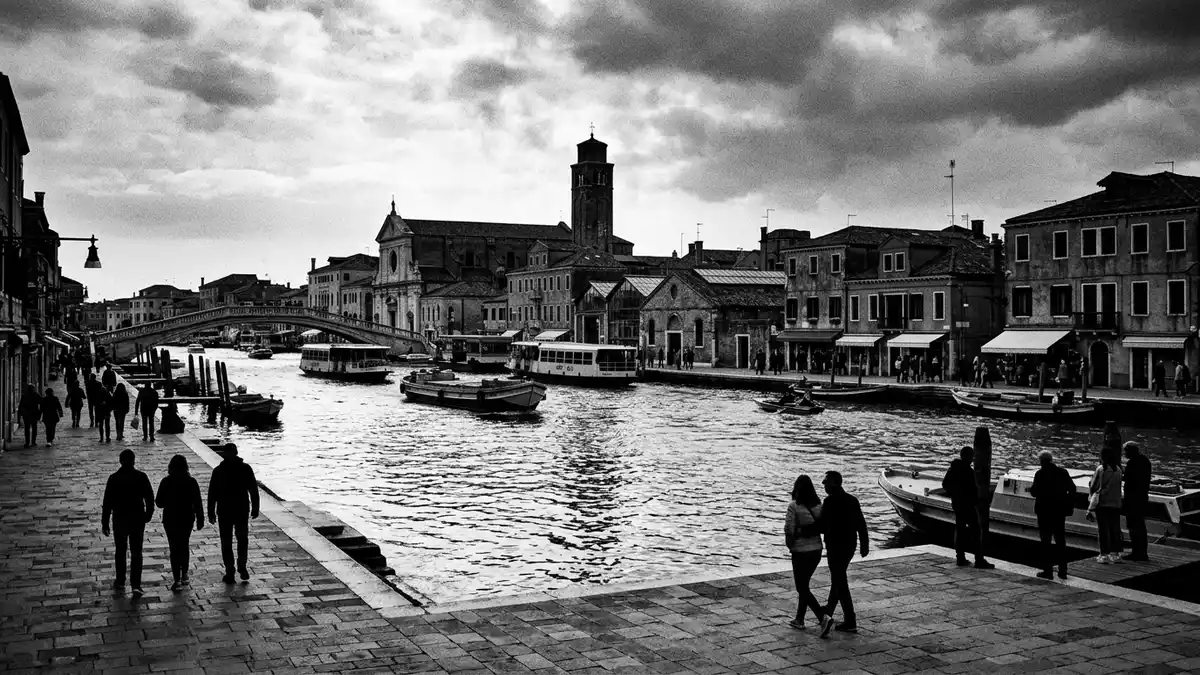
Murano in the Venetian Lagoon is a small island community north-east of Venedig, where canals, low brick houses and glass furnaces sit side by side and glassmaking has defined the place for centuries.
Murano as an island in the Venetian Lagoon
Murano lies in the lagoon north-east of Venice’s historic centre, separated from the city by expanses of shallow water and linked to it by public boats that run across the lagoon. The settlement occupies a cluster of islands connected by bridges, with canals cutting between the houses and workshops in a pattern reminiscent of central Venice but on a smaller and calmer scale.group of islands connected The quays are lined with brick and stone buildings, many with tiled roofs and chimneys, and behind them courtyards hold the industrial sheds and furnaces where glass is still melted and worked.
Murano belongs to the Metropolitan City of Venice in the Veneto region of Italy, and its position within the lagoon has mattered to its history as a workshop island. The water around it carries boats from Venice and other lagoon islands, and the approach brings views of bell towers, piers and industrial buildings rising directly from the water. At the centre of Murano stands the basilica of Santa Maria e San Donato, a church with roots in the Middle Ages that anchors the island’s long history of settlement and worship.Santa Maria e San Donato basilica Around it, narrow calli and small bridges give the island an intimate scale, with workshops and showrooms opening directly onto the lanes.
Glassmaking moved to Murano in the thirteenth century
Murano’s identity as a glassmaking island took shape in the late thirteenth century, when the Venetian authorities ordered glass furnaces in the city to relocate to Murano. A decree in 1291 required furnaces that had previously operated in Venice to be moved to the island, concentrating the craft there and making Murano the privileged location for glassworking in the Republic.1291 order moving furnaces Workshops and furnaces developed along Murano’s canals, so that fire-based industry and water-based transport were bound together in the landscape.
By the fifteenth century, Murano’s furnaces had produced innovations that shaped European glass. Angelo Barovier, a glassmaker active in Venice and Murano in the fifteenth century, developed an exceptionally clear glass known as cristallo, a material similar in transparency to rock crystal.Angelo Barovier and cristallo glass This refined glass supported the production of mirrors and delicate vessels, and it remains one of the historical names associated with Murano glass. Over the centuries, guild regulations, secrecy and family traditions helped keep techniques on the island, and glassmaking became the craft most associated with Murano and its name.
Historic furnaces and glass museum today
Murano’s canals are lined with glassworks where molten glass is gathered on metal blowpipes, shaped on benches and cooled in long furnaces, and visitors see both historic and contemporary techniques in operation. Glassmakers on the island work with cristallo and coloured glasses, as well as patterns such as filigrana, where fine white or coloured canes appear as stripes or lattices within clear glass, and murrine, where patterned canes are sliced and fused to form decorative surfaces.Murano glass techniques like filigrana and murrine Workshops along the main canals show finished vases, chandeliers and jewellery, reflecting the range of objects produced from the island’s furnaces.
Glass history on Murano is presented in the Museo del Vetro, the Glass Museum housed in Palazzo Giustinian, a former aristocratic residence that gives space to historical pieces, tools and documents.Murano Glass Museum in Palazzo Giustinian Moving through its rooms shows the progression from early everyday glassware to Renaissance luxury objects and modern design. Elsewhere on the island, contemporary studios explore new forms and colours, working within a setting where centuries of glassmaking have left an architectural imprint in the shapes of factory sheds, chimneys and canal-side yards.
Visiting Murano: what travellers from Western Europe should know
- Murano lies north-east of Venice in the Venetian Lagoon, and public boats cross from the city’s Fondamenta Nove and other piers directly to the island.
- The island is flat and reached entirely on foot once ashore, with canals crossed by numerous small bridges and lanes that narrow between houses and workshops.
- Murano sits within Italy; the official language is Italian and the currency is the euro.
Searching for Murano on social platforms
These links open searches for Murano on each platform.
Frequently asked questions about Murano
Where is Murano in relation to Venice?
Murano is an island group in the Venetian Lagoon north-east of Venice’s historic centre, reached by public boats that cross the lagoon from city piers.
What can visitors expect on a visit to Murano?
Visitors encounter canals, small bridges, glass workshops and showrooms, as well as historic churches and the Glass Museum in Palazzo Giustinian on the island.
What makes Murano distinctive among lagoon islands?
Murano is defined by its long tradition of glassmaking concentrated since 1291, with furnaces, specialised techniques and the cristallo innovation associated with Angelo Barovier.


