
Musee du Bardo and its palace galleries in Tunis
Published on 09/12/2026 at 20:23 | Editorial responsibility: Rafael Müller, Editor-in-Chief AD HOC NEWS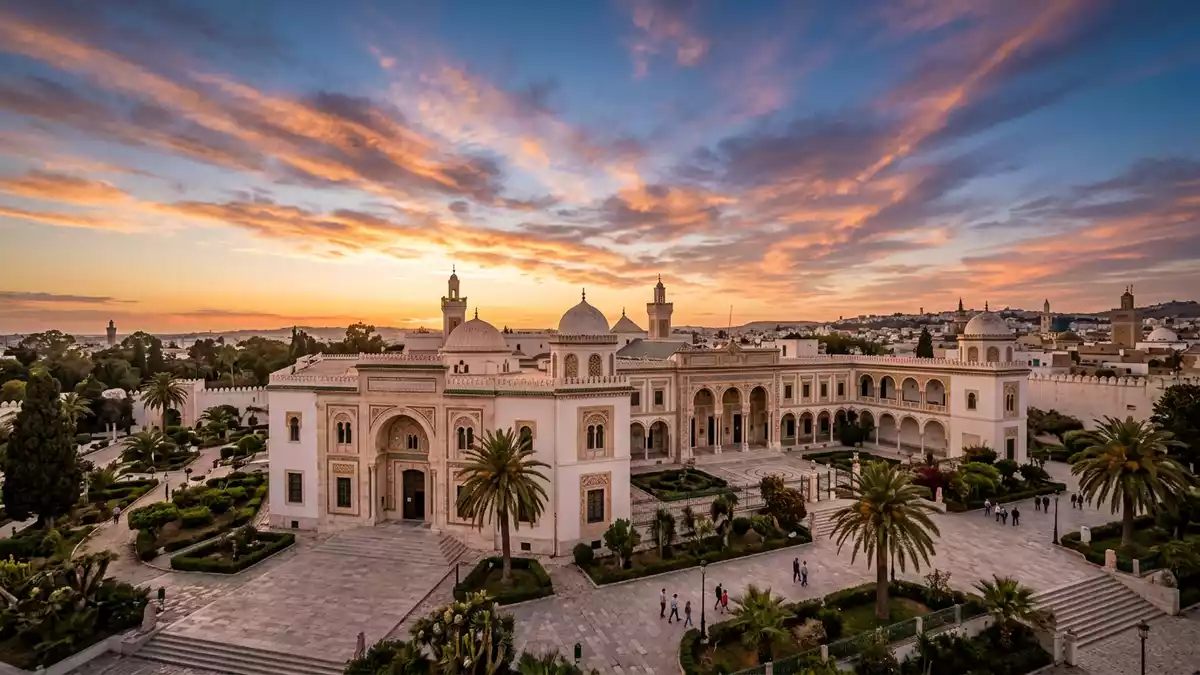
Musee du Bardo in Tunis combines a palace setting with galleries of archaeology and mosaic. Housed in Le Bardo, it is tied to a 19th-century Bey palace and the reign of Ali Bey III.
Palace rooms turned into museum space
The building keeps the air of a court residence, with decorated rooms, courtyards and long gallery spaces. Its palace fabric sits beside display halls that hold finds from across Tunisia, and the contrast is part of the museum’s identity.
The Bardo name is linked to a longer palace history, and the museum opened under the title Alaoui Museum in 1888. That date and name place it firmly in the late nineteenth-century world of reform, collection and display in Tunis.
Roman mosaics and other collections
The strongest visual impression comes from the mosaic galleries. Floors, panels and large figural scenes fill the rooms with depictions of gods, hunting, music and daily life from Roman North Africa.
Among the museum’s recognised holdings are mosaics from Carthage, Dougga, Hadrumetum and Utica, together with Punic objects, sculpture and Islamic art. A museum page describes the collection as stretching from prehistory to the Islamic period, and the range is visible in the material itself.
The Roman mosaics are the work most visitors associate with the museum, and they give the galleries a clear rhythm of colour, pattern and narrative scene. One highlighted piece is the mosaic of Neptune, placed among many others with mythological and domestic subjects.
A national museum in a former beylical palace
Musee du Bardo is also a record of Tunisian history through its setting. The palace shell, built under the Husaynid rulers, frames collections that cover Punic, Roman, Byzantine and Islamic material from the country.
The museum was renamed after independence, giving the site a national role that matches its range. The layers of the place are visible in the decorated ceilings, stairways and rooms, which remain part of the visitor’s route through the galleries.
The result is a museum where the container and the contents both matter. Palace architecture, archaeological objects and later museum additions share the same address in Le Bardo, west of central Tunis.
Visiting Musee du Bardo: what travellers from Western Europe should know
- The museum is in Le Bardo, in the Tunis area, west of the historic centre. Tunis is the capital of Tunisia.
- The official language is Arabic and the currency is the Tunisian dinar.
- The museum occupies a former palace, so the route through the building moves between rooms, stairways and galleries.
- The collections range from mosaics and sculpture to Punic, Islamic and archaeological material from across Tunisia.
- Entry requirements depend on your nationality; UK travellers can check the FCDO travel advice at gov.uk/foreign-travel-advice, Irish travellers the Department of Foreign Affairs at ireland.ie.
Searching for Musee du Bardo on social platforms
These links open searches for Musee du Bardo on each platform.
Frequently asked questions about Musee du Bardo
Where is Musee du Bardo?
It is in Le Bardo, west of central Tunis, in Tunisia. The museum occupies a former palace complex rather than a purpose-built box.
What does a visit contain?
The galleries combine mosaics, sculpture, Punic material and Islamic objects. The palace rooms remain visible as part of the route through the museum.
What makes it distinctive?
The place combines a beylical residence with one of Tunisia’s major archaeological collections. Its Roman mosaics, palace spaces and national historical range belong to the same setting.


