
Musee du Bardo and its world of mosaics in Tunis
Published on 08/22/2026 at 10:46 | Editorial responsibility: Rafael Müller, Editor-in-Chief AD HOC NEWS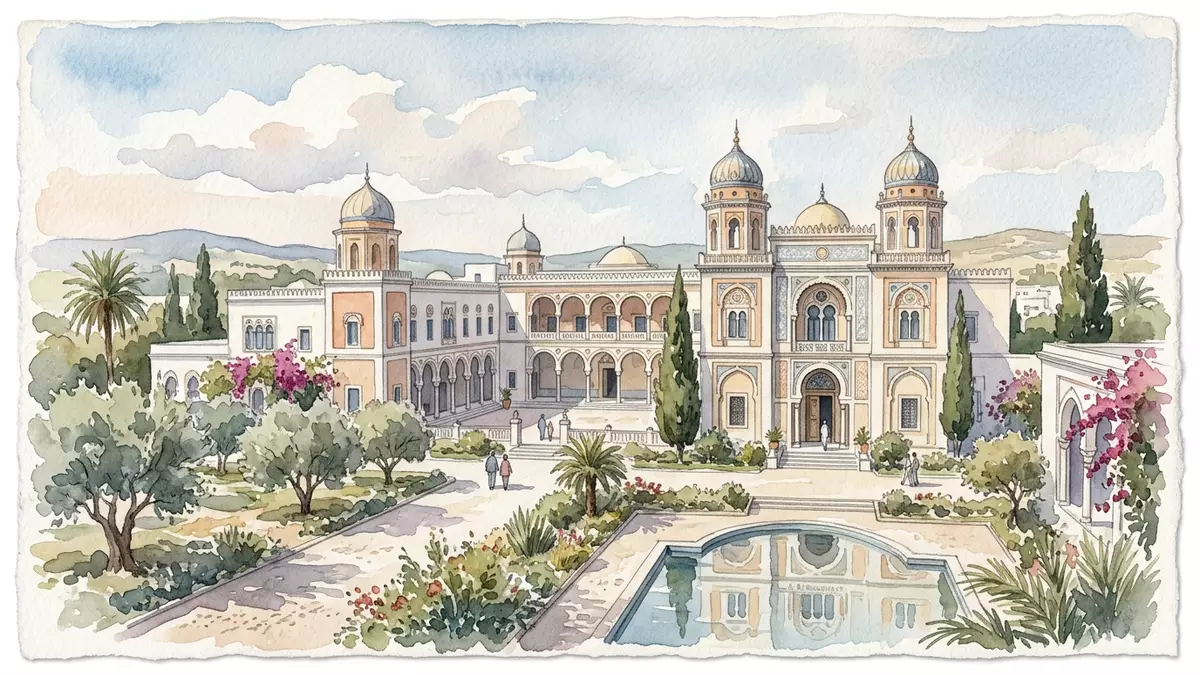
Musee du Bardo in Tunis is a national museum of arts and history housed in a former beylical palace that became a museum in the nineteenth century. It is best known for its extensive Roman mosaic collection, which turns the palace into a walkable timeline of Tunisia’s ancient past.
A nineteenth-century museum in a beylical palace
Musee du Bardo stands in the suburb of Le Bardo, west of central Tunis, in a palace that once belonged to the beys who ruled Tunisia under the Husainid dynasty.Bardo National Museum The palace complex includes reception halls, inner courtyards and former harem apartments, and its arabo-Islamic architecture forms an ornate setting for the museum’s archaeological collections.largest archaeological museum in Tunisia
The museum opened to the public on 7 May 1888 under the name Musée Alaoui and later took on the national title that it carries now.inauguration on 7 May 1888 Its galleries occupy large parts of the historic palace, and the building has been classified as a historic monument in Tunisia. Walking through Musee du Bardo therefore means moving both through archaeological history and through the layers of Tunisian political and architectural history linked to the beys.
The world’s largest collection of Roman mosaics
Musee du Bardo is widely recognised for holding one of the richest collections of ancient mosaics found in North Africa, many of them Roman and Byzantine works recovered from archaeological sites across Tunisia such as Carthage, Dougga and Utica.largest collection of mosaics The mosaics line the walls and floors of the palace rooms, turning halls and staircases into galleries of stone pictures.
One of the most noted pieces is a mosaic showing the Roman poet Virgil seated with two muses, accompanied by verses from the “Aeneid”, a work that has become an emblem for the museum’s classical collection.mosaic of Virgil Other mosaics depict marine scenes, banquets, hunting and mythological figures, offering a visual record of daily life and belief in the Roman and early Christian periods of Tunisia. The sheer number and variety of mosaics at Musee du Bardo make the museum a central reference point for Roman art in the Mediterranean region.
Collections that trace Tunisia’s long history
Beyond its mosaics, Musee du Bardo presents collections that span from prehistoric times through the Punic, Roman, Byzantine and Islamic periods of Tunisia.sections from prehistory to Islamic era Punic rooms contain sarcophagi, stelae and jewellery, including finely worked gold pieces that show the craftsmanship of Carthage and other Phoenician settlements along the Tunisian coast.
Roman galleries hold statues, inscriptions and decorative stonework alongside the mosaics, while the Islamic section displays ceramics, carved wood, manuscripts and architectural fragments from mosques and houses. Together, these collections show how Tunisia shifted from a centre of Phoenician trade to a Roman province, then to part of the early Islamic world, all within one museum visit.
Visiting Musee du Bardo: what travellers from Western Europe should know
- Musee du Bardo stands in Le Bardo, a district west of central Tunis, and is reached by road from the city and Tunis–Carthage International Airport.
- The museum is housed in a multi-storey historic palace, with staircases and long gallery routes that require walking across large interior spaces.
- The official language is Arabic and the currency is the Tunisian dinar.
- Entry requirements depend on your nationality; UK travellers can check the FCDO travel advice at gov.uk/foreign-travel-advice, Irish travellers the Department of Foreign Affairs at ireland.ie.
Searching for Musee du Bardo on social platforms
These links open searches for Musee du Bardo on each platform.
Frequently asked questions about Musee du Bardo
Where is Musee du Bardo located?
Musee du Bardo is in Le Bardo, a suburb west of central Tunis in Tunisia, within a former beylical palace complex.
What can visitors expect to see inside?
Visitors encounter extensive Roman and Byzantine mosaics, Punic sarcophagi and jewellery, Roman statues and inscriptions, and Islamic-era ceramics and artworks.
What makes Musee du Bardo distinctive among museums?
It combines a nineteenth-century national museum, housed in a historic palace, with one of the world’s largest collections of Roman mosaics from across Tunisia.


