
Museo del Prado: Madrid’s palace of painting
Published on 08/22/2026 at 17:36 | Editorial responsibility: Rafael Müller, Editor-in-Chief AD HOC NEWS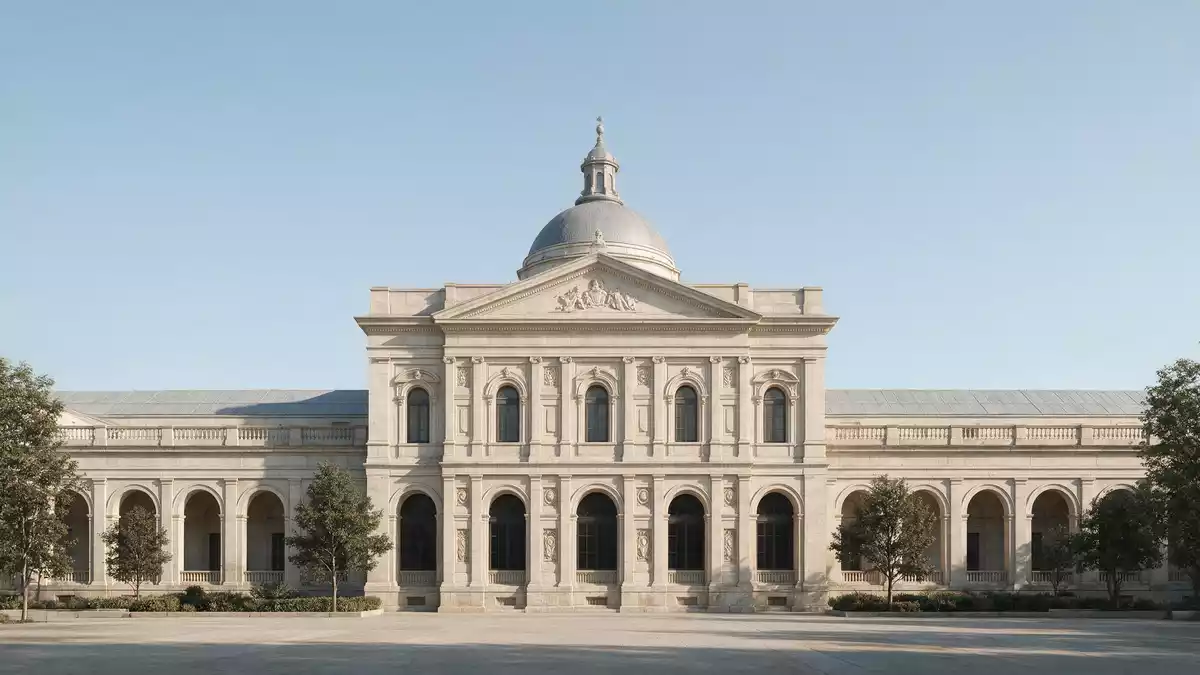
Few art museums bring national history and European painting together as clearly as Museo del Prado in Madrid, housed in a long neoclassical building first designed by Juan de Villanueva in 1785 for King Charles III and opened to the public as an art museum in 1819.
A royal museum in a neoclassical shell
Museo del Prado stands on the Paseo del Prado in central Madrid, aligned with one of the city’s historic boulevards and surrounded by formal avenues of trees and grand nineteenth-century architecture.Paseo del Prado, Madrid The core structure, known as the Villanueva Building, belongs to the late eighteenth century and reflects the sober symmetry and columned facades associated with Spanish neoclassicism.Villanueva Building
Juan de Villanueva, court architect to Charles III and a leading figure in Spanish neoclassical design, was originally commissioned to create a building for the Natural History Cabinet, but his long, dignified galleries with generous ceiling height translated readily into exhibition spaces for paintings and sculptures.designed by Juan de Villanueva The conversion into an art museum took place under Ferdinand VII, and the institution opened as a royal museum of paintings and sculptures in November 1819, anchoring its identity firmly in the Bourbon monarchy and its collections.
From royal collection to national gallery
The foundation of Museo del Prado’s holdings lies in the Spanish royal collections assembled from the sixteenth century onward, beginning in the era of Charles V and expanding under the Habsburg and Bourbon dynasties.royal collections from the sixteenth century When the museum opened in 1819 its first catalogue listed 311 paintings, although more than 1,500 works from various royal residences were already stored in the building, giving the new institution a substantial core of Spanish and European art from the outset.311 paintings in the first catalogue
Over the centuries the collection has been enriched by further acquisitions, donations and bequests, expanding from royal holdings into a national gallery of European painting and sculpture. The museum’s rooms highlight major schools and artists connected with Spain, including extensive displays of works by Diego Velázquez, Francisco de Goya and El Greco, alongside Italian and Flemish masters such as Titian and Rubens. This concentration of masterpieces makes Museo del Prado a key reference point for studying the visual culture of the Spanish monarchy and its dialogue with wider European art.
Layout, galleries and visiting rhythm
Inside the Villanueva Building, long enfilades of rooms run along the central axis, connected by wide corridors where large canvases line the walls in dense sequences. The principal floor presents many of the best-known works, arranged by school and period, while upper and lower levels accommodate further galleries, study rooms and spaces for temporary exhibitions. High ceilings and plain wall treatments put the emphasis on the paintings themselves, with sculpture and decorative arts appearing in selected zones rather than competing for attention.
The museum complex extends beyond the original shell into later additions, creating a group of interconnected wings and halls accessed from several entrances around the perimeter, including streets such as Calle Ruiz de Alarcón.Calle Ruiz de Alarcón address Visitors move between grand picture galleries, more intimate rooms focused on single artists or themes, and circulation spaces where architectural elements of Villanueva’s design, such as arcades and classical detailing, remain visible despite modern adaptations. The overall impression is of a palace of painting, with sequences of works tracing Spanish history, religion and myth across several centuries.
Visiting Museo del Prado: what travellers from Western Europe should know
- Museo del Prado stands on the Paseo del Prado in central Madrid, close to other major institutions in the city’s museum axis and within walking distance of Atocha railway station.
- The historic building is arranged over multiple levels, and exploring the main galleries involves covering long corridors and using staircases between floors.
- Madrid is in Spain, where the official language is Spanish and the currency is the euro (EUR).
Searching for Museo del Prado on social platforms
These links open searches for Museo del Prado on each platform.
Frequently asked questions about Museo del Prado
Where is Museo del Prado located in Madrid?
Museo del Prado is in central Madrid on the Paseo del Prado, close to Atocha station and other major museums along the same boulevard.
What can visitors expect inside Museo del Prado?
Visitors encounter extensive galleries of Spanish and European painting arranged by school and period, with highlights from Velázquez, Goya, El Greco, Titian and Rubens.
What makes Museo del Prado distinctive among art museums?
Its combination of a neoclassical eighteenth-century building by Juan de Villanueva and a world-class collection rooted in the Spanish royal holdings from the sixteenth century gives it a distinctive character.


