Museo Egizio in Turin and the rebirth of ancient Egypt in Europe
Published on 08/06/2026 at 17:30 | Editorial responsibility: Rafael Müller, Editor-in-Chief AD HOC NEWS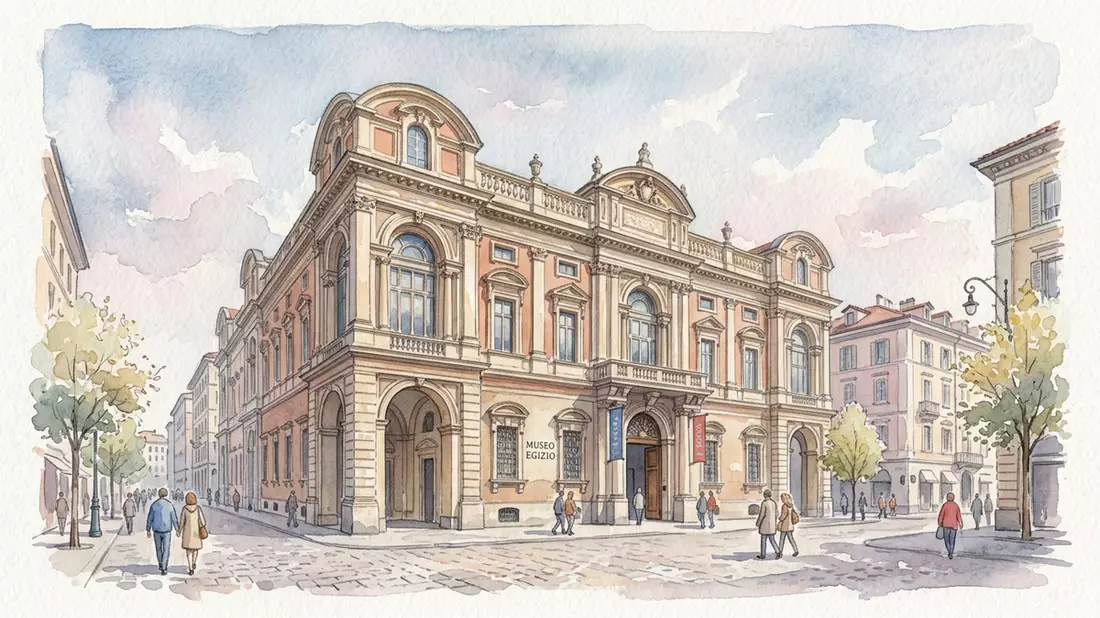
Turin’s Museo Egizio and Europe’s Egyptomania
Museo Egizio in Turin is a place where ancient Egypt and modern Europe look at one another across glass cases. Few collections outside Egypt itself concentrate so fully on the daily life, religion and royal power of the Nile civilisation, and this focus has shaped how generations of Europeans imagine ancient Egypt. Instead of a single star exhibit, the museum works like a long, unfolding narrative that leads from modest grave goods to monumental statues.
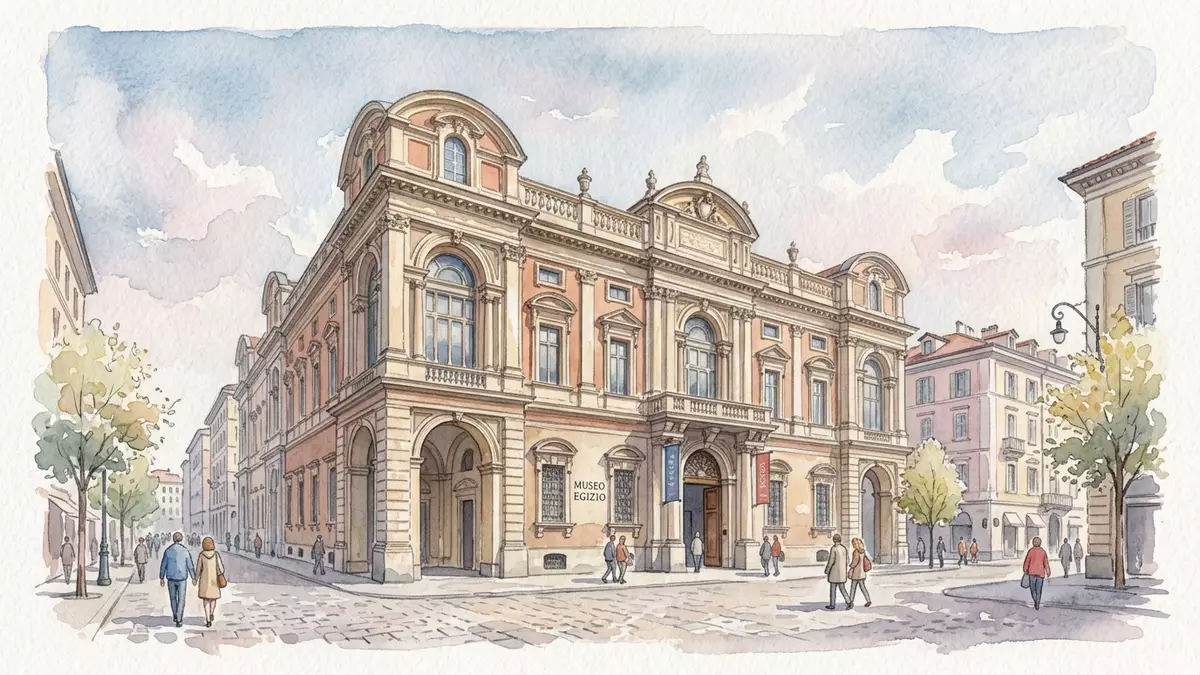
The museum occupies an elegant palazzo in central Turin, a setting that gives its Egyptian artefacts a distinctly European stage. Behind the stone façade, galleries open one after another in a clear sequence, allowing visitors to follow Egypt from prehistoric communities through pharaonic courts and into the period of Greek and Roman rule. The building’s thick walls, cool interiors and controlled light create a sense of pause that suits fragile papyri, painted coffins and weathered granite figures.
From Savoy curiosity to modern research museum
Museo Egizio grew out of the collecting passions of the rulers of the House of Savoy, who assembled Egyptian antiquities long before mass tourism to the Nile was possible. Over time, their cabinets of curiosities turned into a systematic collection, enriched by archaeological expeditions that brought back statues, stelae, tools and domestic objects discovered in context. What began as a princely display evolved into a research institution where archaeologists, philologists and conservators work on the same objects that visitors see in the galleries.
This dual role, public museum and scholarly centre, is visible throughout the displays. Many labels identify not just the object but also the excavation site and the historical period, tying Turin to places such as Thebes and Saqqara. Some rooms foreground the story of archaeology itself, showing photographs, notebooks or early recording systems that reveal how methods changed over the decades. The result is a museum that is as much about the modern encounter with Egypt as it is about the pharaohs.
Walking the galleries: statues, tombs and everyday Egypt
One of the most striking experiences at Museo Egizio is the progression from colossal royal sculptures to small traces of ordinary lives. Visitors step into rooms dominated by stone statues that once guarded temples and palaces, many carved in hard granite or greywacke with sharply defined features. These figures often stand on high plinths so that eye level meets the torso or folded arms rather than the base, underlining their original role as objects of veneration and royal propaganda.
Further along, the galleries concentrate on funerary culture. Rows of painted coffins line the walls, their surfaces crowded with hieroglyphs and vivid depictions of protective deities. Some rooms reconstruct tomb groupings, setting sarcophagi, canopic jars and shabti figurines together to suggest how they were originally arranged. Nearby cases show jewellery, cosmetic spoons, amulets and tools, objects that connected the world of the living with beliefs about the afterlife. Other sections bring out the texture of everyday Egypt: pottery vessels used for storage and cooking, linen fragments, writing boards and ostraca covered in ink notes, which together sketch a society of scribes, workers and craftspeople.
Visiting Museo Egizio: what travellers from Western Europe should know
- Museo Egizio stands in central Turin, within walking distance of major squares and reachable by city public transport, taxi and bicycle from across the urban area.
- Admission arrangements and opening hours are set by the site's operator and change with the season; the official website is the only binding source. Timed tickets or daily limits may apply, so it is worth checking the official booking page before travelling.
- Turin experiences warm summers and cool, often foggy winters, so many visitors prefer the museum during the milder temperatures of spring and autumn or earlier in the day.
- The visit involves prolonged standing and walking on hard floors, and some upper levels are reached by stairs as well as lifts; comfortable footwear makes a clear difference.
- On the ground, Italian is the main language, but staff in a large museum like this usually handle English, and card payments are widely accepted in the city and museum surroundings.
- Entry requirements depend on your nationality. UK travellers should check the FCDO travel advice at gov.uk/foreign-travel-advice; Irish travellers the Department of Foreign Affairs at ireland.ie; EU and EEA citizens their own national foreign ministry.
Searching for Museo Egizio on social platforms
Museo Egizio appears frequently in travel videos and photo feeds, which can help visualise the galleries and plan how long to spend in each section.
Frequently asked questions about Museo Egizio
Where is Museo Egizio located?
Museo Egizio stands in the historic centre of Turin in northern Italy, within a grid of nineteenth-century streets and close to major city landmarks.
What can visitors expect during a visit?
Visitors move through themed galleries that present statues, coffins, mummies, papyri and everyday objects, with clear information about their origins and historical periods.
What makes Museo Egizio distinctive among Egyptology museums?
Museo Egizio is distinctive for its strong focus on ancient Egypt alone and for the way it links monumental sculptures with domestic and textual material from documented excavations.
More on Museo Egizio at AD HOC NEWS