
Myeongdong’s tangle of streets and stories in central Seoul
Published on 08/20/2026 at 12:52 | Editorial responsibility: Rafael Müller, Editor-in-Chief AD HOC NEWS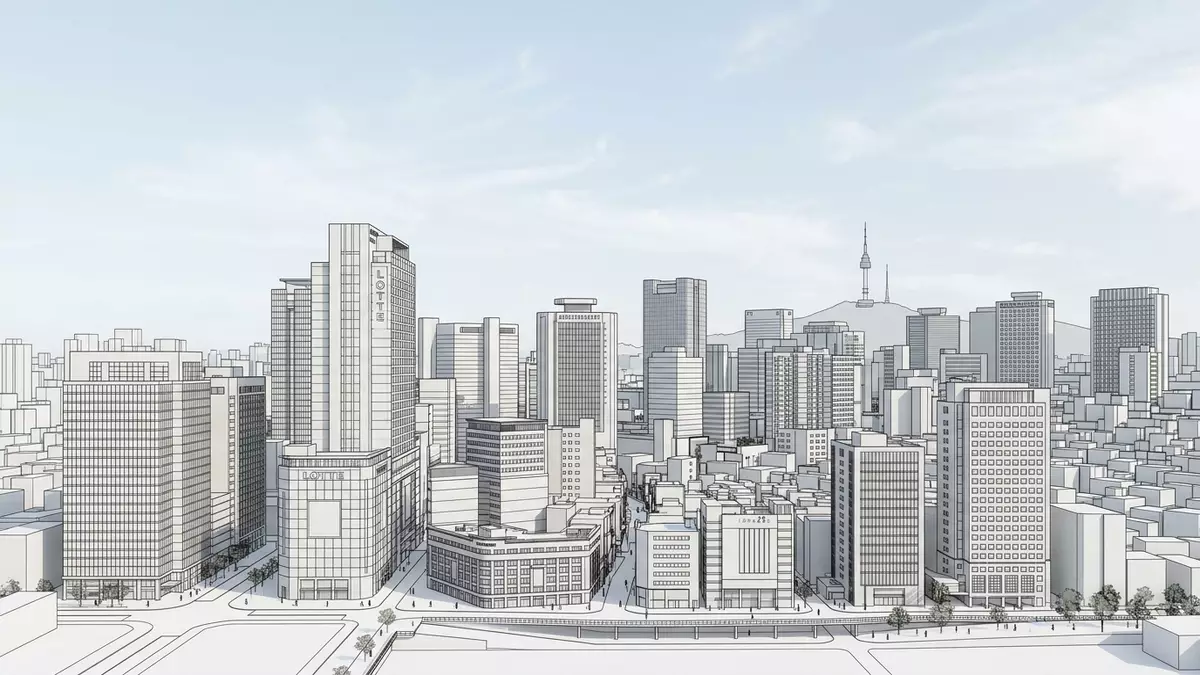
Myeongdong in central Seoul is a compact district where dense shopping streets thread between banks, theatres and a landmark cathedral that dates from the late nineteenth century. Once a residential quarter in the Joseon Dynasty capital of Hanseong, it grew into a commercial and financial hub after the Korean War and carries that layered history in its streets.
A shopping grid between Namsan and Cheonggyecheon
Myeongdong forms a tight grid of streets in Jung-gu, framed by Namsan mountain to the south and the Cheonggyecheon stream to the north, in the historic centre of Seoul.A compact grid of pedestrian streets gives the district a legible structure, with lanes that squeeze between mid-rise buildings and spill into larger avenues at the edges.
The area is lined with department stores, shopping centres and a dense mix of shopfronts selling clothing, shoes, bags and cosmetics.Large department stores such as Lotte and Shinsegae stand near malls like Noon Square and M Plaza, creating a vertical landscape of retail above the ground-level streets. Between these big blocks, narrow alleys carry smaller shops, cafés and food stalls that fill any remaining frontage.
From Joseon residential quarter to commercial heart
During the Joseon Dynasty, the area now known as Myeongdong formed part of the southern section of Hanseong and carried names such as Myeongryebang and Chonghyeon.In the early Japanese colonial period in 1914 it was renamed Meiji-cho, reflecting Japan’s administrative imprint on the city. In 1946, after independence, the district received the modern name Myeongdong, which it still holds.
As Seoul rebuilt after the Korean War, banks and financial institutions along Namdaemun-ro and Euljiro extended their reach into Myeongdong, bringing high-rise construction and corporate offices.By the 1970s the district was known for department stores, shopping centres, restaurants and boutiques, and it became closely associated with youthful fashion and entertainment. At the same time, Myeongdong served as a stage for political demonstrations in the 1980s and 1990s, especially around the cathedral, tying the commercial streetscape to wider civic life.
Myeongdong Cathedral and the brick skyline
Rising above the surrounding shops, Myeongdong Cathedral is one of the most recognisable buildings in the district and a landmark of Korean Catholicism.Ground was broken for the cathedral in 1892 and the building was completed in 1898, giving the church a firmly anchored late nineteenth-century date within Seoul’s urban history. The structure is built in brick, with a tall tower and a nave aligned with the street.
The cathedral stands on a raised site above the commercial lanes, its forecourt reached by a series of steps that lift visitors away from the shopfronts below.The church is recognised as a major parish seat for the Archdiocese of Seoul and continues to serve liturgical functions alongside its role as a symbol of the district. Around it, the skyline mixes brick, glass and concrete, with theatres and cultural venues occupying plots that once formed part of the older street fabric.
Visiting Myeongdong: what travellers from Western Europe should know
- Myeongdong lies in Jung-gu in central Seoul, between Namsan mountain and the Cheonggyecheon stream. It is reached by Seoul Metro Line 4 at Myeongdong Station and by nearby Euljiro 1(il)-ga Station.
- The streets in the core shopping area are narrow and carry a steady flow of pedestrians, with frequent kerbs and small changes in level between shopfronts.
- The district stands on a gentle slope rising towards Namsan, so walks towards the south side involve uphill stretches along paved streets.
- The official language is Korean and the currency is the South Korean won. Entry requirements depend on your nationality; UK travellers can check the FCDO travel advice at gov.uk/foreign-travel-advice, Irish travellers the Department of Foreign Affairs at ireland.ie.
Searching for Myeongdong on social platforms
These links open searches for Myeongdong on each platform.
Frequently asked questions about Myeongdong
Where is Myeongdong in Seoul?
Myeongdong is a district in Jung-gu in central Seoul, set between Namsan mountain and the Cheonggyecheon stream and bordered by major roads such as Namdaemun-ro.
What should visitors expect in Myeongdong?
Visitors encounter a dense shopping district with department stores, malls, smaller boutiques and food stalls, alongside banks, theatres and Myeongdong Cathedral rising on a hill above the streets.
What makes Myeongdong distinctive among Seoul’s districts?
Myeongdong’s combination of late nineteenth-century cathedral architecture, post-war financial towers and mid-twentieth-century shopping streets creates a rare layering of religious, commercial and civic functions within a compact grid.


