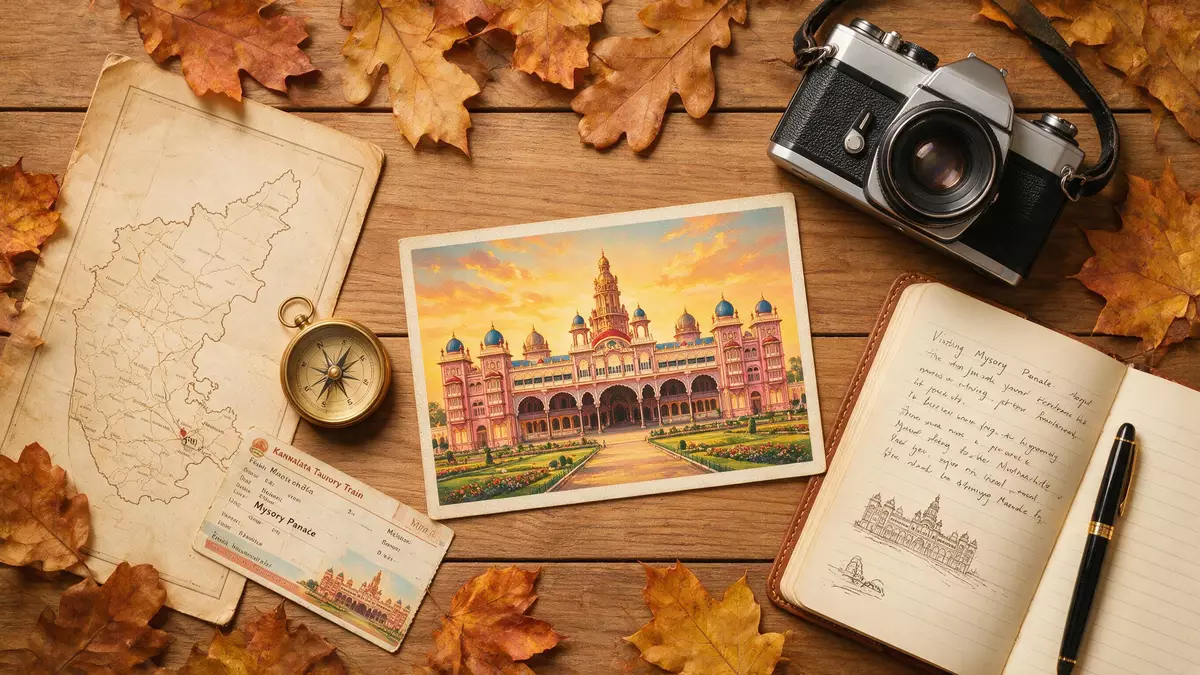
Mysore Palace in Mysuru: a granite and marble royal landmark
Published on 08/12/2026 at 14:19 | Editorial responsibility: Rafael Müller, Editor-in-Chief AD HOC NEWS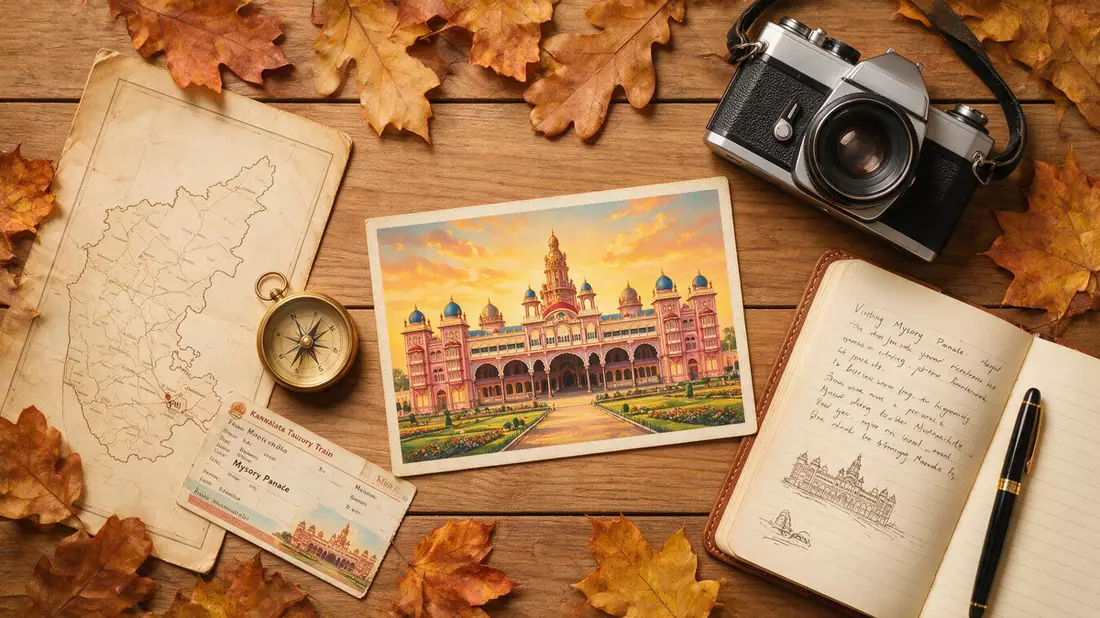
Mysore Palace, also known as Amba Vilas Palace, is the historic royal residence that dominates the centre of Mysuru in southern India. Built for the Wodeyar dynasty in the early twentieth century, its grey granite and pale marble domes rise above courtyards, halls and temple towers that still define the city’s royal quarter.
From Wodeyar court to Indo-Saracenic landmark
The present Mysore Palace stands inside the old fort area of Mysuru, in the state of Karnataka, and served as the principal residence of the Wodeyar maharajas who ruled the Kingdom of Mysore.Principal residence of the Wodeyar maharajas The Wodeyar line held power in this region from the late fourteenth century, and Mysuru grew around their fortified seat.
The current palace was completed in 1912, after a previous largely wooden structure on the site was destroyed by fire in the late nineteenth century.Completed in 1912 after an earlier palace burned Construction began in 1897 and the new design is attributed to the British architect Henry Irwin, whose work combined Indian and European motifs.Design attributed to Henry Irwin The result is an Indo-Saracenic building, a style that blends elements drawn from Hindu, Islamic, Rajput and European architecture.
Domes, towers and ceremonial halls
Mysore Palace is a three-storey structure of grey granite, capped by a central five-storey tower that culminates in a gilded dome.Three-storey granite structure with a gilded central dome The façades combine deep arcades with projecting balconies, while pale-coloured domes and decorative finials stand out against the darker stone. The building faces towards Chamundi Hills, a low range that also carries one of the region’s most important temples.Orientation towards Chamundi Hills
Inside, a series of ceremonial halls and audience chambers reflect the palace’s role at the head of a princely state. The Kalyana Mantapa, or marriage hall, is known for its stained-glass ceiling and patterned floors, while the Durbar Hall provided the setting for royal assemblies. Throughout the interiors, carved pillars, painted ceilings and inlaid doors combine local craftsmanship with imported materials in a way that mirrors the hybrid style of the exterior.
Temples, courtyards and the palace as museum
The palace complex extends beyond the main residential block into walled grounds with gateways, open spaces and several Hindu temples. Within the enclosure stand temples dating between the fourteenth and twentieth centuries, underlining the long religious and ceremonial significance of the site.Temples from the fourteenth to twentieth centuries Their towers and shrines appear between lawns and processional routes used for court and festival events.
Mysore Palace functions as a museum as well as a royal residence, with galleries that display paintings, weapons, jewellery and other objects connected to the Wodeyar dynasty and the former Kingdom of Mysore.Museum of Wodeyar art and architecture The city contains several other palaces, but this building, set within the historic fort, is the one most closely associated with Mysuru’s royal past.Palace within the historic fort
Visiting Mysore Palace: what travellers from Western Europe should know
- Mysore Palace stands in central Mysuru, in Karnataka in southern India. It lies in the area of the historic fort, near Sayyaji Rao Road and Chamrajpura.
- The complex covers a broad, largely level site, but moving between halls and courtyards involves staircases and long corridors on hard stone or tiled floors.
- Mysuru is linked by rail to other cities in Karnataka. Mysuru Junction is the main station, and the palace area can be reached from there by road.
- The official language of this part of India is Kannada and the currency is the Indian rupee.
- Entry requirements depend on your nationality; UK travellers can check the FCDO travel advice at gov.uk/foreign-travel-advice, Irish travellers the Department of Foreign Affairs at ireland.ie.
Searching for Mysore Palace on social platforms
These links open searches for Mysore Palace on each platform.
Frequently asked questions about Mysore Palace
Where is Mysore Palace located?
Mysore Palace stands in the centre of Mysuru in the state of Karnataka, in southern India, within the area of the city’s historic fort.
What can visitors expect inside Mysore Palace?
Visitors encounter ceremonial halls such as the Durbar Hall and Kalyana Mantapa, richly decorated interiors, temple courtyards and museum displays related to the Wodeyar dynasty.
What makes Mysore Palace distinctive among Indian palaces?
Mysore Palace is distinctive for its Indo-Saracenic architecture, with granite walls, pale domes and a gilded central tower, and for the concentration of temples within its grounds.