
Namib Desert and the red dunes of Sossusvlei
Published on 09/22/2026 at 20:18 | Editorial responsibility: Rafael Müller, Editor-in-Chief AD HOC NEWS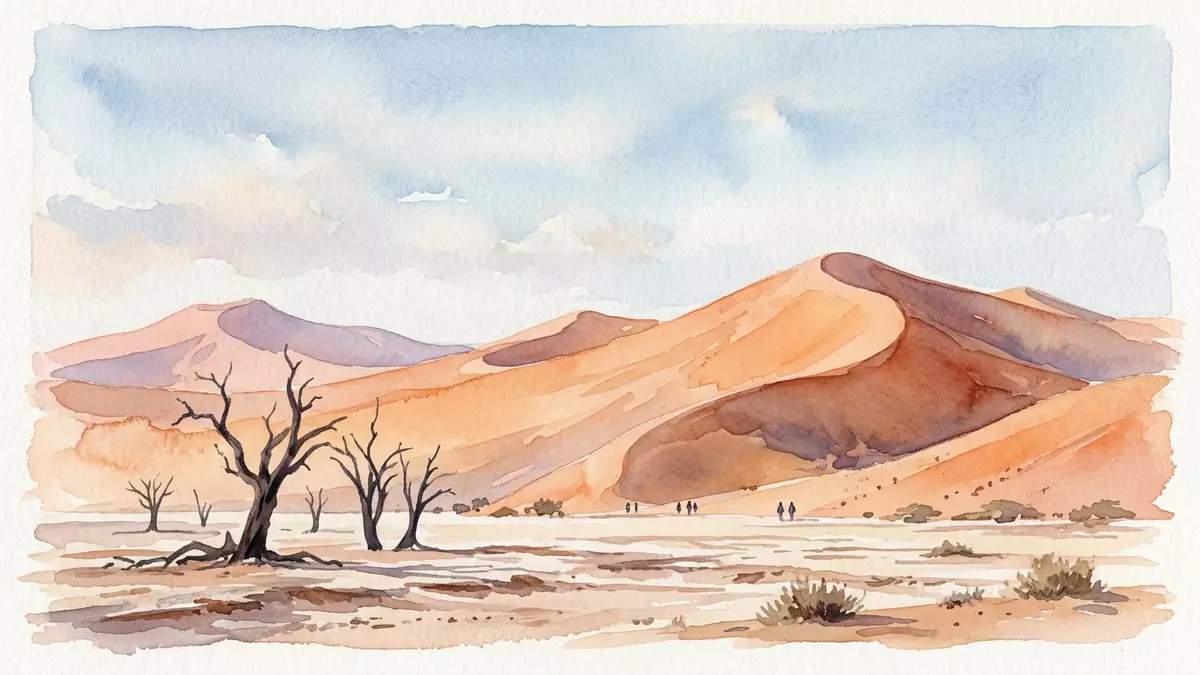
Namib Desert reaches the Atlantic coast across southern Namibia, with Sossusvlei among its most recognisable landscapes. Red dunes surround a pale clay pan, while dry channels, gravel plains and distant mountains extend across the wider desert.
Sossusvlei: a clay pan among red dunes
Sossusvlei is an endorheic pan, meaning that water entering the basin has no outlet to the sea. The ephemeral Tsauchab River ends among the dunes, reaching the pan only after substantial rain in its inland catchment. Sossusvlei’s clay pan lies in the southern Namib, within Namib-Naukluft National Park.
The pan floor contains pale silts and clay, with polygonal cracks formed as wet sediments dry. Nearby Dead Vlei has the stark remains of camel-thorn trees, preserved as dark trunks against the pale ground and orange dunes. The surrounding dunes are star dunes, shaped by winds arriving from different directions.
Quartz sand, iron oxide and ancient river courses
The orange and red colour of the dunes comes from iron oxide coating quartz grains. Sand reached the Atlantic through the Orange River and other drainage systems, then moved northwards along the coast before winds carried it inland.
Namib Desert contains both active sand seas and older geological formations. Beneath parts of the loose dunes lies the Tsondab Sandstone Formation, a partly cemented remnant of an older desert system. The Namib Sand Sea formation records changing relationships between river sediment, wind and rock across millions of years.
A fog desert beside the Atlantic
Namib Desert is a coastal desert whose landscape changes from sand seas near Sossusvlei to gravel plains, exposed bedrock and scattered mountain outcrops elsewhere. Granite, mica-schist and other metamorphic rocks form parts of the desert platform.
Fog from the Atlantic is a major source of moisture in the Namib Sand Sea. Beetles, reptiles, plants and mammals occupy habitats shaped by scarce rainfall, moving sand and coastal fog. Welwitschia mirabilis grows in the wider Namib-Naukluft landscape, alongside camel-thorn trees, shepherd’s trees and lichens.
The Namib Sand Sea entered the UNESCO World Heritage List in 2013. The protected property covers about 3,077,700 hectares, including extensive dune fields and habitats influenced by fog. Namib-Naukluft National Park also includes Sesriem Canyon, the Naukluft Mountains, gravel plains and ephemeral rivers.
Visiting Namib Desert: what travellers from Western Europe should know
- Sossusvlei lies in Namib-Naukluft National Park, south-west of Windhoek. Road journeys from the park entrance lead towards the Tsauchab River basin and the dune fields.
- The approach crosses sand, gravel and dry river terrain. Walking on dunes involves loose sand and sustained gradients, while the clay pans have exposed, cracked surfaces.
- The official language is English and the currency is the Namibian dollar.
- Entry requirements depend on your nationality; UK travellers can check the FCDO travel advice at gov.uk/foreign-travel-advice, Irish travellers the Department of Foreign Affairs at ireland.ie.
- Conditions on the mountain change with the seasons; the local cable-car operators and alpine clubs provide information.
Searching for Namib Desert on social platforms
These links open searches for Namib Desert on each platform.
Frequently asked questions about Namib Desert
Where is Namib Desert?
Namib Desert lies along the Atlantic coast of Namibia. Sossusvlei occupies its southern dune region, within Namib-Naukluft National Park.
What can visitors expect at Sossusvlei?
The landscape combines red dunes, a pale clay pan, dry channels and cracked sediment. Nearby Dead Vlei contains the dark remains of camel-thorn trees.
What makes Namib Desert distinctive?
Its coastal sand sea combines extensive dunes with Atlantic fog. The dunes, gravel plains, ephemeral rivers and fog-dependent wildlife form a desert landscape shaped by both wind and limited moisture.


