
Namib Desert dunes and pans around Sossusvlei
Published on 08/21/2026 at 22:49 | Editorial responsibility: Rafael Müller, Editor-in-Chief AD HOC NEWS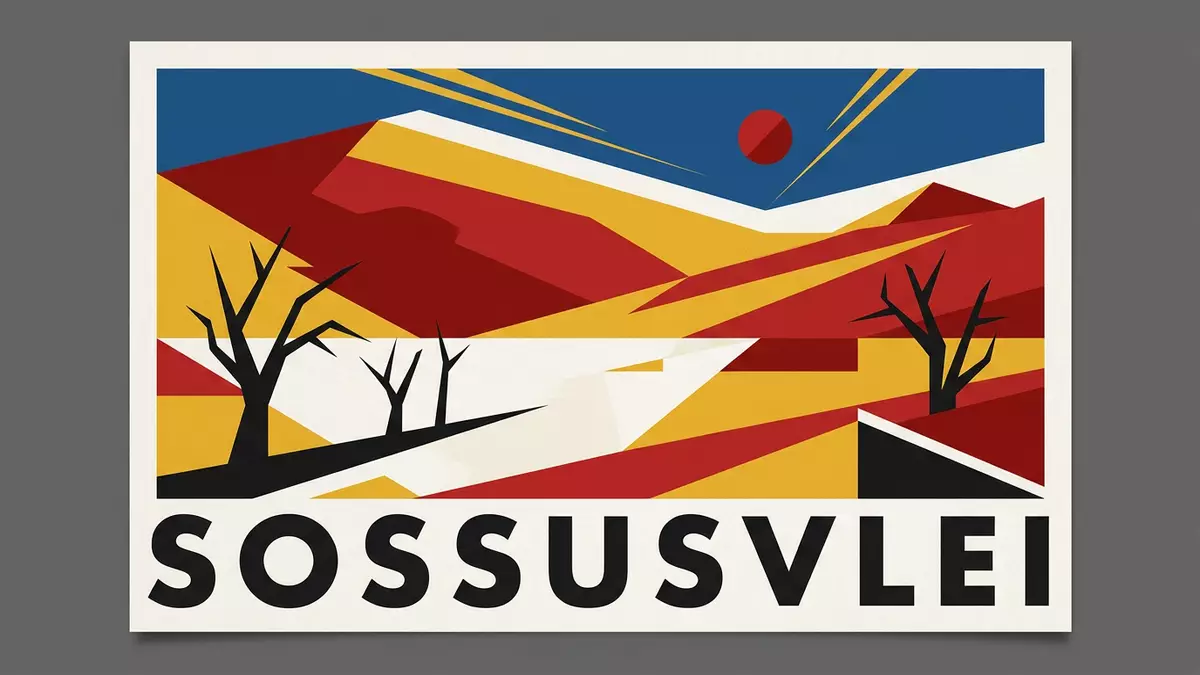
The Namib Desert around Sossusvlei in Namibia brings together high red dunes and pale clay pans in one of southern Africa’s most distinctive desert landscapes. Here, the Tsauchab River runs into a dead end among the sand, leaving a salt and clay basin ringed by dunes that have developed over millions of years in the wider Namib Sand Sea.
Red dunes, white pans and an ancient desert
Sossusvlei sits in the southern part of the Namib Desert, a coastal desert stretching along the Atlantic shore of Namibia. The basin itself is a salt and clay pan, its surface typically a cracked, pale crust that marks the point where the Tsauchab River’s course is blocked by sand coming in from the desert. The surrounding dunes rise in sweeping ridges, coloured deep orange and red by iron-rich sands that have oxidised over long periods of time.salt and clay pan The name “Sossusvlei” combines words from Nama and Afrikaans, translating as “dead-end marsh”, a reference to this blocked river and enclosed basin.dead-end marsh
The Namib Desert is widely described as one of the oldest deserts on Earth, with evidence of desert conditions dating back tens of millions of years and some estimates placing its age around 55 million years.oldest desert on Earth Within this ancient setting, the Namib Sand Sea forms a vast dune field that includes Sossusvlei and covers thousands of square kilometres inland from the coast.Namib Sand Sea This dune system overlays older semi-consolidated sands with younger, mobile dunes, giving the region a layered geological history that is visible in the contrasting colours and forms of the sand.
Dune shapes, heights and the path of the Tsauchab
The dunes around Sossusvlei reach heights that rank among the tallest sand formations anywhere, with individual ridges rising more than 300 m (about 985 ft) above the surrounding pans.dunes over 300 metres Named dunes such as Big Daddy have become reference points for the area, standing well over 300 m (about 985 ft) and offering wide views across the sand sea and the clay basins below.Big Daddy dune These ridges are made of fine quartz sand that has been shaped into long, sharp-backed forms, while further into the dune field complex star dunes develop where wind directions vary.
Sossusvlei lies at the end of the Tsauchab River, an ephemeral river that only occasionally brings water into the basin. In dry years the pan is a cracked clay floor flanked by dry riverbeds and dunes; in wetter periods the river can fill the basin, creating a short-lived lake that stands out against the desert around it.Tsauchab River basin The clay beneath the pan allows little seepage, so when water does arrive it can persist for some time before evaporating, leaving behind a fresh crust and new patterns in the dried surface.
Sand origins, colours and the wider Namib landscape
The sands of the Namib Desert around Sossusvlei trace their origins far beyond the local dune field. Sediment from southern Africa’s interior was carried down rivers such as the Orange to the Atlantic, where the Benguela Current moved it north along the coast before surf and wind brought it back ashore and inland.Benguela Current and sands Over millions of years, this cycle built up the Namib Sand Sea, with some estimates dating the sand in parts of Sossusvlei to several million years in age.millions of years old sand
The distinctive red colour of the dunes comes from a thin coating of iron oxide on the grains, deepening in tone with age and exposure. Closer to the Atlantic coast, the desert opens into gravel plains, rocky hills and lower dunes, while inland near Sossusvlei the sand forms higher ridges and complex dune shapes that reflect different wind patterns.red Namib dunes Across the broader Namib Desert biome, researchers identify fossil dune formations such as the Tsondab Sandstone, which provide evidence of ancient desert conditions and mark the long continuity of arid climates in this region.Namib Desert biome
Visiting Namib Desert: what travellers from Western Europe should know
- The Sossusvlei area of the Namib Desert lies in south-western Namibia, within Namib-Naukluft National Park, and is reached by road from towns such as Sesriem.
- Exploring the dunes and pans involves walking on soft sand and climbing slopes with significant gradients, so sturdy footwear and readiness for uneven terrain are important.
- The surrounding desert is exposed, with little natural shade away from dune bases and pans, and conditions can vary with altitude between the lower plains and higher ridges.
- The official language is English and the currency is the Namibian dollar.
- Entry requirements depend on your nationality; UK travellers can check the FCDO travel advice at gov.uk/foreign-travel-advice, Irish travellers the Department of Foreign Affairs at ireland.ie.
Searching for Namib Desert on social platforms
These links open searches for Namib Desert on each platform.
Frequently asked questions about Namib Desert
Where is the Namib Desert around Sossusvlei located?
It lies in south-western Namibia, within Namib-Naukluft National Park, in the southern part of the Namib Sand Sea where the Tsauchab River is blocked by high dunes.
What can travellers expect when visiting the Sossusvlei area?
Travellers encounter large red sand dunes, pale clay pans such as Sossusvlei and Deadvlei, and wide desert plains where walking on soft sand and exposed ground is part of the experience.
What makes the Namib Desert near Sossusvlei distinctive?
The combination of an ancient coastal desert, very high iron-rich dunes, and enclosed salt and clay pans fed by an intermittent river gives the area a recognisable character within Namibia.


