
Nanjing Confucius Temple requires reservations from 1 October
Published on 10/04/2026 at 03:06 | Editorial responsibility: Rafael Müller, Editor-in-Chief AD HOC NEWS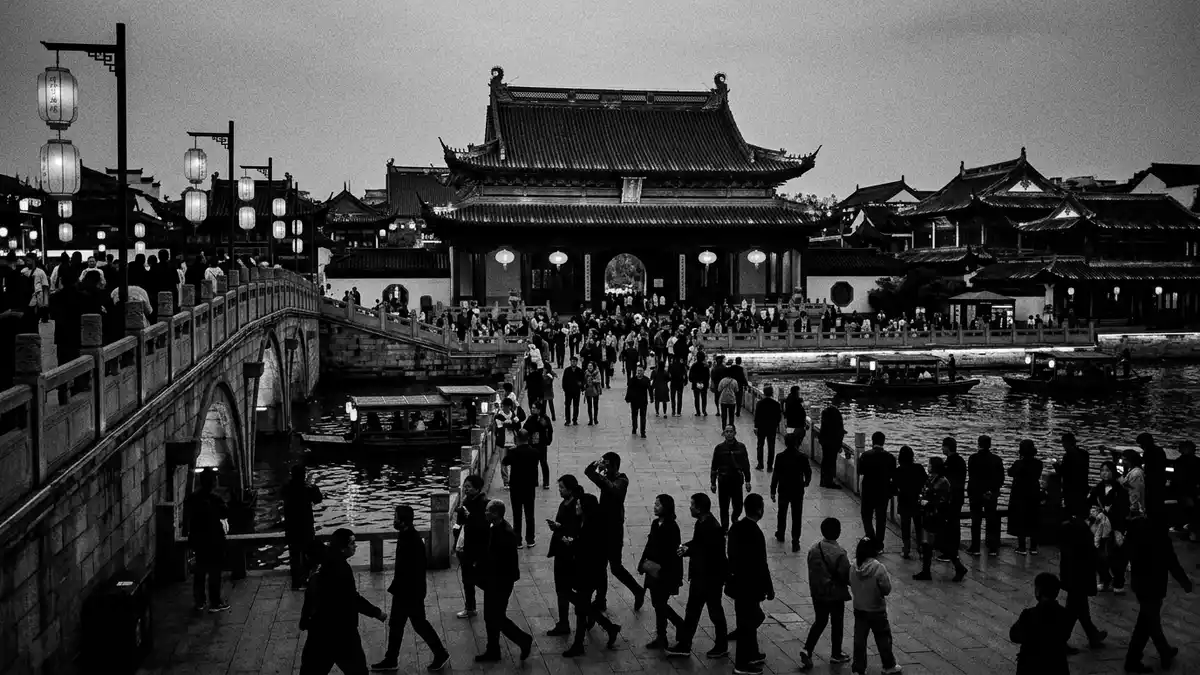
Nanjing Confucius Temple introduces reservation controls in Nanjing, China, from 1 October to 7 October 2026, covering the core visitor area during the national holiday period. The complex, also called the Confucian Temple, stands beside the Qinhuai River and forms the historic centre of the Qinhuai scenic belt.
Reservations cover Nanjing Confucius Temple from 1 October
The holiday arrangement requires visitors to reserve entry to the core area each day from 2pm to 10pm between 1 October and 7 October 2026. The area is enclosed by the East Archway, West Archway, North Archway, Wende Bridge, Wenyuan Bridge and Jinling Road, according to the holiday access announcement.
The same arrangement introduces traffic controls around the attraction. From 2pm to 10pm, private motor vehicles cannot enter the area enclosed by Jiankang Road, Zhonghua Road, Changle Road and Pingjiangfu Road, while buses, scenic-area shuttle vehicles and emergency vehicles are exempt. Large coaches face a separate restriction in the area bounded by Baixia Road, Zhongshan South Road and the Qinhuai River, with public buses and scenic-area shuttles again excluded.
Vehicles belonging to residents, businesses, diners and hotel guests can pass after registration for the relevant day or the previous day. The notice also says that traffic and security staff may adjust controls in response to visitor flows, giving the access change a direct effect on how Western European travellers reach the site during the holiday.
The Qinhuai complex links temple, academy and examination hall
The place beside the river is not a single isolated hall. The Nanjing local gazetteer describes the present complex as a combination of a Confucian temple, an academy and an examination hall, with the temple built in 1034 and the examination hall added in 1168. These dates place the reservation controls within a site whose layout reflects both ritual and education.
The national culture portal records that the temple suffered repeated destruction and reconstruction. It was severely damaged in 1937 and rebuilt with local government support in 1984, while the wider complex developed in the architectural styles associated with the Ming and Qing periods. Dacheng Hall is the principal ceremonial building, and the Jiangnan Examination Hall now contains a specialist museum on the imperial examination system.
The access rules therefore apply to a group of connected historic settings rather than only to the hall used for worship. The same arrangement that regulates arrival at the riverside visitor zone also surrounds the archways and bridges that connect the temple precinct with the academy and examination heritage of the Qinhuai riverfront.
How the 1 October access change affects the Qinhuai visit
The operator's website identifies the Confucian temple, Jiangnan Examination Hall, Mingde Hall and other historic locations as parts of the Qinhuai scenic belt. The official site also presents the area as a group of linked attractions, so a visit planned around several buildings should allow for the holiday reservation boundary rather than treating each stop as an independent entrance.
For visitors arriving by car, the published warning is clear: parking around the site is limited and driving is inconvenient during the holiday. Public transport is the recommended alternative in the announcement, but travellers should still check the reservation system and follow signs and staff directions on arrival.
Visiting Nanjing Confucius Temple: what travellers from Western Europe should know
- The access change applies from 1 October to 7 October 2026, with reservations required for the core area from 2pm to 10pm each day.
- The reservation boundary includes the East, West and North Archways, Wende Bridge, Wenyuan Bridge and Jinling Road. Unregistered vehicles cannot enter the specified control areas during the main period.
- The complex is beside the Qinhuai River in Nanjing and includes the Confucian temple, Imperial Academy and Jiangnan Examination Hall.
- Parking around the site is limited during the holiday, and the published visitor notice recommends public transport rather than driving.
- Entry requirements depend on your nationality; UK travellers can check the FCDO travel advice at gov.uk/foreign-travel-advice, Irish travellers the Department of Foreign Affairs at ireland.ie.
Searching for Nanjing Confucius Temple on social platforms
These links open searches for Nanjing Confucius Temple on each platform.
Frequently asked questions about Nanjing Confucius Temple
When do reservations apply at Nanjing Confucius Temple?
Reservations apply from 1 October to 7 October 2026 between 2pm and 10pm for the defined core visitor area.
Where is Nanjing Confucius Temple and how do you get there?
It is beside the Qinhuai River in Nanjing. The holiday notice recommends public transport because parking around the site is limited.
What is Nanjing Confucius Temple?
It is a historic complex combining a Confucian temple, an Imperial Academy and the Jiangnan Examination Hall. The temple was built in 1034, while the examination hall was added in 1168.


