
National Museum of Cambodia and its terracotta courtyards
Published on 08/24/2026 at 22:50 | Editorial responsibility: Rafael Müller, Editor-in-Chief AD HOC NEWS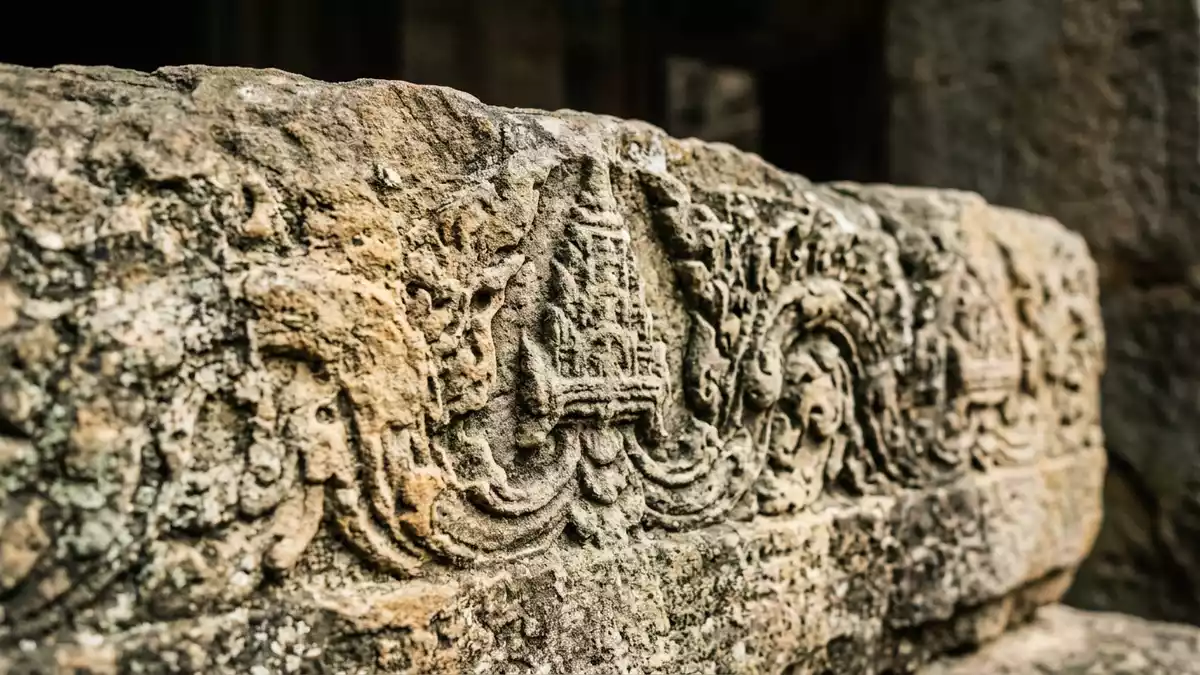
National Museum of Cambodia in Phnom Penh brings together Khmer sculpture, ceramics and ritual objects in a complex of terracotta courtyards and galleries inspired by temple architecture. Opened in 1920 during the reign of King Sisowath, it remains a central place for understanding Cambodia’s artistic heritage.
Terracotta courtyards and Khmer-inspired architecture
The museum stands just north of the Royal Palace, on Street 13 between Streets 178 and 184 in central Phnom Penh, in a block of ochre-red buildings wrapped around planted courts.The museum is located on Street 13 The layout groups roofed galleries around an open central courtyard, with further courtyards aligned along the main axes of the building.
The ensemble was conceived under French colonial administration by George Groslier, a historian of Khmer art born in Phnom Penh in 1887, who designed the museum in a style drawing from classical temple forms.George Groslier designed the building Construction began with a foundation stone laid on 15 August 1917, and the completed museum was inaugurated on 13 April 1920 during the Khmer New Year in the presence of King Sisowath.The foundation stone was laid in August 1917 The buildings use red brick and plaster, with tiered roofs, prominent spires and ornamental pediments that echo Angkor-period motifs.
From colonial Musée Albert Sarraut to national institution
When it opened in 1920, the institution carried the name Musée Albert Sarraut, reflecting its creation within French Indochina under the patronage of Governor General Albert Sarraut.The museum opened as Musée Albert Sarraut George Groslier became its first curator, overseeing the early collections and displays as archaeological work at Angkor and other Khmer sites supplied new material.Groslier served as the first director
Control of the museum shifted gradually from French to Cambodian hands, with Cambodian authorities assuming direction in the mid twentieth century.Control passed from French to Cambodian authorities In 1968, the architect Vann Molyvann, a leading figure in New Khmer Architecture, supervised a renovation of the complex, updating the fabric while retaining its characteristic courtyards and roofs.The museum was renovated in 1968 under Vann Molyvann The museum closed between 1975 and 1979 during the Khmer Rouge years and reopened to the public on 13 April 1979, following repairs to the building and restoration of displays.The museum reopened in April 1979
Khmer sculpture and collections spanning centuries
National Museum of Cambodia is described as the country’s largest museum of cultural history, with a collection that covers the full span of Cambodian artistic production from prehistoric material to post-Angkorian works.The museum houses over 14,000 objects The collection is organised into stone, metal, wood and ceramics, with sculpture from Angkor Wat, Angkor Thom and other temple sites displayed alongside bronzes, ritual objects and everyday artefacts.The collections are divided into four main categories
Among the highlights are early statues of Vishnu from Phnom Da, Angkorian sandstone figures and later Buddhist images associated with kings such as Jayavarman VII.Highlights include statues from the pre-Angkor and Angkor periods The galleries are arranged around the courtyards, so that sequences of sculpture from the Funan and Chenla periods through the Angkor empire can be viewed in relation to one another, while ceramics and bronzes show the range of Khmer craft traditions over many centuries.
Visiting National Museum of Cambodia: what travellers from Western Europe should know
- National Museum of Cambodia stands in central Phnom Penh on Street 13, immediately north of the Royal Palace, with its entrance at the corner of Street 13 and Street 178.
- The courtyards and galleries are connected by covered walkways, and some areas involve shallow steps and changes in level along the circuit of the displays.
- The official language is Khmer and the currency is the Cambodian riel.
- Entry requirements depend on your nationality; UK travellers can check the FCDO travel advice at gov.uk/foreign-travel-advice, Irish travellers the Department of Foreign Affairs at ireland.ie.
Searching for National Museum of Cambodia on social platforms
These links open searches for National Museum of Cambodia on each platform.
Frequently asked questions about National Museum of Cambodia
Where is National Museum of Cambodia located?
National Museum of Cambodia stands on Street 13 in central Phnom Penh, just north of the Royal Palace complex and close to the riverside district.
What can visitors expect inside the museum?
Visitors encounter Khmer sculptures, bronzes, ceramics and wooden artefacts arranged in galleries around planted courtyards, covering periods from early kingdoms to the post-Angkor era.
What makes National Museum of Cambodia distinctive among museums in Cambodia?
It combines Khmer-inspired architecture and terracotta courtyards with a comprehensive collection of national sculpture and artefacts, including many works relocated from Angkorian temples.


