
Ngorongoro Crater and the world within its volcanic walls
Published on 09/23/2026 at 18:22 | Editorial responsibility: Rafael Müller, Editor-in-Chief AD HOC NEWS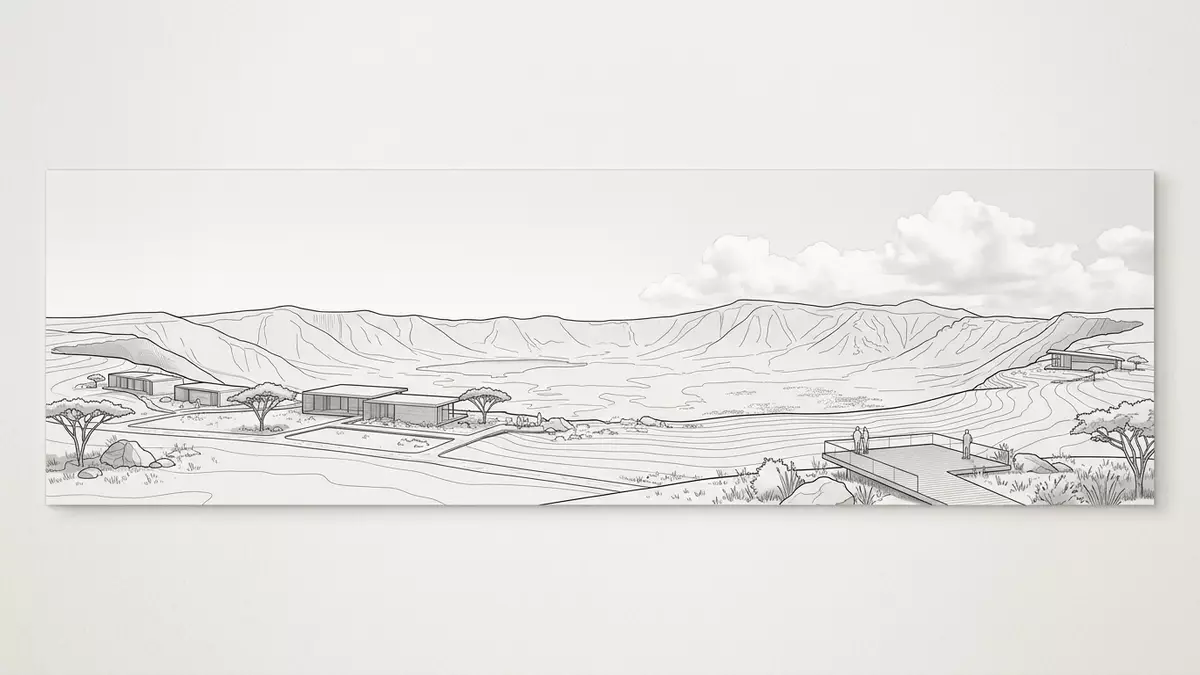
Ngorongoro Crater is a vast volcanic caldera in northern Tanzania, enclosed by steep walls and filled with grassland, wetlands, woodland and wildlife. Its broad floor measures about 260 square kilometres, while the surrounding rim rises hundreds of metres above it.
Ngorongoro Crater: a caldera shaped by collapse
The crater belongs to the Ngorongoro Conservation Area, a protected landscape in the Eastern Rift Valley. The conservation area covers 8,292 square kilometres and includes highland plains, savanna, forests, volcanic craters and archaeological sites.
Ngorongoro Crater formed when a large volcano erupted and collapsed. The event took place millions of years ago, leaving an unbroken volcanic basin with a depth of about 610 metres. UNESCO identifies it as the largest unbroken caldera in the world. largest unbroken caldera
Grassland, forest and water on the crater floor
The crater floor contains open grassland, marshes, woodland and a lake. Lerai Forest grows in the southern part of the basin, while the permanent waters of Lake Magadi form a conspicuous feature within the grasslands.
The enclosed landscape supports large mammals including zebra, wildebeest, buffalo, hippopotamus and gazelles. Lions and other predators share the same grasslands, while black rhinoceroses occur in the wider crater environment. Birdlife includes flamingos and many other species associated with wetlands and open country.
The crater is not an isolated attraction. It forms part of a much larger protected area that reaches towards the Serengeti plains and includes the highlands around Olmoti and Empakai. The wider landscape connects volcanic geology with habitats used by migrating animals.
A protected landscape shared with Maasai pastoralists
The Ngorongoro Conservation Area was established in 1959 as a multiple land-use area. Wildlife conservation exists alongside the pastoral life of semi-nomadic Maasai communities, whose livestock grazing forms part of the cultural landscape.
This combination gives Ngorongoro a character different from a wildlife reserve defined only by animals. Human history is also embedded in the surrounding area, with archaeological research recording evidence of human evolution and changing relationships between people and their environment.
Olduvai Gorge lies elsewhere within the conservation area and forms part of the same World Heritage property. The gorge preserves important archaeological evidence, while Laetoli contains early hominid footprints dating back 3.6 million years. Ngorongoro Crater itself belongs to this broader setting of geology, wildlife and human history.
The conservation area became a UNESCO World Heritage Site in 1979. Its designation covers natural and cultural values, including the crater, the wider volcanic landscape, biodiversity and archaeological evidence. multiple land-use area
Visiting Ngorongoro Crater: what travellers from Western Europe should know
- Ngorongoro Crater lies in northern Tanzania, within the Ngorongoro Conservation Area. Road journeys from Arusha approach the highlands before descending towards the crater floor.
- The crater rim sits at high altitude, and the descent roads lead down steep volcanic slopes. The crater floor contains uneven ground, open grassland and wetland areas.
- The official language is Swahili and the currency is the Tanzanian shilling.
- Entry requirements depend on your nationality; UK travellers can check the FCDO travel advice at gov.uk/foreign-travel-advice, Irish travellers the Department of Foreign Affairs at ireland.ie.
Searching for Ngorongoro Crater on social platforms
These links open searches for Ngorongoro Crater on each platform.
Frequently asked questions about Ngorongoro Crater
Where is Ngorongoro Crater?
Ngorongoro Crater is in northern Tanzania, within the Ngorongoro Conservation Area and the Arusha Region. The landscape forms part of the Eastern Rift Valley.
What can visitors expect on a visit?
Visitors encounter a volcanic basin containing grassland, wetlands, woodland and wildlife. The route from the rim to the floor follows steep roads across the crater wall.
What makes Ngorongoro Crater distinctive?
Its unbroken volcanic caldera encloses a varied landscape within steep walls. The crater also forms part of a World Heritage property combining wildlife, Maasai pastoralism and archaeological evidence.


