
Niasvizhski zamak: Radziwi?? residence in the wetlands of Neswisch
Published on 08/24/2026 at 13:08 | Editorial responsibility: Rafael Müller, Editor-in-Chief AD HOC NEWS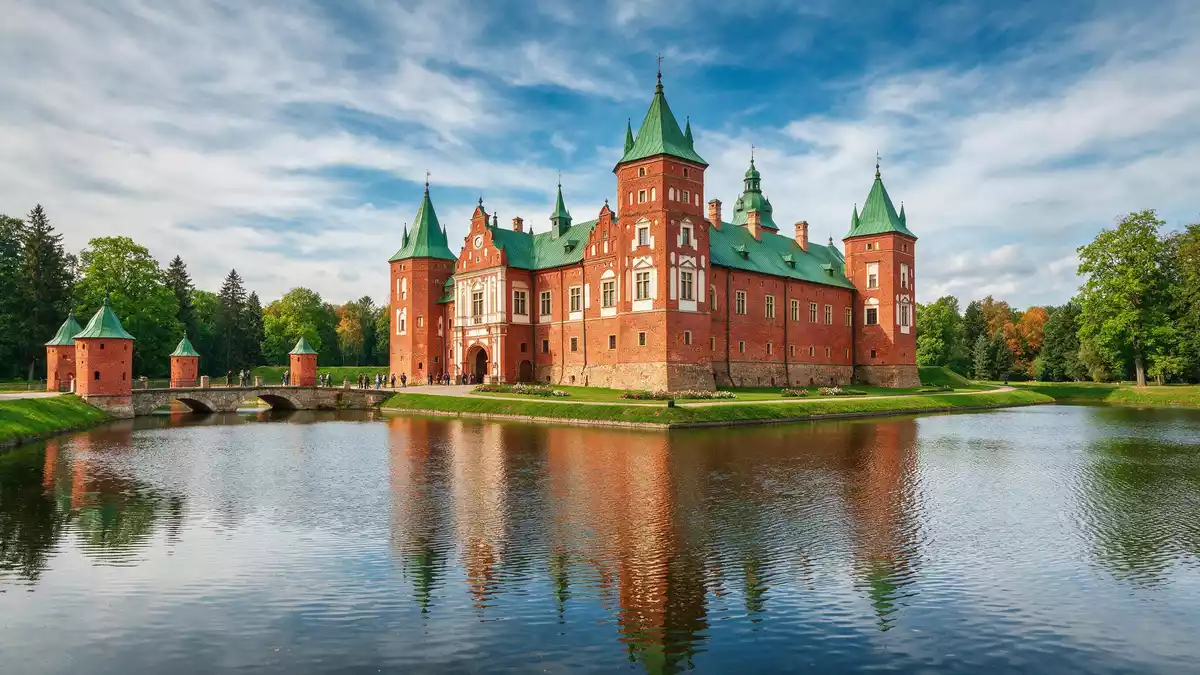
Niasvizhski zamak in Neswisch, Belarus, is a former residence of the Radziwi?? family set on an island-like platform among ponds and earthworks in central Belarus. Built as a fortified residence in the late sixteenth century, it later evolved into a palace wrapped in landscaped parks and gardens.
A Radziwi?? stronghold turned palace
Niasvizhski zamak, known in English as Nesvizh Castle, began as a masonry fortress commissioned by the magnate Miko?aj Krzysztof Radziwi?? “Sierotka” in 1583.Miko?aj Krzysztof Radziwi?? Sierotka The Radziwi??s were one of the most influential families of the Grand Duchy of Lithuania, and their residence at Neswisch reflected that status in scale and ambition.Radziwill family at Nesvizh
Construction of the stone castle started in 1583 on the outskirts of Neswisch, replacing an earlier wooden stronghold from the sixteenth century, and involved Italian architect Giovanni Maria Bernardoni in its formative phases.construction began in 1583 Over the following centuries, the complex was remodelled from a bastioned fortress into a residential château that combined Renaissance and Baroque forms, with representative wings around a central courtyard and defensive elements softened into ornamental features.remodelled in Renaissance and Baroque forms
An ensemble of castle, church and parks
Niasvizhski zamak sits in the north-eastern part of Neswisch, surrounded by a necklace of ponds and landscaped parkland that form part of a wider cultural ensemble.north-eastern part of Nesvizh The castle is linked to Corpus Christi Church, the Radziwi?? mausoleum, and surrounding service buildings, together forming the Architectural, Residential and Cultural Complex of the Radziwill Family at Nesvizh, inscribed on the UNESCO World Heritage List in 2005.UNESCO World Heritage List in 2005
The main palace block is arranged around a rectangular courtyard with façades reflecting successive phases of rebuilding, from austere defensive walls to more ornate elevations with decorative gables and corner towers.large residential château Beyond the built structures, the estate includes extensive parks shaped along water bodies and earthworks, where avenues, lawns and tree plantings frame views back towards the castle and out across the surrounding countryside.palace and park complex
Niasvizhski zamak in Belarusian history and culture
From the sixteenth to the nineteenth century, Niasvizhski zamak served as the principal residence of successive generations of the Radziwi?? princes, anchoring their role in the politics and culture of the Polish–Lithuanian Commonwealth and later regional states.residence of Radziwill princes The ensemble is recognised as a National Historical and Cultural Museum-Reserve, reflecting its importance for Belarusian heritage and its role as a repository of aristocratic life, religious patronage and architectural innovation.National Historical and Cultural Museum-Reserve Nesvizh
In the early twenty-first century the castle underwent extensive restoration, returning interiors and façades to a state that reflects documented historical appearances while consolidating structures for long-term preservation.extensively restored in the early 21st century Exhibitions and furnished rooms present the history of the Radziwi?? family and the wider region, while the fortifications, earthworks and water system remain legible in the landscape as a reminder of the site’s origin as a bastioned stronghold.historico-cultural museum-reserve
Visiting Niasvizhski zamak: what travellers from Western Europe should know
- Niasvizhski zamak stands in the town of Neswisch in central Belarus, south-west of Minsk, and is reached over causeways that cross ponds and earthworks.
- The castle complex includes bastion-like earth ramparts and courtyards connected by staircases and sloping paths, so a visit involves walking across uneven surfaces and climbing internal staircases.
- Neswisch lies among lowland countryside with ponds and parkland around the castle; in winter, snow can extend across the estate and approaches.
- The official language is Belarusian and the currency is the Belarusian rouble.
- Entry requirements depend on your nationality; UK travellers can check the FCDO travel advice at gov.uk/foreign-travel-advice, Irish travellers the Department of Foreign Affairs at ireland.ie.
Searching for Niasvizhski zamak on social platforms
These links open searches for Niasvizhski zamak on each platform.
Frequently asked questions about Niasvizhski zamak
Where is Niasvizhski zamak located?
Niasvizhski zamak is in Neswisch in the Minsk Region of central Belarus, in the north-eastern part of the town among ponds and parkland.
What can visitors expect when exploring the castle?
Visitors encounter a former Radziwi?? residence that combines fortified earthworks, courtyards, restored palace interiors and landscaped parks linked to the Corpus Christi Church.
What makes Niasvizhski zamak distinctive among Belarusian sites?
Its role as the main Radziwi?? residence, its bastion-based origins from 1583 and its UNESCO-listed ensemble of castle, church and parks make it distinctive.


