
Nikko Toshogu and the art of Edo?period splendour
Published on 08/21/2026 at 22:03 | Editorial responsibility: Rafael Müller, Editor-in-Chief AD HOC NEWS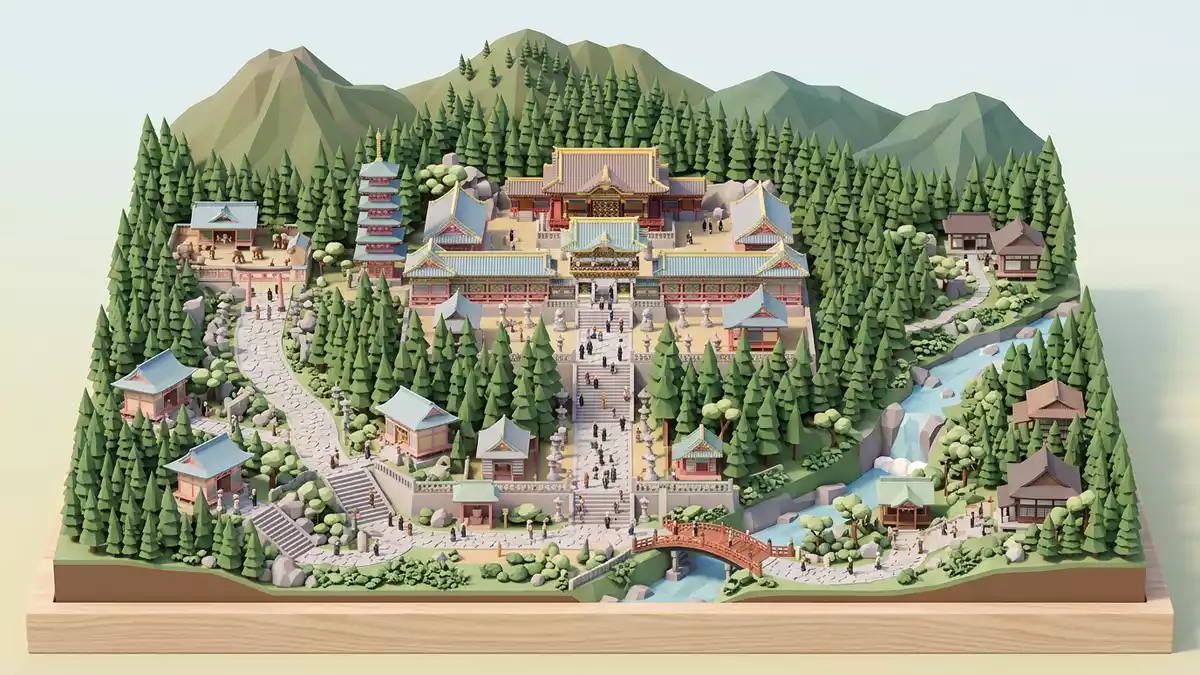
Nikko Toshogu in Nikko, Tochigi Prefecture, is a Shinto shrine complex where Tokugawa Ieyasu, founder of the Tokugawa shogunate, is enshrined amid dense forest and ornate architecture.Tokugawa Ieyasu (1543–1616) was elevated here as the deity Tosho Daigongen in the early seventeenth century.Founded in 1617 to enshrine him The shrine forms part of the “Shrines and Temples of Nikko” UNESCO World Heritage site and is known for vividly decorated buildings rising from an ancient cedar landscape.Shrines and Temples of Nikko
Edo power commemorated in carved wood and lacquer
Nikko Toshogu was established in 1617, a year after Tokugawa Ieyasu’s death in 1616, as the mausoleum shrine of the shogun whose government ruled Japan from 1603 to 1868.Built in 1617 for worshiping Ieyasu The complex developed into an expression of Edo?period religious architecture, combining Shinto and Buddhist elements on a wooded slope above the Daiya River.Architectural style of the Edo period
The main structures are built of timber, richly treated with lacquer and gold leaf, and framed by granite and stone platforms that step up the hillside. Decorative reliefs, painted beams and elaborate metal fittings cover the shrine buildings, turning structural elements into surfaces for iconography drawn from Chinese and Japanese lore.Ornate architecture and many carvings Gates, worship halls and corridors stand among tall cedar trees, so that the Edo?period ornament appears against dark trunks and filtered mountain light.
A layered precinct within Nikko’s World Heritage landscape
The shrine sits in the Sannai district of Nikko, forming one element of a wider sacred ensemble that also includes Futarasan Shrine and Rinnoji Temple.Two shrines and one temple Stone steps and processional approaches lead through successive gates into inner courtyards, with subsidiary shrine buildings and storehouses positioned along the way. The layout creates a progression from outer areas shared with other Nikko religious sites to the inner precinct where Tokugawa Ieyasu is enshrined.
Within the World Heritage nomination, one hundred three religious buildings are counted across the Nikko shrines and temple, with Nikko Toshogu representing the most elaborately decorated group of structures.One hundred three religious buildings Forested slopes rise behind the buildings, and long lines of stone lanterns and stairways follow the terrain. The natural setting forms part of the experience of the shrine, in keeping with the Shinto association between mountains, trees and the divine.Balance and harmony with nature
Craft details and symbolic imagery in Nikko Toshogu
Nikko Toshogu is known for countless carved panels, guardian figures and decorative motifs that inhabit its buildings. Reliefs of animals, mythical beings and auspicious symbols occupy transoms and beam ends, while brightly coloured patterns run along eaves and brackets.Many carvings of auspicious figures Gold leaf highlights details against red and black lacquer, and metal hardware is worked into elaborate forms on doors and railings.
The shrine’s carpenters and artisans of the Edo period produced a style in which structural rhythm and decorative richness reinforce one another. Columns, beams and rafters follow rigorous patterns, yet the variety of figures and ornament means every façade offers different details to explore. Taken together with the neighbouring shrines and temple, Nikko Toshogu illustrates how Edo?period religious architecture integrated craftsmanship, symbolism and landscape into a single sacred centre.Traditional religious centre
Visiting Nikko Toshogu: what travellers from Western Europe should know
- Nikko Toshogu stands in the Sannai area of Nikko, in Tochigi Prefecture north of Tokyo; trains on the JR and Tobu networks serve Nikk? and T?bu Nikk? stations.
- The shrine complex rises on a hillside with numerous stone steps and staircases between gates and courtyards, so movement within the precinct involves sustained climbing on uneven surfaces.
- The grounds are set among tall cedar trees and other forest vegetation, and paths link Nikko Toshogu with the nearby Futarasan Shrine and Rinnoji Temple within the wider sacred area.
- The official language is Japanese and the currency is the Japanese yen.
- Entry requirements depend on your nationality; UK travellers can check the FCDO travel advice at gov.uk/foreign-travel-advice, Irish travellers the Department of Foreign Affairs at ireland.ie.
Searching for Nikko Toshogu on social platforms
These links open searches for Nikko Toshogu on each platform.
Frequently asked questions about Nikko Toshogu
Where is Nikko Toshogu located?
Nikko Toshogu stands in the Sannai district of Nikko in Tochigi Prefecture, on a forested hillside that also contains Futarasan Shrine and Rinnoji Temple.Nikko Toshogu Shrine in Nikko
What should visitors expect inside the shrine complex?
Visitors encounter sequences of gates, worship halls and storehouses connected by stone steps and terraces, all richly decorated with carvings, lacquer and gold set among tall cedar trees.Ornate shrine buildings
What makes Nikko Toshogu distinctive among Japanese shrines?
Nikko Toshogu combines the mausoleum of Tokugawa Ieyasu with an exceptionally elaborate Edo?period architectural style, and forms part of a UNESCO?recognised ensemble of shrines and a temple in Nikko.UNESCO World Heritage inscription


