
Palafitos de Chiloe, colourful stilt houses along Castro’s tidal waterfront
Published on 08/24/2026 at 19:21 | Editorial responsibility: Rafael Müller, Editor-in-Chief AD HOC NEWS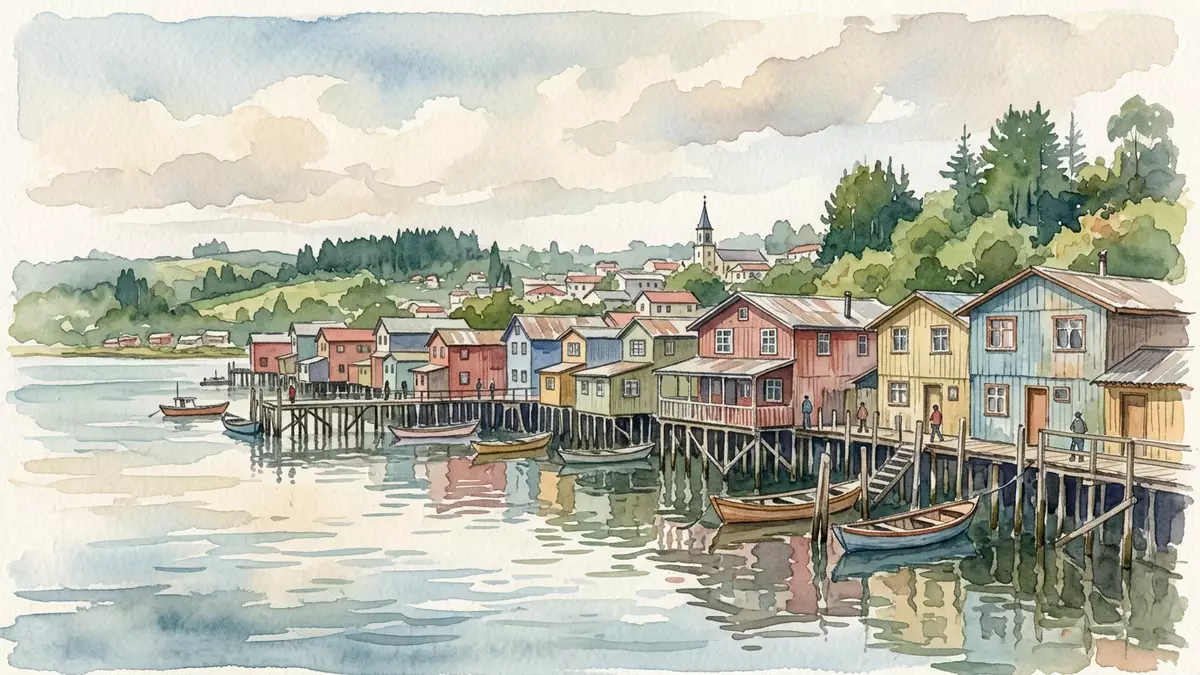
Palafitos de Chiloe are traditional timber houses raised on wooden stilts along the waterfront of Castro, the capital of the Chiloé Archipelago in southern Chile. Their double-facing form, with one side to the street and another directly over the tidal channels, makes this cluster of stilt houses one of the most distinctive urban landscapes in the region, rooted in nineteenth-century coastal life and still visibly tied to the rhythm of the sea.
Timber architecture between land and tide
The defining feature of Palafitos de Chiloe is their structure: wooden houses set on thick piles driven into the shoreline, so that part of each dwelling stands above the water at high tide. Many are clad in native timber shingles, especially alerce, a long-lasting wood traditionally used for roofs and facades in Chiloé’s humid climate.architecture of the palafitos The piles under the houses often use dense woods such as luma or cypress from Guaitecas, chosen for their durability in brackish water.
Each palafito presents two distinct fronts. The landward side faces the street and connects to solid ground via wooden walkways or bridges, while the seaward side extends over the channel with a terrace that serves as a working platform and outdoor space.wooden houses and larch tiles Beneath these terraces, a lower level reaches towards the water, historically used for tasks linked to fishing and shellfish gathering when the tide allowed boats to moor directly under the house.
Historical roots of Castro’s stilt-house districts
Palafitos de Chiloe are part of a wider vernacular tradition of building over water in Chiloé, shaped by a landscape where access to the sea was central to daily life. Research on Chiloé’s coastal settlements points to the emergence of palafitos as an architectural response on shorelines where land and sea interlock, with houses connected both to the town and to a terrace that doubles as a small pier for boats.entre tierra y mar The surviving districts around Castro are closely linked to this pattern.
Many palafitos in Castro date from the nineteenth century, a period when the town expanded along the waterfront and fishing communities consolidated their presence on the tidal edges of the bay.stilt houses of Chiloé Studies of the palafito neighbourhoods describe them as part of the vernacular architecture of the Los Lagos Region, with surviving examples concentrated in Castro and, beyond the main island, in places such as Mechuque within the Chiloé Archipelago.barrios de palafitos de Castro
Gamboa and Pedro Montt: colourful waterfronts in Castro
In Castro, Palafitos de Chiloe are not scattered randomly but form recognisable waterfront districts. The densest and most frequently photographed clusters stand along the Gamboa River and the bay-facing stretch of Pedro Montt Street, where rows of wooden houses rise on stilts above the tidal edge.palafitos in the Gamboa and Pedro Montt areas Here, facades painted in strong colours line up over the water, giving the shoreline a distinctive patchwork appearance when seen from the opposite bank.
The Gamboa neighbourhood offers one of the clearest views of Palafitos de Chiloe, as the stilt houses can be observed across the river, set against the slope of Castro above the shore.stilt houses in Gamboa and Pedro Montt Along the waterfront, some houses remain private dwellings, while others have been converted into small lodgings or hospitality venues, but the basic form of timber construction on stilts continues to define the appearance of these districts.
Visiting Palafitos de Chiloe: what travellers from Western Europe should know
- Palafitos de Chiloe stand along the waterfront of Castro on the Isla Grande de Chiloé in southern Chile, particularly in the Gamboa and Pedro Montt neighbourhoods, reached by road connections from Puerto Montt across the Chacao Channel.
- The stilt-house districts follow the tidal shoreline, with sloping streets and wooden walkways; viewing points along the opposite bank and the waterfront require short walks on uneven ground and simple steps.
- The official language is Spanish and the currency is the Chilean peso.
- Entry requirements depend on your nationality; UK travellers can check the FCDO travel advice at gov.uk/foreign-travel-advice, Irish travellers the Department of Foreign Affairs at ireland.ie.
Searching for Palafitos de Chiloe on social platforms
These links open searches for Palafitos de Chiloe on each platform.
Frequently asked questions about Palafitos de Chiloe
Where are Palafitos de Chiloe located?
Palafitos de Chiloe line parts of the waterfront of Castro, the main town on the Isla Grande de Chiloé in southern Chile, particularly along the Gamboa River and the bay-side stretch of Pedro Montt Street.
What can visitors expect when viewing Palafitos de Chiloe?
Visitors see rows of timber houses raised on wooden stilts over tidal channels, with brightly painted facades and terraces over the water, set against the slopes and streets of Castro’s coastal districts.
What makes Palafitos de Chiloe distinctive compared with other coastal architecture?
Palafitos de Chiloe combine double-facing houses linked both to the street and directly to the tidal water, using native timber construction on piles to form continuous waterfront districts that remain visibly shaped by the changing level of the sea.


