
Palau de l'Almudaina and Palma’s Gothic royal palace
Published on 09/23/2026 at 09:01 | Editorial responsibility: Rafael Müller, Editor-in-Chief AD HOC NEWS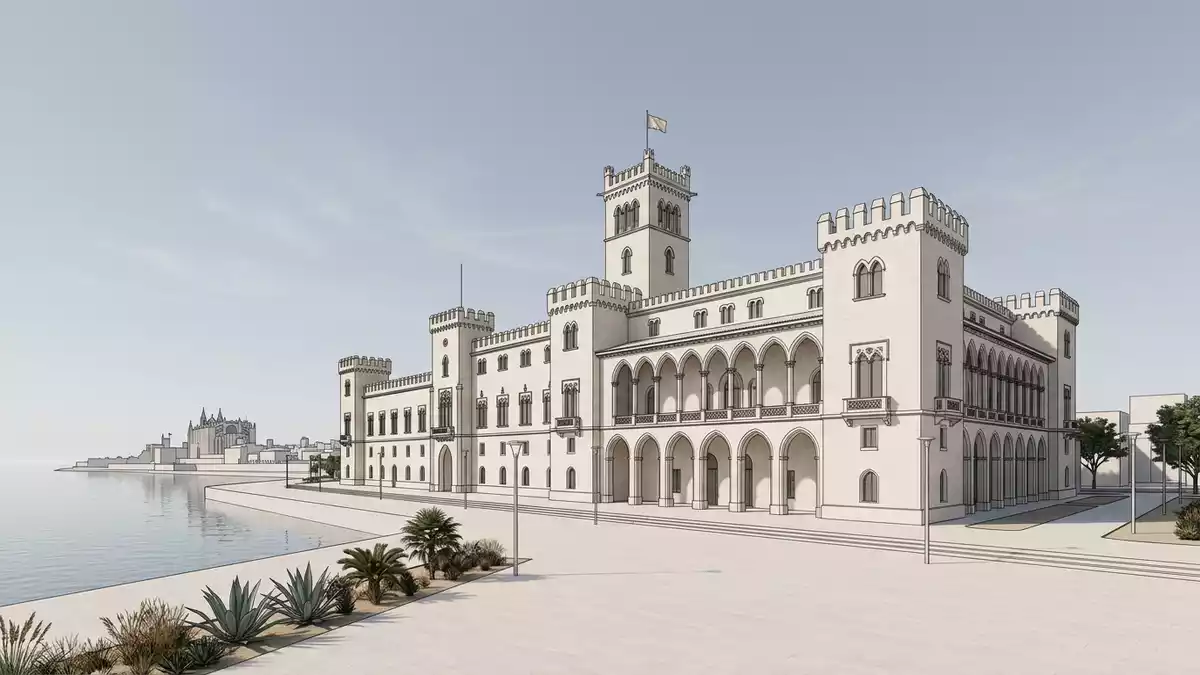
Palau de l'Almudaina rises beside Palma Cathedral as a stone palace with two architectural identities. Its walls preserve the outline of a Muslim citadel, while its halls, chapel and towers carry the Gothic form created for the kings of Majorca.
Palau de l'Almudaina: a citadel beside Palma Cathedral
Palau de l'Almudaina occupies the Carrer del Palau Reial in Palma’s historic centre. The palace faces the waterfront district and stands directly beside La Seu, the city’s cathedral, creating a concentrated view of Mallorca’s religious and royal architecture.
The name derives from the Arabic word for citadel. During Muslim rule, the complex formed part of Madina Mayurqa, the medieval city that occupied Palma. Its surviving fabric includes fortified walls, towers, courtyards and rooms arranged around the older defensive core. the Muslim citadel belongs to the palace’s visible historical structure.
Jaume II and the Gothic palace of Majorca
The palace’s dominant appearance belongs to the Christian rebuilding associated with Jaume II, king of Majorca. Work between 1305 and 1314 transformed the fortified complex into a royal residence with Gothic halls, chapels and ceremonial spaces.
Levantine Gothic shapes the exterior, with strong rectangular towers and long stone elevations. Inside, Mudéjar details remain alongside Gothic elements, creating a layered interior rather than a single uniform style. The Chapel of Santa Anna forms a prominent religious space within the complex, while the halls retain the scale of a medieval court. Jaume II’s rebuilding established the palace form associated with the Kingdom of Majorca.
Royal residence, court and state palace
Palau de l'Almudaina served the monarchs of Majorca before the island became part of the Crown of Aragon. Aragonese rulers and Spanish monarchs continued to use the complex, preserving its role as a royal and administrative centre.
From the sixteenth century, the building also accommodated courts, the viceroy and the captain general of the Balearic Islands. Charles V is associated with the construction of an upper floor during the early sixteenth century. The palace remains an official residence of the Spanish royal family and is used for formal ceremonies and receptions. the official royal residence connects the medieval building with Spain’s present constitutional monarchy.
Visiting Palau de l'Almudaina: what travellers from Western Europe should know
- Palau de l'Almudaina is on Carrer del Palau Reial in central Palma, directly beside Palma Cathedral and close to the waterfront.
- The approach leads through Palma’s historic centre, where stone streets connect the palace precinct with La Seu and the surrounding old town.
- The palace contains courtyards, towers, Gothic halls and the Chapel of Santa Anna. Surfaces and stairs reflect a medieval fortified building.
- The official language is Spanish and Catalan, and the currency is the euro.
Searching for Palau de l'Almudaina on social platforms
These links open searches for Palau de l'Almudaina on each platform.
Frequently asked questions about Palau de l'Almudaina
Where is Palau de l'Almudaina?
Palau de l'Almudaina is on Carrer del Palau Reial in Palma’s historic centre. It stands directly beside Palma Cathedral and near the waterfront.
What can visitors expect inside?
The palace contains fortified walls, courtyards, Gothic halls, towers and the Chapel of Santa Anna. Mudéjar details appear alongside the Gothic architecture.
What makes the palace distinctive?
Its stone fabric combines a Muslim citadel with the Gothic royal residence rebuilt under Jaume II between 1305 and 1314.


