
Parc Guell: Gaudí’s hillside mosaic landscape in Barcelona
Published on 09/09/2026 at 09:39 | Editorial responsibility: Rafael Müller, Editor-in-Chief AD HOC NEWS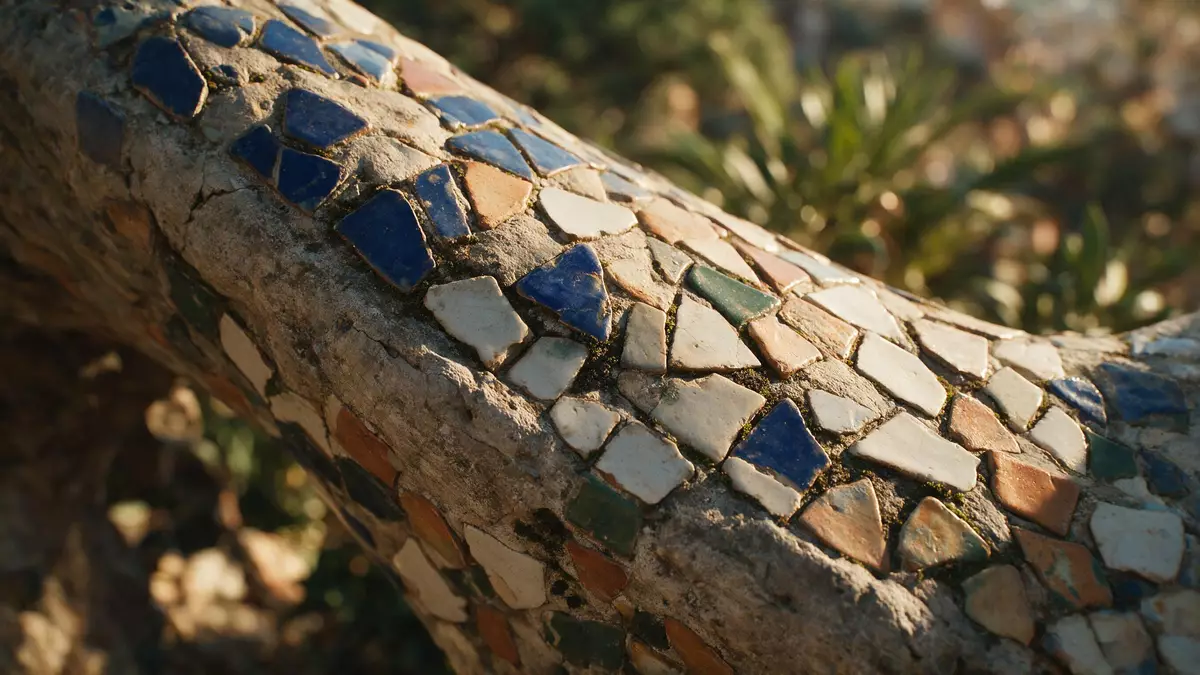
Parc Guell in Barcelona is a hillside park where Antoni Gaudí turned a failed garden city project into a sweeping landscape of mosaics, terraces and winding paths. Conceived around 1900 for the industrialist Eusebi Güell, it was built in the early twentieth century and later became a municipal park recognised as part of Gaudí’s “Works of Antoni Gaudí” World Heritage listing by UNESCO in 1984. The result is a place where architecture, colour and topography are interwoven on a broad slope above the city.
A garden city experiment on Barcelona’s Carmel Hill
Parc Guell occupies Carmel Hill in the Gràcia district, a steep site that Eusebi Güell acquired at the turn of the twentieth century for an ambitious garden city. He commissioned Antoni Gaudí, the leading figure of Catalan modernism, to shape the estate starting in 1900.Eusebi Güell commissioned Antoni Gaudí Gaudí worked on the park between 1900 and 1914, laying out streets, viaducts, terraces and entrances on the rugged terrain.constructed between 1900 and 1914
The original plan envisioned a residential estate of villas surrounded by gardens, connected by curving roads and paths following the hillside. Only a fraction of the planned houses was built, but the infrastructure of walls, viaducts and landscaped levels was largely realised. In 1926 Parc Guell opened as a public park, when the City Council turned the private estate into a municipal space overlooking Barcelona.inaugurated as a public park in 1926
Entrances, stairway and the mosaic dragon
The most recognised approach to Parc Guell is through the monumental entrance on Carrer d’Olot, where two gatehouses flank a broad stairway rising into the park. These entrance pavilions, built in the early years of construction, combine undulating rooflines, textured surfaces and chimney-like elements characteristic of Gaudí’s style.two entrance pavilions and main stairway completed by 1903 Between them, the double flight of steps forms a ceremonial axis leading towards the large terrace above.
On this stairway sits the park’s celebrated mosaic creature known as El Drac, a reptilian figure covered in broken ceramic tiles, functioning historically as a fountain connected to an underground cistern.mosaic dragon on the entrance staircase Around it, further sculpted forms and alcoves are similarly clad in colourful trencadís, the Catalan technique of using fragmented tiles to create shimmering surfaces. The stairway’s composition, together with the gatehouses, announces the transition from city street to Gaudí’s designed landscape.
Hypostyle Room, terrace and parkland
Above the stairway lies the Hypostyle Room, a forest of columns originally intended to support a marketplace for the estate’s residents.Hypostyle Room envisaged as a marketplace Its roof carries a broad open terrace known as Plaça de la Natura, edged by an undulating bench clad in trencadís that follows the terrace perimeter.serpentine bench around the terrace From this terrace, visitors see the city and the sea framed by the park’s structures, with the bench providing continuous seating while reading as a sculptural line in its own right.
Beyond the monumental zone, Parc Guell extends over hectares of sloping ground with paths, viaducts and planted areas weaving through the hillside. Stone structures rise from the terrain to carry walkways and frame viewpoints, while the planting mixes trees and shrubs adapted to the Mediterranean climate. The park’s layout encourages movement between more formally composed spaces near the entrance and quieter slopes further up Carmel Hill.
Modernist heritage and UNESCO recognition
Parc Guell forms part of a wider group of Gaudí works in and around Barcelona that illustrate Catalan modernism at the turn of the twentieth century. UNESCO recognised seven properties built by Gaudí for their creative contribution to architecture and building technology in this period, inscribing them collectively under the title “Works of Antoni Gaudí” in 1984.Works of Antoni Gaudí listing Parc Guell’s inclusion reflects both its architectural features and the way they are integrated into a designed landscape.
The park had already been recognised as an artistic monument in Spain in 1969, underscoring its heritage status long before mass international attention.recognised as an artistic monument in 1969 Today it stands alongside Casa Batlló, Casa Milà and other Gaudí works as part of Barcelona’s architectural identity, with Parc Guell distinguished by its combination of parkland, infrastructure and sculptural details on a prominent hill.
Visiting Parc Guell: what travellers from Western Europe should know
- Parc Guell lies on Carmel Hill in the Gràcia district of Barcelona, north of the city centre, with access by city streets and public transport serving the surrounding neighbourhood.
- The park is built on a hillside with gradients, stepped approaches and uneven paths; reaching the monumental entrance and upper terraces involves walking on inclines and stairways.
- From the main terrace above the Hypostyle Room, wide views open over Barcelona’s urban fabric towards the Mediterranean, with the park’s structures framing both city and sea.
- The official language is Spanish and the currency is the euro (EUR), with Catalan also widely used in public signage and local communication.
Searching for Parc Guell on social platforms
These links open searches for Parc Guell on each platform.
Frequently asked questions about Parc Guell
Where is Parc Guell located within Barcelona?
Parc Guell stands on Carmel Hill in the Gràcia district of Barcelona, occupying a large hillside area above the northern part of the city.
What should visitors expect during a visit to Parc Guell?
A visit involves walking through a designed landscape of mosaic-clad structures, terraces, stairways and parkland on sloping ground, with views over Barcelona and the Mediterranean.
What makes Parc Guell distinctive among Gaudí’s works?
Parc Guell is distinctive as a Gaudí project that combines infrastructure, sculptural architecture and extensive parkland, forming a World Heritage listed hillside landscape rather than a single building.


