Parc national des Calanques and Marseille’s limestone coast
Published on 08/07/2026 at 15:05 | Editorial responsibility: Rafael Müller, Editor-in-Chief AD HOC NEWS
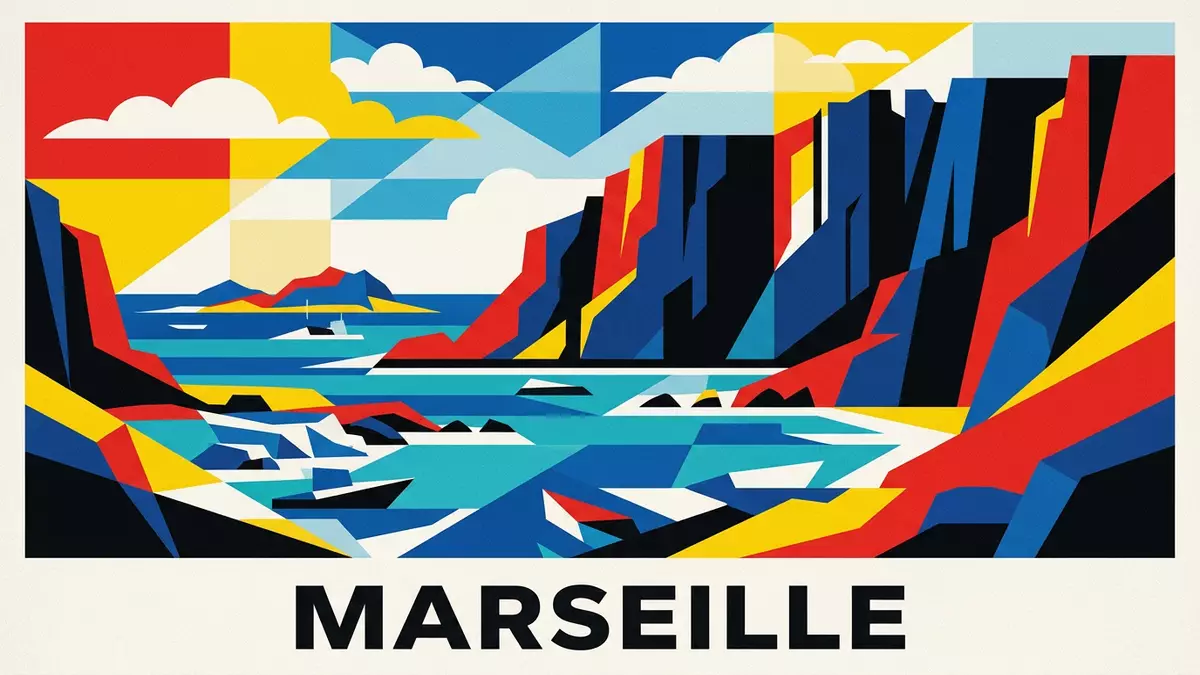
Parc national des Calanques stretches along the Mediterranean edge of Marseille, where pale limestone cliffs drop into narrow inlets and small bays. It is a landscape of rock, scrub and water, shaped by the long meeting of land and sea, with the Vieux-Port city close by.
Limestone cliffs and sea in one park
The calanques themselves are steep-sided coves cut into the coast, with white rock, blue water and rough paths between them. The park also includes offshore and inland areas, so the experience is broader than a single shoreline.
Gorges, headlands and sheltered beaches sit beside exposed slopes covered with Mediterranean vegetation. That mix gives the park its strongest visual contrast: hard rock, open water and low, aromatic growth in a compact space.
A protected coast around Marseille
Parc national des Calanques was created in 2012, making it France’s first national park that includes both terrestrial and marine areas around a major city. The setting brings together Marseille, Cassis and the coast between them.
The park’s identity is tied to the French Mediterranean, not to a single viewpoint or beach. Limestone formations, clear coves and scrubland give it a distinct coastal character that changes from one inlet to the next.
Walks, climbing and sea access
Paths lead through the hills and down to coves, while the sea brings in kayaking, swimming and boat access. Some areas are accessible by road from Marseille, and others ask for a longer approach on foot.
Climbers also use the cliffs, and the park’s rough terrain means sturdy shoes are sensible on many routes. The landscape rewards slow movement, because rock shelves, drop-offs and uneven paths are part of the scene.
Visiting Parc national des Calanques: what travellers from Western Europe should know
- It lies on the coast between Marseille and Cassis, and is reached from Marseille by road, footpaths and boat services.
- Admission arrangements and opening hours are set by the site's operator and change with the season; the official website is the only binding source.
- Late spring and early autumn suit walking and coastal views, while summer brings stronger sun on exposed limestone.
- The terrain includes steep steps, rocky paths and longer walks, so firm footwear and water are sensible.
- French is the main language in the area, and cashless payment is common in Marseille and nearby towns.
- Entry requirements depend on your nationality. UK travellers should check the FCDO travel advice at gov.uk/foreign-travel-advice; Irish travellers the Department of Foreign Affairs at ireland.ie; EU and EEA citizens their own national foreign ministry.
Searching for Parc national des Calanques on social platforms
These links open searches for Parc national des Calanques on each platform.
Frequently asked questions about Parc national des Calanques
Where is Parc national des Calanques?
It runs along the coast south-east of Marseille and reaches towards Cassis. The park combines sea, cliffs and scrub-covered hills.
What should travellers expect on a visit?
Expect rocky paths, steep sections and strong sun on exposed ground. Some coves are reached by walking, while others can be approached by road or boat.
What makes it distinctive?
The park brings limestone cliffs and Mediterranean water together in a protected coastal landscape. Its mix of urban edge, coves and marine areas gives it a strong sense of place.