
Pelourinho Salvador and its colonial streetscapes
Published on 08/22/2026 at 21:24 | Editorial responsibility: Rafael Müller, Editor-in-Chief AD HOC NEWS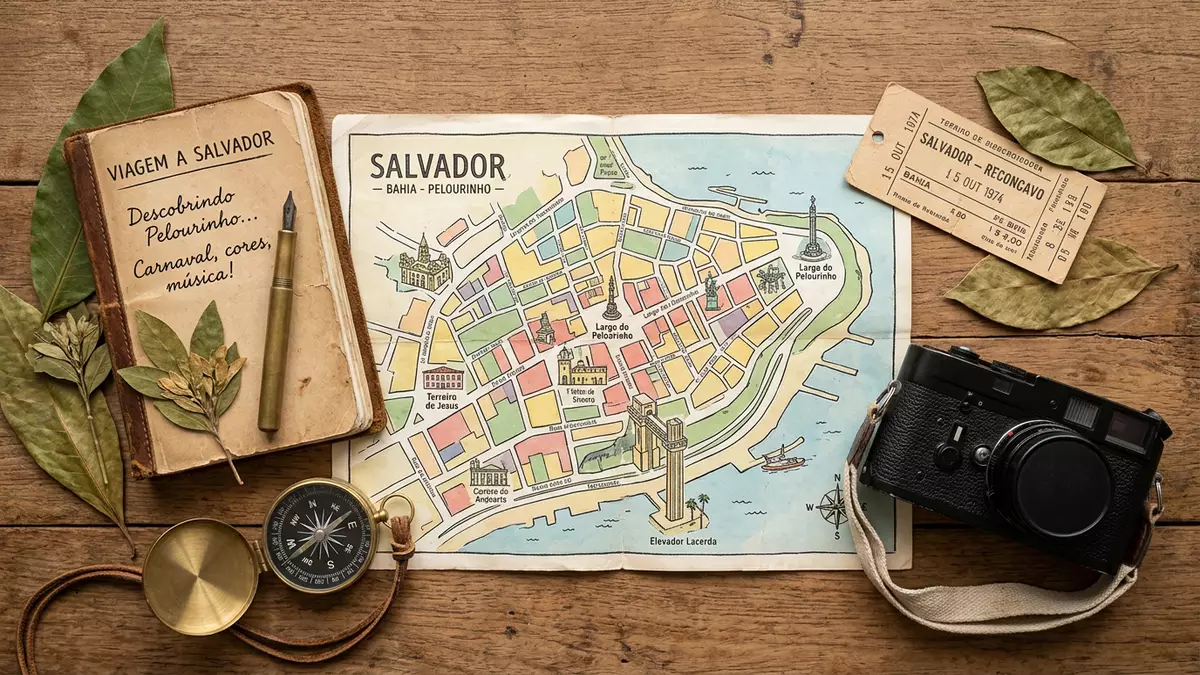
Pelourinho in Salvador, in north-eastern Brazil, is the historic neighbourhood where steep cobbled streets, pastel-coloured townhouses and ornate churches climb the hillside above Baía de Todos-os-Santos. Rising in the Cidade Alta, the upper city, it forms a core part of the Historic Centre of Salvador de Bahia, recognised as a UNESCO World Heritage Site since 1985 for its colonial urban fabric and architecture.
A colonial hill town above the bay
Pelourinho occupies a section of Salvador’s upper historic centre, on ground that drops sharply towards the waterfront of Baía de Todos-os-Santos. The quarter sits within the broader Historic Centre of Salvador de Bahia, whose protected area preserves a street plan that dates back to the sixteenth century, with narrow lanes, stepped alleys and small squares laid out along the ridge.Historic Centre of Salvador de Bahia From the lower city and port district, the Elevador Lacerda links the waterfront to the upper plateau, delivering visitors close to the ensemble of townhouses and churches that define Pelourinho.Elevador Lacerda
The neighbourhood’s setting on the cliff edge gives many of its streets long views over the bay, while within the quarter the focus is on façades and stonework. Pastel-painted houses stand shoulder to shoulder along the gradients, their doors opening directly onto cobbles or shallow steps. At key junctions, broader squares such as Largo do Pelourinho and Terreiro de Jesus create pauses in the dense fabric, framed by civic buildings and religious complexes that belong to the same colonial period.
Churches, sobrado mansions and Portuguese Baroque
The built character of Pelourinho is shaped by its colonial townhouses, known locally as sobrados, and by a concentration of churches that reflect Portuguese Baroque and related styles in Brazil. Many of the mansions once belonged to sugar mill owners, merchants and officials, and their elevations carry simple stucco ornament, balconies and tall sash windows above ground-floor doorways.colonial mansions and sobrados The homogeneity of these constructions, most of them dating from the seventeenth to nineteenth centuries, is part of what led to the UNESCO inscription of the wider historic centre.UNESCO-protected urban fabric
Among the religious buildings, the Church and Convent of São Francisco stands out for its richly decorated interior and tiled cloisters, while the Catedral Basílica and the Church of the Third Order of Our Lady of the Rosary of the Black People contribute further towers and façades to the skyline.Church and Convent of São Francisco Together with civic structures such as the former medical school and historic government buildings, these complexes illustrate the mix of religious, administrative and commercial functions carried by Pelourinho during the Portuguese colonial era.
Name, memory and Afro-Brazilian culture
The name Pelourinho derives from the stone pillar, or pillory, that once stood in the main square and served as a post for public punishment during the centuries of the transatlantic slave trade.origin of the name Pelourinho Slavery in Brazil was formally abolished in the nineteenth century, but the architecture and street pattern of this part of Salvador still reflect the period when the city was a colonial administrative centre and port receiving enslaved Africans.
Over time Pelourinho has become strongly associated with Afro-Brazilian cultural life, in particular through music and performance. Drumming groups such as Olodum and capoeira circles use its squares and streets as stages, while museums and cultural centres in converted mansions explore the history of Bahia’s African-descended communities.Afro-Brazilian cultural heritage The presence of these institutions alongside churches and townhouses makes Pelourinho a place where architectural conservation and living cultural traditions intersect.
Visiting Pelourinho: what travellers from Western Europe should know
- Pelourinho lies in the upper historic centre of Salvador, in the Brazilian state of Bahia, above Baía de Todos-os-Santos and close to the Elevador Lacerda linking the port to the Cidade Alta.
- The streets are cobbled and frequently steep, with stepped alleys and uneven surfaces; walking between squares and churches involves gradients and short flights of stone steps.
- Pelourinho forms part of the wider Historic Centre of Salvador de Bahia, so visits can combine its pastel townhouses with nearby viewpoints over the bay and adjacent neighbourhoods such as Sé and São Bento.
- The official language is Portuguese and the currency is the Brazilian real.
- Entry requirements depend on your nationality; UK travellers can check the FCDO travel advice at gov.uk/foreign-travel-advice, Irish travellers the Department of Foreign Affairs at ireland.ie.
Searching for Pelourinho on social platforms
These links open searches for Pelourinho on each platform.
Frequently asked questions about Pelourinho
Where is Pelourinho in Salvador?
Pelourinho is a historic neighbourhood in the upper city of Salvador, in the Brazilian state of Bahia, forming part of the UNESCO-listed Historic Centre of Salvador de Bahia.
What should visitors expect in Pelourinho?
Visitors encounter steep cobbled streets lined with pastel sobrado mansions, colonial churches, small squares and a concentration of museums and cultural centres in converted historic buildings.
What makes Pelourinho distinctive among Brazilian historic districts?
Pelourinho combines a largely intact colonial street plan and Portuguese Baroque architecture with Afro-Brazilian cultural institutions and performances, set on a hillside overlooking Baía de Todos-os-Santos.


