
Persepolis and the stone terraces of the Achaemenid kings
Published on 08/23/2026 at 12:09 | Editorial responsibility: Rafael Müller, Editor-in-Chief AD HOC NEWS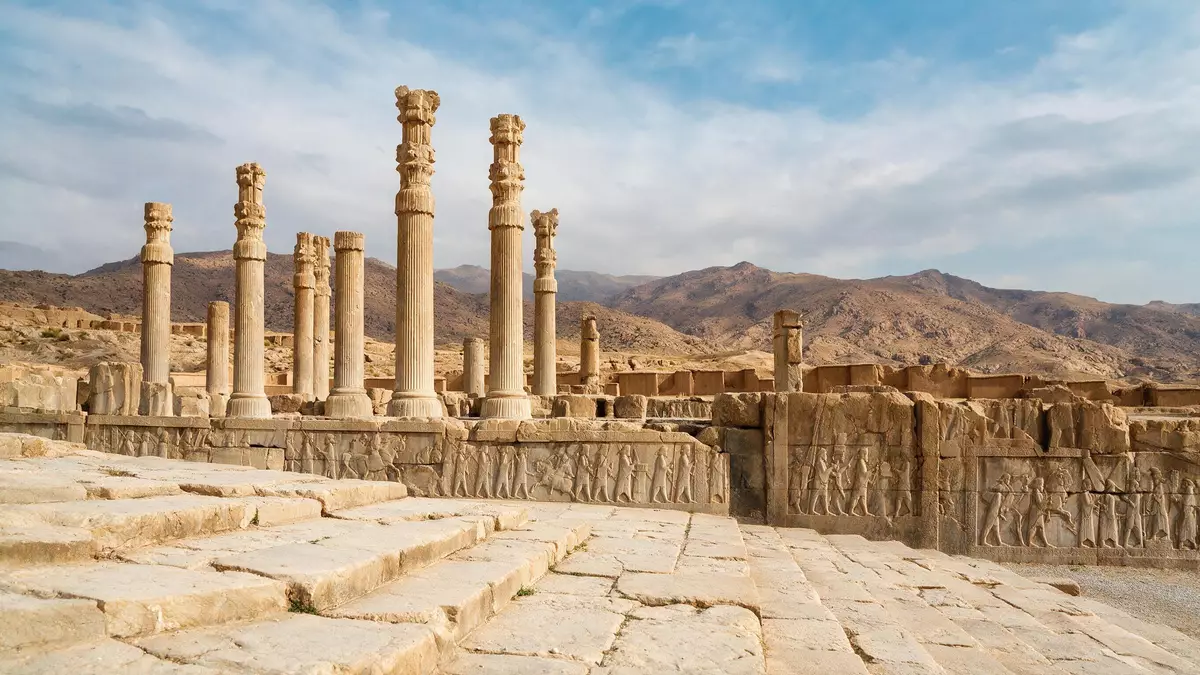
Persepolis near Shiraz in southern Iran is the ruined ceremonial capital of the Achaemenid Empire, raised on a broad stone terrace against the slopes of Kuh-e Rahmat.
Terraces, staircases and the setting in Fars
Persepolis stands in the plains of Marvdasht in Fars province, framed by the southern Zagros Mountains and close to rivers that once supplied the royal city with water.The site lies north-east of Shiraz and rises on an immense half-artificial, half-natural platform cut into the rock.The terrace is backed by Kuh-e Rahmat and carries the palaces, halls and gateways that once formed the heart of the Persian court.
The platform is approached by broad ceremonial staircases whose low steps carry visitors steadily up from the surrounding plain to the level of the royal precinct.These staircases converge on a main gate that once controlled access to the inner complex, setting a clear transition from the outer world to the chambers of the “King of Kings”. From the upper level the view extends across the plain and towards the Zagros foothills, giving a clear sense of how the builders used the natural rise to support their elevated city of stone.
Darius I and the palace city of the Achaemenid Empire
The royal complex at Persepolis was begun by Darius I around 518 BC, when he laid out the great terrace and commissioned its first monumental buildings.Persepolis is founded by Darius I as a palace city in the Persian homeland and takes its name from the Greek for “city of the Persians”. Over the following generations Xerxes I and Artaxerxes I added further halls and palaces, expanding the ensemble into a dense group of audience chambers, residential quarters and administrative spaces.
The Apadana, the great audience hall attributed to Darius, stood on the western side of the terrace as one of the largest structures in the complex, its stone columns carrying a high roof over formal gatherings.Nearby lay the Hall of a Hundred Columns, completed under Artaxerxes I, and royal residences such as the Tachara and Hadish palaces. Together these buildings formed a ceremonial capital distinct from older centres like Pasargadae, focusing imperial ritual and courtly display in one carefully planned terrace city.
Reliefs, gates and the carved delegations of empire
One of the most striking elements of Persepolis lies in the stone reliefs carved along the staircases and walls, especially around the Apadana audience hall.The staircase of the Apadana carries a long procession of delegations from many regions of the empire, depicted bringing gifts such as animals, vessels and textiles. These figures are rendered with careful attention to dress and hairstyle, preserving in stone a catalogue of the cultures under Achaemenid rule.
At the head of the main stair stood the Gate of All Nations, a square hall built by Xerxes I whose doorways were flanked by colossal guardian figures.Some of these guardians take the form of bulls and human-headed winged creatures derived from Assyro-Babylonian models, showing how the builders drew on artistic traditions from Mesopotamia as well as Iran. Passing through this gate would have brought ancient visitors into a court facing the Apadana, where further reliefs showed royal attendants, guards and ceremonial scenes.
Persepolis as a World Heritage archaeological site
Persepolis today is an archaeological site rather than a living city, and the ruins remain among the most studied remains of the ancient Near East.UNESCO inscribed Persepolis on the World Heritage List in 1979 as a cultural property, recognising its outstanding testimony to Achaemenid civilisation. Visitors walk among broken column bases, fallen capitals and preserved wall sections, tracing the outlines of palaces and halls on the terrace.
The complex covers an area of several hectares and retains clear traces of its urban planning, from the layout of gates and processional routes to the positioning of major buildings in relation to the mountain backdrop.The World Heritage inscription highlights the architectural ensemble as a masterpiece of human creative genius and a rare surviving example of an imperial ceremonial capital. Stone pavements, carved doorways and the bases of columns together give a strong sense of the scale and ambition of the Achaemenid kings, even though roofs and many upper structures have long disappeared.
Visiting Persepolis: what travellers from Western Europe should know
- Persepolis lies in Fars province north-east of Shiraz, and is reached overland from the city by road through the Marvdasht plain.
- The archaeological site sits on a raised stone terrace, and a visit involves climbing broad exterior staircases and walking over uneven stone and gravel surfaces.
- In the surrounding area of Fars, other ancient sites such as Naqsh-e Rostam and Pasargadae stand within driving distance, making it possible to combine Persepolis with further Achaemenid remains.
- The official language is Persian and the currency is the Iranian rial.
- Entry requirements depend on your nationality; UK travellers can check the FCDO travel advice at gov.uk/foreign-travel-advice, Irish travellers the Department of Foreign Affairs at ireland.ie.
Searching for Persepolis on social platforms
These links open searches for Persepolis on each platform.
Frequently asked questions about Persepolis
Where is Persepolis and what kind of place is it?
Persepolis is an archaeological site in Fars province north-east of Shiraz in Iran, formed by the ruins of an ancient Achaemenid ceremonial capital.
What can visitors expect when exploring Persepolis?
Visitors walk across a raised stone terrace with staircases, gateways, palace foundations and carved reliefs, gaining views over the Marvdasht plain and the surrounding mountains.
What makes Persepolis distinctive among ancient sites?
Persepolis is distinctive for its planned terrace city, monumental audience halls and detailed stone reliefs of imperial delegations, and it holds a UNESCO World Heritage inscription recognising this ensemble.


