
Pho co Hoi An: lantern-lit trading port on the Thu Bon River
Published on 08/22/2026 at 22:21 | Editorial responsibility: Rafael Müller, Editor-in-Chief AD HOC NEWS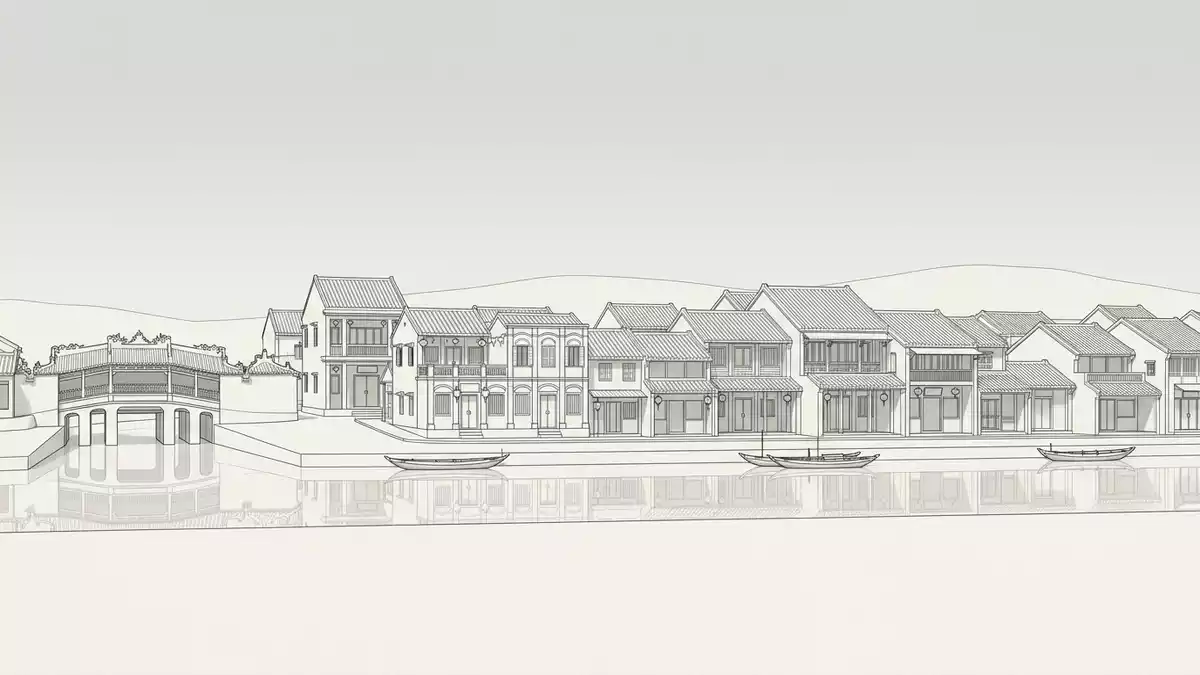
Pho co Hoi An, the historic old town of Hoi An in central Vietnam, is a compact riverfront quarter where centuries of trade are still written into timber facades and narrow streets. Recognised as Hoi An Ancient Town, it preserves the layout of a South-East Asian port active between the fifteenth and nineteenth centuries and remains one of Vietnam’s most distinctive historical centres.
From trading port to protected heritage town
The old town of Hoi An occupies the north bank of the Thu Bon River in Quang Nam Province, close to the river’s mouth on the central coast of Vietnam. Within a core area of about 30 ha (74 acres), streets, houses and communal buildings form a grid that reflects its history as a small but cosmopolitan harbour where ships from East Asia and beyond once called to trade.The inscribed property sits inside a wider buffer zone designed to protect its historic setting.
The town’s significance was formally recognised in 1999 when Hoi An Ancient Town was inscribed on the World Heritage List, with UNESCO citing its exceptionally well-preserved character and the fusion of indigenous and foreign influences in its buildings and street plan.The World Heritage designation anchors Pho co Hoi An firmly among the key cultural sites of Vietnam and has helped ensure that the traditional streetscape remains largely intact.
Timber houses, bridges and riverside streets
Walking through Pho co Hoi An reveals a town built on wood, tile and masonry, with rows of narrow-fronted houses opening onto the street and extending deep into the urban blocks. Many buildings combine Vietnamese forms with elements drawn from Chinese and Japanese merchants, creating façades where carved wooden panels, tiled roofs and colour-washed walls sit side by side. The concentration of historic structures is remarkable: surveys list more than 1,000 preserved houses within the old town, alongside assembly halls, pagodas and other monuments.The catalogue of heritage buildings includes the Japanese Bridge, whose covered span across a small canal has become one of Hoi An’s most recognisable sites.
At street level the layout reflects Hoi An’s trading past. Buildings front onto a network of lanes leading down towards the water, where the Thu Bon River provided anchorage for vessels moving along maritime routes that linked Vietnam with China, Japan and other parts of South-East Asia.Its role as a traditional Asian trading port is still evident in the alignment of streets and the presence of former merchants’ houses, some of which retain altars and reception rooms reflecting their original use.
Lantern light and layered cultural influences
Among the most striking aspects of Pho co Hoi An is the way different cultures meet within a small geographic area. Long-standing links with Chinese communities can be seen in the architecture of assembly halls and temples, where elaborate roofs and decorative motifs contrast with the simpler lines of vernacular Vietnamese houses. Japanese influence is most famously embodied in the wooden bridge, while later European contact appears in certain details of façades and urban organisation.The town’s fusion of cultures is a central part of its appeal.
Evenings in the old town are characterised by the glow of lanterns hung from eaves and across streets, reflecting local craft traditions that have become closely associated with Hoi An’s identity. The combination of lamplight, waterfront views and historic architecture gives Pho co Hoi An a theatrical quality, especially along the riverfront where reflections in the water double the colour and form of the buildings. Behind these views lies a formal status: Hoi An Ancient Town has been recognised not only as a World Heritage Site but also as a National Cultural Heritage Site under Vietnamese law.National heritage classifications underline how strongly the town is protected within Vietnam’s cultural framework.
Visiting Pho co Hoi An: what travellers from Western Europe should know
- Pho co Hoi An lies in the city of Hoi An in Quang Nam Province on the central coast of Vietnam, on the north bank of the Thu Bon River, with Da Nang as the nearest major city.
- The historic quarter is compact and largely level, with streets laid out for walking; many lanes are narrow, and exploring often involves moving on foot along paved surfaces and crossing low bridges.
- The official language is Vietnamese and the currency is the Vietnamese ??ng.
- Entry requirements depend on your nationality; UK travellers can check the FCDO travel advice at gov.uk/foreign-travel-advice, Irish travellers the Department of Foreign Affairs at ireland.ie.
Searching for Pho co Hoi An on social platforms
These links open searches for Pho co Hoi An on each platform.
Frequently asked questions about Pho co Hoi An
Where is Pho co Hoi An located?
Pho co Hoi An is the historic old town of Hoi An in Quang Nam Province, central Vietnam, on the north bank of the Thu Bon River near its mouth.
What can visitors expect when exploring the old town?
Visitors encounter a compact network of streets lined with timber houses, assembly halls and small temples, many reflecting Vietnamese, Chinese and Japanese influences, alongside riverside views and lantern-lit evenings.
What makes Pho co Hoi An distinctive among historic towns?
Its distinction lies in the exceptionally well-preserved fabric of a South-East Asian trading port dating from the fifteenth to nineteenth centuries and in its recognised status as a UNESCO World Heritage Site.


