
Piedra Monastery hosts Te quiero, Goya on 25 September
Published on 09/27/2026 at 12:49 | Editorial responsibility: Rafael Müller, Editor-in-Chief AD HOC NEWS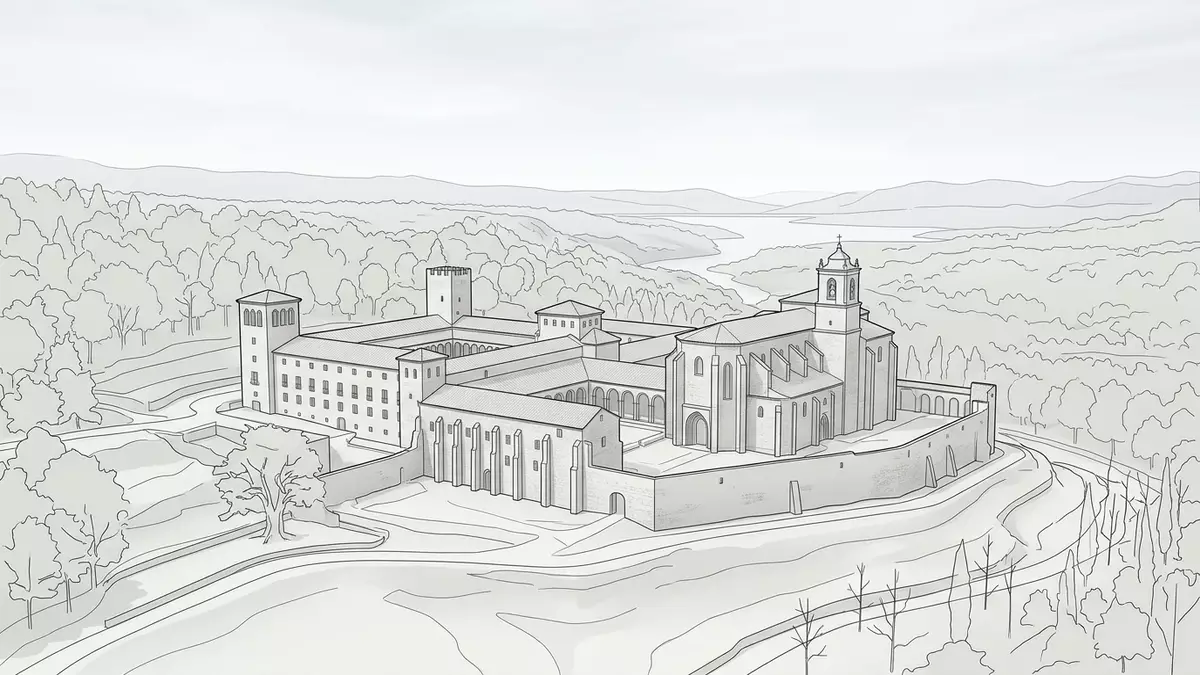
Piedra Monastery hosted Pilar Almalé's Te quiero, Goya performance on 25 September 2026 in Nuévalos, Spain. The church formed the setting for a multidisciplinary work about Francisco de Goya, presented within the Aragón, tierra de cultura programme.
Te quiero, Goya brought music and dance to the monastery church
The performance began at 7pm on 25 September 2026, according to the event announcement. Pilar Almalé, a singer, composer and viol player from Zaragoza, directed the production and performed a programme combining music, dance and video projection.
The work follows Goya's life and creative legacy through folk, popular and contemporary music. Its placement inside the church connected a modern stage production with one of the site's historic interiors. Event details from Aragón Digital identify the church, date, time and programme.
Admission was free, but the organisers required visitors to obtain tickets in advance because capacity was limited. The announcement placed the performance within Aragón, tierra de cultura, a programme promoted by the regional government agencies responsible for culture, heritage and tourism.
Piedra Monastery links a Cistercian church with a water garden
The site combines a former Cistercian monastery with a historic garden park beside the Piedra River. The monastery's history reaches back to 1194, when Alfonso II of Aragon and Sancha donated a former castle to monks from Poblet. The buildings were occupied by the community in the early thirteenth century, and the abbey was consecrated in 1218.
The church where Te quiero, Goya was staged is part of a complex built during the transition from Romanesque to Gothic architecture. The surrounding park contains paths, waterfalls, streams, lakes and caves, while the river shaped its landscape and supported the first fish farm in Spain in 1867. These features made the 25 September 2026 programme more than a performance in a neutral hall: it used a historic religious interior within a wider site formed by water, gardens and monastic history. The Spanish tourism profile confirms the site's history, location and park development.
The monastery was declared a National Monument in 1983 and is now recognised as an Asset of Cultural Interest in the monument category. Its rooms also include cultural displays linked with wine, chocolate and the history of the complex. The operator describes the park as a Historic Garden and the monastery as a thirteenth-century Cistercian building. Its official park description records the waterfalls, caves, river and garden setting.
Visiting Piedra Monastery: what travellers from Western Europe should know
- The Te quiero, Goya performance took place on 25 September 2026 at 7pm in the church at Piedra Monastery.
- Admission to the performance was free, but advance tickets were required because capacity was limited. The performance itself was a past event on 25 September 2026, rather than a continuing programme.
- The complex is in Nuévalos, in Zaragoza province, Aragon, Spain. The site is reached at C/ Afueras SN, according to the national tourism listing.
- The park's terrain includes paths crossing waterfalls, streams, lakes and caves. Visitors should therefore expect a landscape walk rather than a single level indoor venue.
- Spanish is the official language used locally, and Spain's national currency is the euro.
Searching for Piedra Monastery on social platforms
These links open searches for Piedra Monastery on each platform.
Frequently asked questions about Piedra Monastery
When did Te quiero, Goya take place at Piedra Monastery?
The performance took place on 25 September 2026 at 7pm in the monastery church.
Where is Piedra Monastery and how do you get there?
The complex is in Nuévalos, Zaragoza province, in Aragon, Spain. Its listed address is C/ Afueras SN.
What is Piedra Monastery?
It is a former Cistercian monastery and historic garden park beside the Piedra River, with a history reaching back to 1194 and buildings occupied by the monks by 1218.


