
Plaza Vieja in Havanna, where colonial layers frame a Cuban square
Published on 09/03/2026 at 14:00 | Editorial responsibility: Rafael Müller, Editor-in-Chief AD HOC NEWS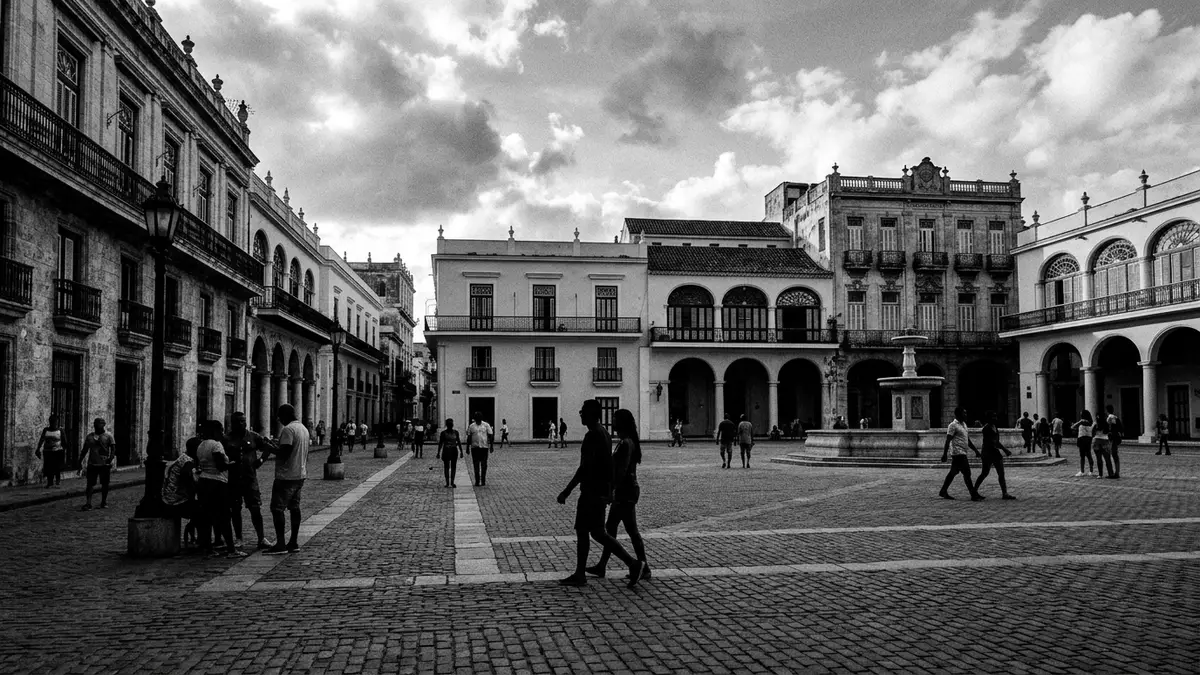
Plaza Vieja in Havanna is a colonial square where centuries of Cuban architecture line an open stone surface, turning one urban space into a compact record of Old Havana’s layered past. Laid out in 1559 as Plaza Nueva, it belongs to the earliest generation of planned civic squares in the city and later took on its present name as other plazas emerged nearby.
From Plaza Nueva to Plaza Vieja in Old Havana
Plaza Vieja lies within La Habana Vieja, the historic centre of Cuba’s capital that forms part of the UNESCO World Heritage listing known as Old Havana and its Fortification System.Old Havana and its fortifications The square appeared in the mid-sixteenth century as Plaza Nueva, an additional civic space laid out after the Plaza de Armas and the Plaza de San Francisco as Havana grew as a Spanish colonial port.the plaza emerged in 1559 Over time the name shifted, and by the nineteenth century the designation Plaza Vieja distinguished it from newer market squares elsewhere in the city.the evolution of its names
In its colonial decades Plaza Vieja functioned as part of Havana’s civic and commercial core. Accounts describe the square as a place where markets, public gatherings and spectacles such as bullfights took place under Spanish rule, watched from surrounding balconies by residents of the wealthy houses that lined the edges.colonial uses of the square The absence of a major church directly fronting the plaza sets it apart from many other Caribbean colonial squares, giving it a more secular character linked to trade, social life and municipal events.
Architecture around the square: façades, arcades and a palace
The defining experience of Plaza Vieja lies in the architecture that encloses it on all sides, with baroque, neoclassical and later styles sharing the same perimeter. Guide descriptions highlight the square as one of Havana’s most architecturally eclectic spaces, where Cuban baroque stands beside art nouveau influences and other twentieth-century interventions.architecturally eclectic square Many buildings present arcaded ground floors and upper storeys marked by timber balconies, ironwork and coloured plaster, creating continuous street walls punctuated by doorways and windows opening onto the square.
Among the most noted structures is the Palace of the Counts of Jaruco, dating from 1738 and occupying a corner where the streets Muralla and San Ignacio meet.the Palace of the Counts of Jaruco This palace shows a transition in Cuban architecture from earlier Spanish mudéjar forms to baroque features, with timber ceilings and decorative woodwork reported inside.transition from mudéjar to baroque Around it, other houses and former commercial premises from the seventeenth, eighteenth and nineteenth centuries define the square, some converted for cultural or hospitality uses while retaining their historic façades.
A civic space reshaped and restored
The uses of Plaza Vieja have shifted repeatedly since its sixteenth-century origin. In the eighteenth century the square became a market area, known as Plaza del Mercado as Havana’s commercial life concentrated there.eighteenth-century market function Nineteenth-century accounts note public events including executions linked to political conflicts, underscoring that this was not only a place of trade but also a stage for colonial authority.executions in the nineteenth century Later, twentieth-century changes altered the appearance of the square, including the removal of an earlier marble fountain and introduction of structures associated with vehicular use.
By the late twentieth century Plaza Vieja had suffered visible deterioration, and restoration projects led by Havana’s Office of the Historian and supported in the framework of the UNESCO World Heritage designation began to focus on recovering its historic character.restoration initiatives in Old Havana Work on the square included the reconstruction of a fountain reminiscent of the original Carrara marble piece and the removal of intrusive later additions so that the open stone surface and the surrounding colonial buildings could once again define the space.fountain and open square The result is a plaza that reads as a restored civic room framed by architecture from several centuries.
Visiting Plaza Vieja: what travellers from Western Europe should know
- Plaza Vieja stands within La Habana Vieja, Havana’s historic quarter on the western side of the bay, and is reached on foot along the narrow streets that link the main colonial plazas.
- The square itself is a level paved space bordered by buildings whose entrances often involve steps; arcaded walkways and doorways line the edges, and the approach streets can be tight and irregular.
- Nearby landmarks include Plaza de San Francisco and Plaza de Armas within the same historic core, making it possible to move between several colonial squares while staying inside the UNESCO-listed area.
- The official language is Spanish and the currency is the Cuban peso.
- Entry requirements depend on your nationality; UK travellers can check the FCDO travel advice at gov.uk/foreign-travel-advice, Irish travellers the Department of Foreign Affairs at ireland.ie.
Searching for Plaza Vieja on social platforms
These links open searches for Plaza Vieja on each platform.
Frequently asked questions about Plaza Vieja
Where is Plaza Vieja located within Havanna?
Plaza Vieja is situated in La Habana Vieja, the historic centre of Havana on the western side of the bay, inside the UNESCO-listed colonial core.
What can visitors expect when they arrive at Plaza Vieja?
Visitors encounter a paved open square framed by colonial and later buildings with arcades, balconies and restored façades, reflecting Havana’s architectural history.
What makes Plaza Vieja distinctive among Havana’s squares?
Plaza Vieja is distinctive for its secular civic character, its origins in 1559 as Plaza Nueva, and its perimeter of seventeenth to nineteenth-century architecture within a single enclosed space.


