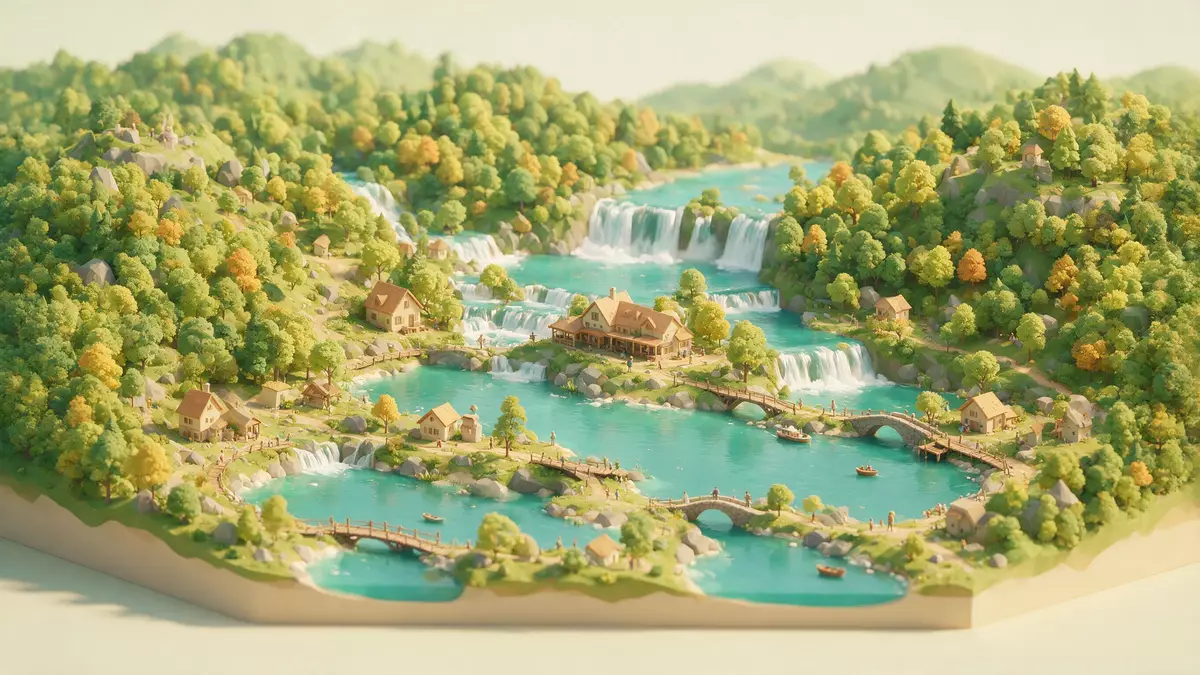
Plitvicka jezera: water, limestone and forest in Plitvice
Published on 08/12/2026 at 14:24 | Editorial responsibility: Rafael Müller, Editor-in-Chief AD HOC NEWS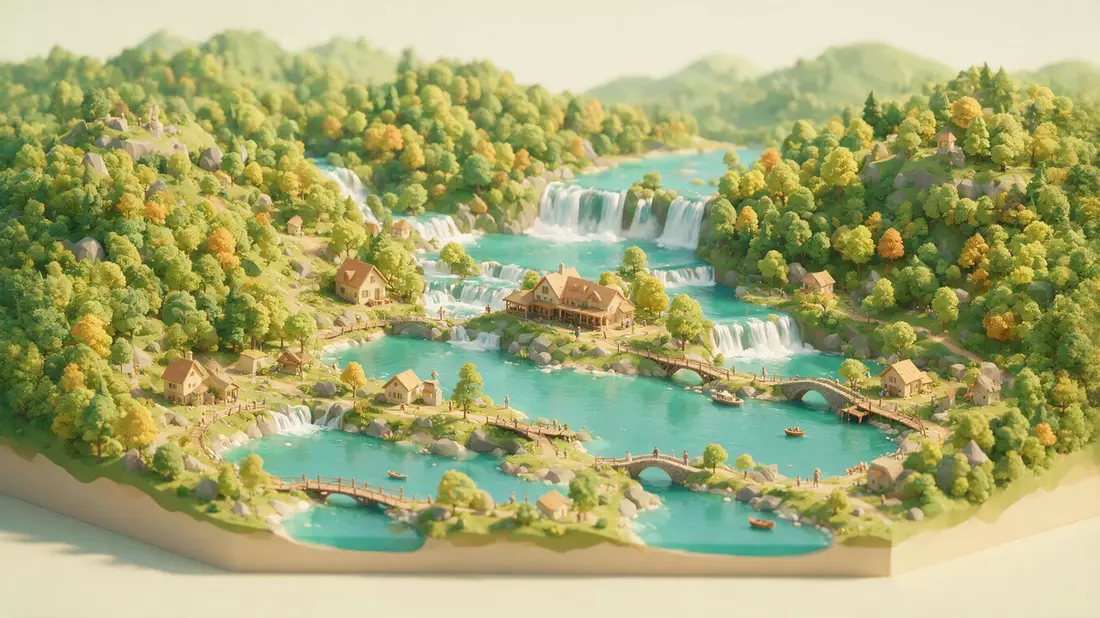
Plitvicka jezera, better known internationally as Plitvice Lakes National Park, is a protected lake and waterfall landscape in central Croatia, where water, limestone and forest shape a layered karst terrain.
Water stepping down through a karst valley
Plitvicka jezera forms a chain of lakes arranged in terraces within a hilly karst region in inland Croatia, south of Karlovac and north of Zadar.Plitvice Lakes National Park The lakes lie between the limestone massifs of Mala Kapela to the west and Plješivica to the east in the Dinaric mountain belt, and are fed by rivers and streams that drop in a sequence of cascades.hilly karst region in central Croatia
The national park covers almost 300 km² (around 115 sq mi), containing lakes, rivers, forest and grassland within its boundaries.Croatia's largest national park Within that area, the water forms a system of interconnected basins separated by natural barriers of tufa, also known as travertine, which have built up over time as mineral-rich water deposits calcium carbonate on mosses and other vegetation.tufa barriers creating lakes
A protected landscape of lakes, forest and waterfalls
The Plitvice lake system was formally declared a national park on 8 April 1949, making Plitvicka jezera the oldest national park in Croatia.oldest and largest national park in Croatia The protected area extends over parts of Lika-Senj County and Karlovac County, with the park’s administrative centre near the settlement that shares its name.municipality in central Croatia Forests occupy a large proportion of the park, framing the lakes with mixed woodland characteristic of the Dinaric region.
In 1979 Plitvice Lakes National Park was inscribed on the UNESCO World Heritage List for the outstanding natural value of its tufa-forming lake and waterfall system.UNESCO World Heritage inscription in 1979 The inscription highlights the continuing process of barrier formation and the clear water flowing over and through the porous limestone, creating a landscape of pools, rapids and falls surrounded by forested slopes.World Heritage recognition
Paths, viewpoints and the character of Plitvicka jezera
Visitors encounter Plitvicka jezera on marked routes that follow the lakeshores and cross the water on wooden walkways, bringing the cascades and limestone formations close at hand.access routes through the lake system The paths pass between water and forest, with views towards higher slopes and down into basins where falling water links one level of the system to the next.
The park lies in a basin between Mala Kapela and Plješivica, with the Korana river rising from the lower lakes and continuing towards northern Croatia.location between Mala Kapela and Plješivica The D1 road, an important north–south route between Zagreb and the Adriatic coast, runs through the wider Plitvicka Jezera municipality, giving the park a connection to both inland Croatia and the coast.D1 road through Plitvicka Jezera
Visiting Plitvicka jezera: what travellers from Western Europe should know
- Plitvicka jezera lies in central Croatia in the Lika region, between Karlovac and Zadar, with the D1 road linking it to Zagreb and the Adriatic coast.
- The lake system sits in hilly karst terrain between Mala Kapela and Plješivica, and walking routes include boardwalks and paths that involve uneven ground.
- Regional buses and private vehicles reach the Plitvice area along inland roads; access points are signposted for the national park.
- The official language is Croatian and the currency is the Croatian kuna.
Searching for Plitvicka jezera on social platforms
These links open searches for Plitvicka jezera on each platform.
Frequently asked questions about Plitvicka jezera
Where is Plitvicka jezera?
Plitvicka jezera is in central Croatia, in the Lika region between Karlovac and Zadar, within Lika-Senj and Karlovac counties.
What can visitors expect at Plitvicka jezera?
Visitors encounter a chain of clear lakes, numerous waterfalls, forested slopes and marked walking routes including wooden walkways close to the water.
What makes Plitvicka jezera distinctive among Croatian landscapes?
The continuing formation of tufa barriers in a large protected karst valley, recognised by UNESCO since 1979, gives Plitvicka jezera its characteristic stepped lake and waterfall system.