
Poás Volcano records an eruption on 20 September
Published on 09/27/2026 at 14:25 | Editorial responsibility: Rafael Müller, Editor-in-Chief AD HOC NEWS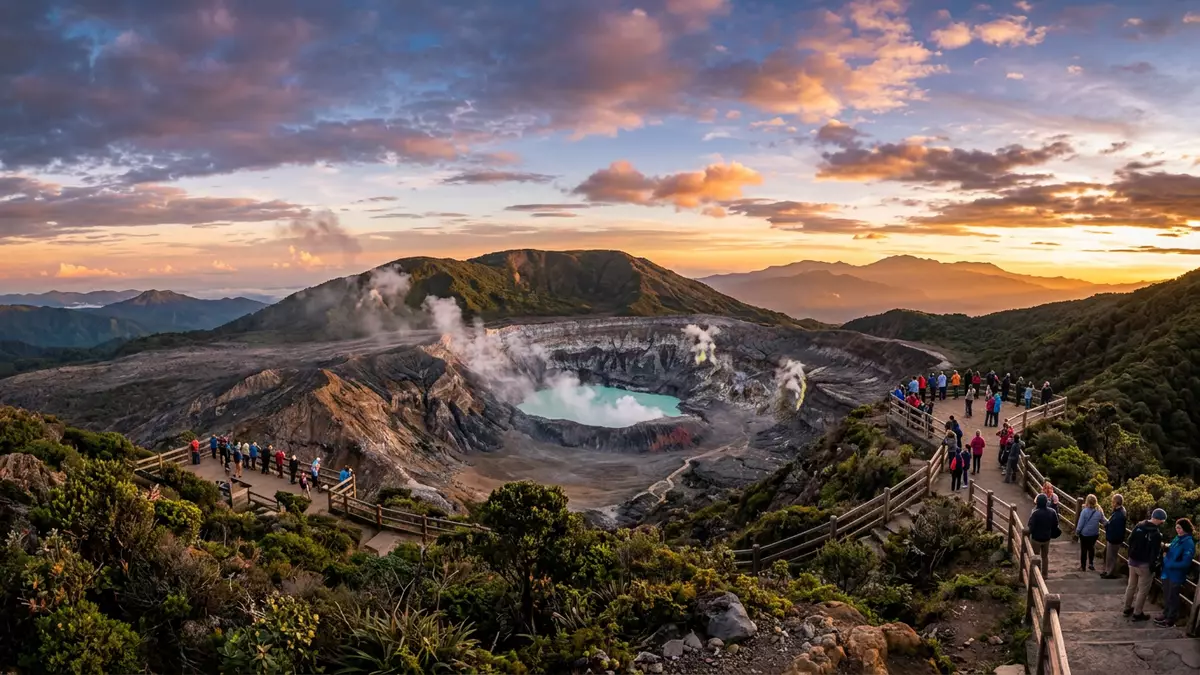
Poás Volcano (Volcán Poás) recorded a small phreatic eruption on 20 September 2026, giving travellers in Alajuela a fresh reason to check access conditions before visiting the Costa Rican national park. The eruption occurred in the centre of the crater lake at 1.40pm, according to the Smithsonian Institution’s Global Volcanism Program.
Poás Volcano records a small eruption on 20 September
The Smithsonian report identifies the event as a small phreatic eruption, meaning that it involved steam-driven activity in the crater lake rather than a lava flow. The same report records sulphur dioxide emissions of 181 plus or minus 50 tonnes per day.
The event is part of continuing activity at the volcano. The monitoring information names the Observatorio Vulcanológico y Sismológico de Costa Rica-Universidad Nacional, known as OVSICORI-UNA, as the reporting institution. The Smithsonian profile lists the last known eruption as occurring in 2026.
The latest event does not by itself announce a full park closure. Instead, the visitor arrangements reported for the site include controlled access to the crater area. The viewing platform is limited to 56 people at one time, and visitors must wear safety helmets on designated routes.
Poás Volcano links the crater lake to visitor safety
The eruption matters directly to a visit because the crater lake is the principal feature viewed from the park’s observation area. The Smithsonian profile describes the northern lake, Laguna Caliente, as a site of frequent phreatic and phreatomagmatic eruptions since 1828.
The volcano is a composite stratovolcano in Costa Rica’s Central America Volcanic Arc. Its elevation is 2,697 metres (8,848 ft), and the site contains three summit craters arranged along a north-south line. These confirmed physical features explain why access is managed around the crater rather than treated as an ordinary mountain walk.
For visitors, the connection between the 20 September 2026 eruption and the current rules is practical: the lake remains the focus of the experience, while the viewing platform and approach routes are subject to protective measures. The Smithsonian activity profile records both the event and the monitoring background.
Alajuela location places the park near Costa Rica’s Central Valley
Poás Volcano National Park lies in Alajuela Province in central Costa Rica, northwest of San José. The Costa Rican Tourism Board identifies the park address as Poás, 20802, Alajuela, and gives road approaches through Alajuela, Poasito and the highlands north of San José.
The setting combines a high-elevation volcanic landscape with a managed visitor route. The Tourism Board’s park information and directions place the attraction within the protected area and describe the recognised road routes.
Visiting Poás Volcano: what travellers from Western Europe should know
- The relevant event occurred on 20 September 2026 in the centre of the crater lake.
- Access to the crater viewing platform is controlled, with no more than 56 people allowed there at one time and helmets required on designated routes.
- The park is in Alajuela Province, northwest of San José. Road approaches run through the city of Alajuela towards Poasito, or through Heredia and Varablanca.
- The terrain is volcanic and high elevation, with the principal visitor experience centred on an observation area overlooking Laguna Caliente rather than a descent into the crater.
- Spanish is Costa Rica’s official language and the national currency is the Costa Rican colón.
- Entry requirements depend on your nationality; UK travellers can check the FCDO travel advice at gov.uk/foreign-travel-advice, Irish travellers the Department of Foreign Affairs at ireland.ie.
Searching for Poás Volcano on social platforms
These links open searches for Poás Volcano on each platform.
Frequently asked questions about Poás Volcano
When did the eruption at Poás Volcano occur?
A small phreatic eruption occurred on 20 September 2026 in the centre of the crater lake.
Where is Poás Volcano and how do you get there?
It is in Alajuela Province in central Costa Rica, northwest of San José. Road approaches lead through Alajuela and Poasito, or through Heredia and Varablanca.
What is Poás Volcano?
It is an active composite stratovolcano with three summit craters and a crater lake called Laguna Caliente. The volcano rises to 2,697 metres (8,848 ft) and lies within Costa Rica’s Central America Volcanic Arc.


