
Pompei: walking through an ancient Roman city of ash
Published on 08/24/2026 at 11:41 | Editorial responsibility: Rafael Müller, Editor-in-Chief AD HOC NEWS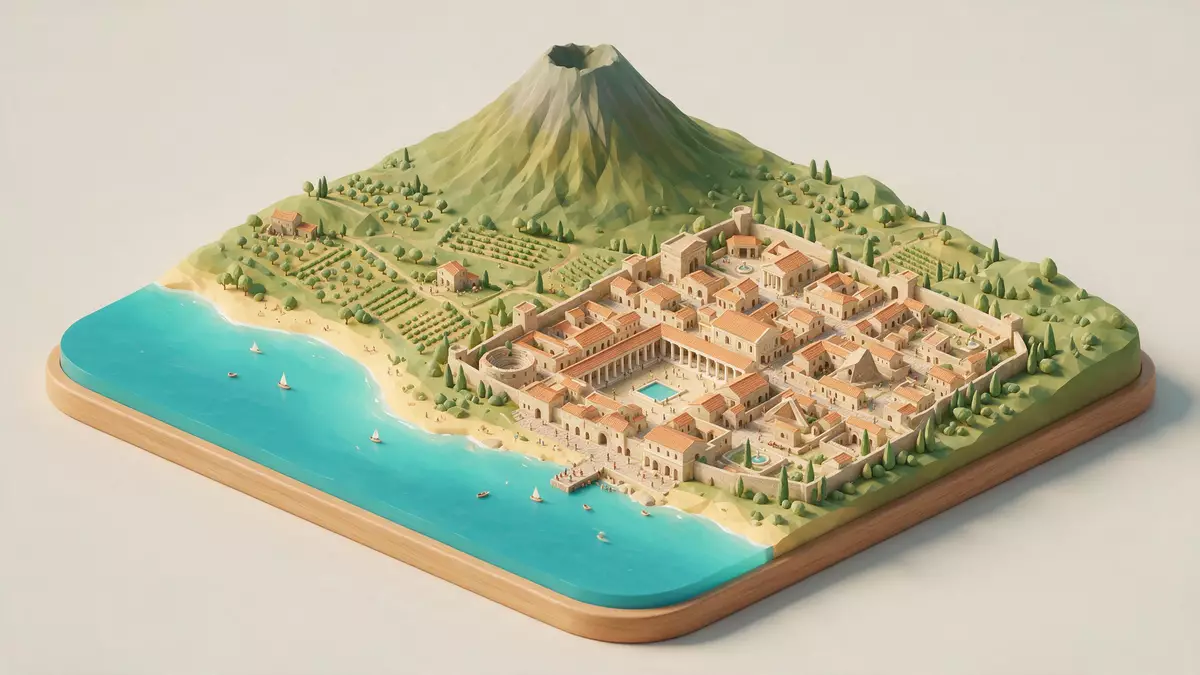
Pompei, known in English as Pompeii, is an ancient Roman city preserved in remarkable detail after the eruption of Mount Vesuvius in 79 AD froze daily life beneath volcanic ash. The ruins lie within the modern municipality of Pompei in Campania in southern Italy, forming a vast archaeological park where streets, houses and public buildings still outline a complete Roman urban landscape.
A Roman city sealed by Vesuvius
Pompei stood on a spur of land near the mouth of the Sarno River at the south-eastern base of Mount Vesuvius, a volcanic cone overlooking the Bay of Naples. Archaeological and historical studies place the city’s destruction in AD 79, when Vesuvius buried it under up to several metres of ash and pumice during a catastrophic eruption that engulfed neighbouring settlements such as Herculaneum and Stabiae.the eruption in AD 79 The blanket of material sealed streets, courtyards and interiors, preserving architecture and artefacts that later excavations uncovered.
The ancient city covers tens of hectares, enclosed by substantial defensive walls that trace a circuit measured in kilometres around the site.city walls and enclosed area Within this area, excavations have brought hundreds of buildings to light, ranging from modest dwellings to grand town houses with elaborate frescoes, as well as bath complexes, temples and an amphitheatre. The ash layer that once hid Pompei also protected many of these structures from weathering, allowing floors, wall paintings and even graffiti to survive.
Streets, houses and public life in Pompei
Walking through Pompei today means following a grid of Roman streets paved with large stones and lined with raised pavements, kerbs and stepping-stones where pedestrians once crossed through traffic. Wheel ruts are still visible in places, and junctions open onto small squares and larger public spaces where markets and gatherings took place.Roman street layout and public spaces Many houses preserve doorways, internal courtyards and reception rooms, some on multiple levels, with wall paintings depicting mythological scenes, gardens and architectural motifs.
Among the public buildings, the forum forms a broad rectangular space edged by civic structures and temples, while the amphitheatre stands near the edge of the site with its elliptical arena and encircling seating tiers.forum and amphitheatre Bath complexes show rooms arranged for different temperature zones and social functions, and workshops and taverns open directly onto the streets with counters, storage niches and traces of industrial activity. Together, these elements make Pompei one of the most complete surviving examples of a Roman city, with domestic, religious, commercial and entertainment spaces all accessible within the excavation.
World Heritage status and the surrounding landscape
Pompei forms part of a World Heritage ensemble designated by UNESCO as the Archaeological Areas of Pompeii, Herculaneum and Torre Annunziata, recognising the exceptional preservation of Roman urban and villa life across several sites.World Heritage inscription The archaeological park sits within a wider buffer zone that includes modern towns around Vesuvius and stretches towards the boundary of the Vesuvius National Park, linking the ruins to the volcanic landscape that shaped their history.buffer zone and surrounding municipalities
From Pompei, views reach towards the slopes of Mount Vesuvius and across the plain that leads to the Bay of Naples, situating the ruins within a setting that combines ancient remains with modern infrastructure and settlements. The contrast between the stone pavements, plastered walls and excavated structures inside the archaeological area and the contemporary town outside the perimeter walls underlines the long continuity of habitation in this part of Campania.
Visiting Pompei: what travellers from Western Europe should know
- Pompei lies south-east of Naples in the Campania region of Italy, close to the Sarno River plain and within reach of other towns around Mount Vesuvius.
- The archaeological area consists of extensive paved streets, uneven stone surfaces and open-air spaces, and visiting involves several hours of walking on hard ground.
- The official language is Italian and the currency is the euro.
- Entry requirements depend on your nationality; UK travellers can check the FCDO travel advice at gov.uk/foreign-travel-advice, Irish travellers the Department of Foreign Affairs at ireland.ie.
Searching for Pompei on social platforms
These links open searches for Pompei on each platform.
Frequently asked questions about Pompei
Where is Pompei and what is its historical context?
Pompei is in the Campania region of southern Italy, near Naples, and was a Roman city destroyed in the eruption of Mount Vesuvius in AD 79.
What can visitors expect to see during a visit to Pompei?
Visitors encounter paved Roman streets, houses with courtyards and wall paintings, public buildings such as baths and temples, and large structures including the forum and amphitheatre.
What makes Pompei distinctive among archaeological sites?
Pompei preserves an extensive Roman cityscape within a single archaeological park, with domestic, civic and religious architecture all accessible, and forms part of a UNESCO-recognised World Heritage ensemble.


