
Positano’s vertical seaside village on the Amalfi Coast
Published on 08/15/2026 at 14:22 | Editorial responsibility: Rafael Müller, Editor-in-Chief AD HOC NEWS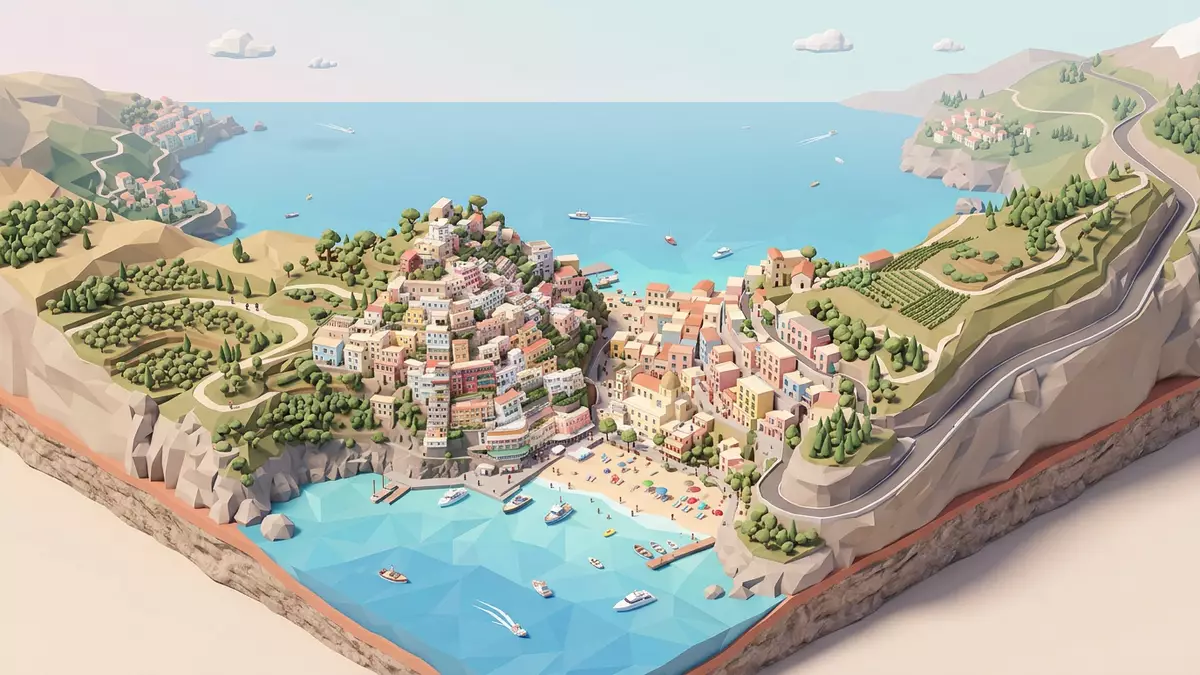
Positano on the Amalfi Coast in southern Italy is a coastal town where houses, lanes and stairways climb steeply from the Tyrrhenian Sea up a rocky slope. The settlement forms part of the UNESCO-listed Amalfi Coast and is a comune in the Province of Salerno in the region of Campania.
Terraced houses between mountain and sea
Positano occupies a narrow amphitheatre of land where the hillside drops towards the Tyrrhenian Sea, creating a compact town built largely on terraces and stepped streets above a central bay. The municipal territory covers about 8.6 km² and rises from a low elevation near the shore to higher hamlets above the main settlement, reflecting the close relationship between the village and the surrounding cliffs.Municipal territory and elevation The town lies between Amalfi to the east and Sorrento to the west along the coastal road, making it one of the principal centres of this stretch of Campania.
Historically, Positano developed as a fishing centre linked to the wider maritime culture of the Amalfi Coast, with boats drawn up on the main beach beneath the houses above. During the Roman period the area functioned as a holiday resort, a role evidenced by the remains of a Roman villa close to the later church of Santa Maria Assunta.History of Positano In medieval times Positano formed part of the territory of the Maritime Republic of Amalfi, sharing its fortunes as a coastal trading region on the Tyrrhenian Sea.Role within the Amalfi Coast
Santa Maria Assunta and the historic core
The heart of Positano clusters around the Church of Santa Maria Assunta and the broad Spiaggia Grande beach below. The church traces its origins to a Benedictine monastery founded in the tenth century, which established an early religious centre around which the village grew.Tenth-century Benedictine origins Over the eighteenth century the building underwent extensive transformations, giving it a Baroque character with stucco decoration and a Latin cross ground plan with three naves.
Above the church rises a dome clad in coloured majolica tiles, using yellow, green and blue ceramics that make the structure a distinctive landmark within the dense cluster of pastel façades.Majolica-tiled dome of Santa Maria Assunta Inside, the church houses a Byzantine icon of the Madonna, known locally as the Madonna di Positano, which dates to the twelfth century and represents one of the town’s most important devotional artworks.Byzantine Madonna icon The church stands only a short distance back from the main beach, so its dome is visible from much of the waterfront and from the boats offshore.
Layers of history on the Amalfi Coast
Archaeological and historical evidence indicates that the territory of Positano was inhabited in prehistoric times and became particularly important during the Roman era, when coastal villas lined this stretch of shore. A volcanic event in 79 AD associated with Vesuvius deposited material on the surrounding ridges; subsequent erosion contributed to changes in the landscape that affected some of these Roman structures along the Amalfi Coast.Roman villas and landscape changes Later, in the medieval period, Positano formed part of the duchy of Amalfi and its port took on a strategic role as the first harbour west of Amalfi for ships navigating the Tyrrhenian coast.Medieval port and trading role
Defensive needs in the sixteenth century, including exposure to raids and pirate attacks along the Tyrrhenian littoral, contributed to a system of towers and a pattern of stairways, arcades and narrow alleys that characterise the built fabric of Positano along the cliffs.Watchtowers and defensive layout Over successive centuries the town’s steep streets, terraced houses and coastal setting attracted writers, artists and dancers, including figures such as John Steinbeck, Pablo Picasso and Rudolf Nureyev, who spent time on the Amalfi Coast.
Visiting Positano: what travellers from Western Europe should know
- Positano lies on the Amalfi Coast in Campania, south of Naples, between Amalfi and Sorrento and can be reached by road along the coastal route that links these towns.
- The town is built on a steep slope above the Tyrrhenian Sea, with many stairways and sloping lanes; moving between the upper streets and the main beach involves climbing and descending numerous steps.
- Positano’s central area focuses on the Spiaggia Grande and the Church of Santa Maria Assunta, with narrow streets leading down from higher residential areas to the waterfront.
- The official language is Italian and the currency is the euro.
Searching for Positano on social platforms
These links open searches for Positano on each platform.
Frequently asked questions about Positano
Where is Positano located?
Positano is a town and comune on the Amalfi Coast in the Province of Salerno, part of the Campania region in southern Italy.
What should visitors expect in Positano?
Visitors encounter a coastal settlement built on steep terrain, with terraced houses, narrow stairways, a central beach and the historic Church of Santa Maria Assunta near the waterfront.
What makes Positano distinctive among Amalfi Coast towns?
Positano is distinctive for its vertical layout on the cliffside, the majolica-tiled dome of Santa Maria Assunta above Spiaggia Grande and its role as a historic port within the Amalfi Coast.


