
Predjamski grad: a castle built into a karst cave
Published on 09/24/2026 at 01:36 | Editorial responsibility: Rafael Müller, Editor-in-Chief AD HOC NEWS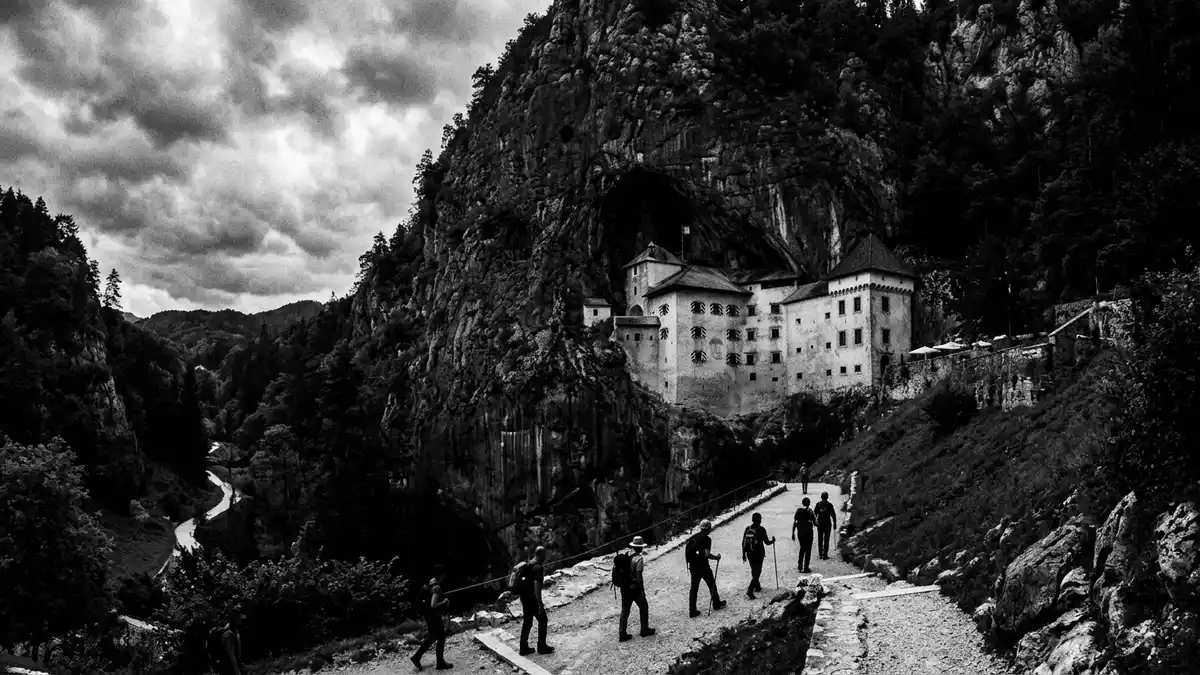
Predjamski grad rises inside a limestone cliff near Postojna, with Renaissance walls set directly before a karst cave entrance. The castle and the rock form a single visible composition, joining masonry, galleries and subterranean space.
Predjamski grad between cliff and cave
The castle stands in Predjama, within the municipality of Postojna in Slovenia. Its Slovenian name means “castle in front of the cave”, a direct description of the relationship between the building and the karst landscape.
A high limestone wall forms the backdrop, while the built façade occupies the cave mouth. The result is neither a conventional hilltop fortress nor an underground settlement. Predjamski grad combines a fortified residence with natural cavities, rock ledges and passages behind the visible walls.
The surviving complex has a Renaissance appearance, with the main form dating from 1570. The building rises across several levels, and its rooms include halls, living quarters, an armoury and a dungeon. The arrangement places domestic and defensive spaces within the same cliff-side composition.
From Luegg to a Renaissance residence
Predjamski grad was first mentioned in 1274 under the German name Luegg. The Patriarchs of Aquileia held the castle, which had Gothic origins and was associated with the Luegg noble family.
The medieval fortress became connected with Erazem Lueger, also known as Erazem of Predjama, during the fifteenth century. His name remains tied to the cave behind the castle and to stories of conflict with the Habsburgs.
The medieval building was damaged after a siege, and a later fortress was affected by the earthquake of 1511. In 1567, the ruined property passed to Baron Philipp von Cobenzl. The current Renaissance castle was constructed in 1570, and the Cobenzl family used it as a residence.
In 1846, Predjamski grad was sold to the Windischgrätz family. Yugoslav authorities nationalised the castle in 1945, after which it became a museum. Its rooms present the life of a sixteenth-century residence through furnishings, weapons and architectural spaces.
The cave system behind the castle
The cave is not merely a backdrop. A karst cave hall lies behind the castle, connected with a wider underground system beneath the cliff. The natural cavities give the complex its unusual depth and explain the contrast between exterior masonry and interior rock.
The cave known as Erazmova Jama lies behind the castle. Other passages and cave levels extend through the limestone, while the Lovka river flows through the deeper underground landscape. The watercourse is part of the wider karst system associated with the area around Postojna.
Medieval accounts describe access through the caves during the siege associated with Erazem. The historical figure and the later legends have become inseparable from the castle’s identity, although the popular stories contain dramatic details that are not all historical.
Predjamski grad also belongs to the visual history of the landscape. Karl Friedrich Schinkel produced a lithograph of the castle after travelling through the region, adding an architectural record to the building’s long association with artists and travellers.
The castle is recognised as the world’s largest cave castle, a designation connected with its construction within the entrance of a natural cave. Its significance rests on the direct union of architecture and geology: the limestone cliff is part of the fortress’s visible form.
Visiting Predjamski grad: what travellers from Western Europe should know
- Predjamski grad is in the village of Predjama, within the municipality of Postojna in Slovenia. A road connects the village with Postojna and the Postojna Cave area.
- The approach reaches a castle built against a limestone cliff. Interior routes include stairs, uneven stone surfaces and narrow passages associated with the historic building and cave.
- The castle museum occupies several floors. Displays include an armoury, a dungeon, halls and living quarters linked with sixteenth-century castle life.
- The official language is Slovene and the currency is the euro.
Searching for Predjamski grad on social platforms
These links open searches for Predjamski grad on each platform.
Frequently asked questions about Predjamski grad
Where is Predjamski grad?
Predjamski grad is in Predjama, near Postojna in southwestern Slovenia. The castle stands within a limestone cliff associated with the region’s karst landscape.
What can visitors expect inside?
The museum presents halls, living quarters, an armoury and a dungeon across the historic castle’s levels. Stairs, stone surfaces and cave passages form part of the interior setting.
What makes Predjamski grad distinctive?
Its Renaissance walls occupy the entrance of a natural karst cave. The building, cliff and underground spaces form one castle complex rather than separate architectural and geological attractions.


