
Quebrada de Humahuaca, an Andean corridor of colours and culture
Published on 09/09/2026 at 15:31 | Editorial responsibility: Rafael Müller, Editor-in-Chief AD HOC NEWS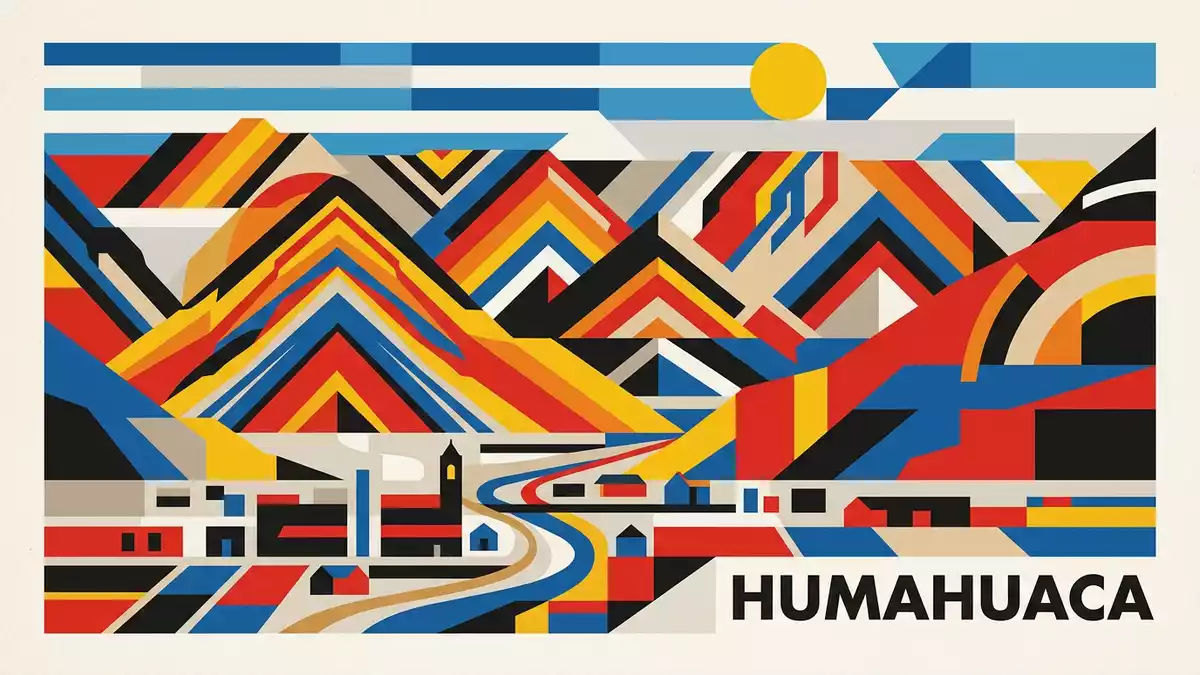
Quebrada de Humahuaca is a long Andean valley in northern Argentina where bands of coloured rock rise above villages and fields along the Río Grande, forming a landscape shaped by altitude and aridity.Province of Jujuy provides the setting, and the designation of the valley as a UNESCO cultural landscape in 2003 anchors its status as a place where nature and long human use are visibly intertwined.UNESCO World Heritage Site
Quebrada de Humahuaca as a high Andean valley corridor
Stretching for around 150 km (93 mi) along a north–south axis, Quebrada de Humahuaca follows the course of the Río Grande between high plateaux to the west and wooded slopes to the east.spectacular valley of the Río Grande The valley lies in Jujuy Province, a north-western region of Argentina where elevations between roughly 1,800 and 2,800 m (5,906–9,186 ft) create a semi-arid climate with strong contrasts between sunlit slopes and cooler river terraces.semi-arid valley stretching between 1800 and 2800 masl
The quebrada forms part of a wider Andean system: to the west rise high plateaux of the Puna, and to the east the ranges of Zenta, Aparzo, Hornocal and Tilcara mark the transition to more wooded areas.bounded by mountain ranges Water arriving from side streams cuts into the valley walls, defining pockets of cultivation and settlement where the Río Grande’s floodplain offers flatter ground.
Rock colours, villages and the visible cultural landscape
One of the most immediate impressions of Quebrada de Humahuaca is the colour of its rock: layers of red, ochre, grey and green form banded slopes that frame settlements such as Tilcara, Purmamarca and Humahuaca.mountainous and semiarid valley These colours reflect the complex geology of the valley, where folded sedimentary strata are exposed by erosion and create striking patterns across the hills.
Along the valley floor and lower slopes lie villages, pre-Hispanic terraces and field systems that together form the cultural landscape recognised by UNESCO.cultural criteria (ii), (iv) and (v) In places, traces of pre-ceramic and later settlements can be seen close to modern houses, while chapels, plazas and stone structures mark colonial and post-independence layers within the same valley.
An ancient route and layered human history
For at least 10,000 years, Quebrada de Humahuaca has functioned as a corridor between the Andean highlands and the plains, with tracks and routes following the valley and linking passes across the surrounding ranges.cultural route between the Andean highlands and the plains In the pre-Hispanic period, the valley formed part of a wider network associated with the Camino Inca, a major Andean route system that connected highland centres with lower regions.Camino Inca
Later, Quebrada de Humahuaca saw Inca presence, Spanish colonial expansion and battles during the nineteenth-century Argentine War of Independence, all leaving marks in fortifications, churches and memorials along the valley.colonized by both the Inca and the Spaniards The inscription of the valley on the World Heritage List on 2 July 2003 reflects this continuity of use and the coexistence of living communities with archaeological remains spanning millennia.inscribed on the World Heritage List in 2003
Visiting Quebrada de Humahuaca: what travellers from Western Europe should know
- Quebrada de Humahuaca lies in Jujuy Province in north-west Argentina, with the town of Humahuaca among several settlements along the Río Grande that serve as bases within the valley.
- The terrain combines high-altitude plateau edges with steep valley sides, so approaches to viewpoints and older terraces often involve walking on uneven paths and ascending stone or earth steps.
- Roads follow much of the valley’s north–south line, crossing the Río Grande and linking villages such as Purmamarca, Tilcara and Humahuaca, while smaller tracks reach out to hamlets and archaeological sites on the slopes.
- The official language is Spanish and the currency is the Argentine peso.
- Entry requirements depend on your nationality; UK travellers can check the FCDO travel advice at gov.uk/foreign-travel-advice, Irish travellers the Department of Foreign Affairs at ireland.ie.
Searching for Quebrada de Humahuaca on social platforms
These links open searches for Quebrada de Humahuaca on each platform.Frequently asked questions about Quebrada de Humahuaca
Where is Quebrada de Humahuaca located?
Quebrada de Humahuaca is a longitudinal valley in Jujuy Province in north-west Argentina, following the Río Grande between high Andean plateaux and eastern ranges.
What should visitors expect on a visit to Quebrada de Humahuaca?
Visitors encounter a semi-arid high-altitude landscape with multicoloured rock slopes, villages along the river, archaeological traces on the hillsides and roads that follow the valley’s north–south line.
What makes Quebrada de Humahuaca distinctive among Andean valleys?
Its combination of striking layered geology, long use as an Andean corridor, visible pre-Hispanic and colonial remains and recognition as a UNESCO cultural landscape makes Quebrada de Humahuaca distinctive.


