

Ranthambore National Park reopens on 1 October
Published on 10/11/2026 at 02:24 | Editorial responsibility: Rafael Müller, Editor-in-Chief AD HOC NEWSKey points in brief
- Ranthambore National Park reopened to visitors in Sawai Madhopur on 1 October 2026 after a three-month monsoon closure.
- The reopening began at the Ganesh Dham main gate, where forest officials sent safari vehicles into the park on 1 October 2026.
- Ranthambore National Park became a national park in 1980 and contains the 10th-century Ranthambore Fort, part of a UNESCO World Heritage listing.
- Visitors to India can reach the park through Sawai Madhopur and should follow the forest rules announced for the new tourism season.
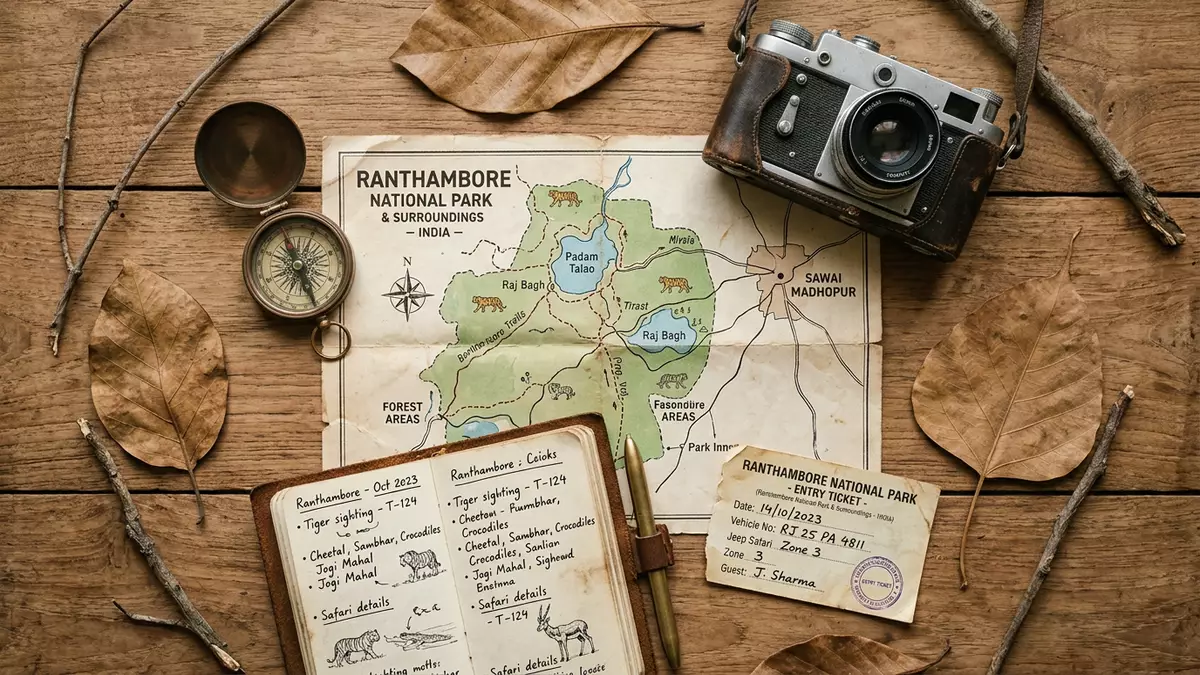
Ranthambore National Park reopened to visitors in Sawai Madhopur on 1 October 2026 after a three-month monsoon closure. The reopening started the new safari season in Rajasthan and brought the park back into public use for wildlife drives.
Ranthambore National Park reopened after the monsoon closure
The reopening took place at the Ganesh Dham main gate. Forest officials welcomed domestic and overseas visitors with tilak and garlands, while local performers presented Rajasthani folk dances and a rangoli was made at the entrance.
Safari vehicles were sent into the forest after the welcome ceremony. The 1 October reopening report names Sawai Madhopur, the Ganesh Dham gate and the officials present. A separate report also records that the park opened to visitors on 1 October 2026 after three months and that the forest department sent vehicles into the reserve from the main gate.
Ranthambore National Park links safari access with a historic fort
The protected area lies in Rajasthan near Sawai Madhopur and takes its name from Ranthambore Fort, which stands within its boundaries. Rajasthan Tourism describes the park as being surrounded by the Aravalli and Vindhya ranges and places the fort among the principal attractions of the area.
The fort was built by Chauhan rulers in the tenth century. The park was established as a wildlife sanctuary in 1955, included in Project Tiger in 1973 and declared a national park in 1980. The fort is part of the Hill Forts of Rajasthan, a UNESCO World Heritage listing. This history gives the 1 October 2026 reopening a specific setting: safari access resumed below a medieval fort rather than at a separate wildlife venue. Rajasthan Tourism describes the park and fort in its Sawai Madhopur information.
Visiting Ranthambore National Park: what travellers from Western Europe should know
- The reopening took effect on 1 October 2026, and the Ganesh Dham main gate was the venue for the opening welcome and the departure of safari vehicles.
- The park was open to visitors from 1 October 2026 after the three-month monsoon closure. Tourism operations were to follow the forest rules, according to officials quoted in the reopening report.
- Sawai Madhopur is the reference town for the visit, while Ganesh Dham is the named main entrance used for the 1 October 2026 reopening.
- The setting combines dry forest, wildlife routes, rocky terrain and the historic Ranthambore Fort, so a safari is an outdoor visit governed by forest conditions rather than a museum tour.
- Entry requirements depend on your nationality; UK travellers can check the FCDO travel advice at gov.uk/foreign-travel-advice, Irish travellers the Department of Foreign Affairs at ireland.ie.
Searching for Ranthambore National Park on social platforms
These links open searches for Ranthambore National Park on each platform.
Frequently asked questions about Ranthambore National Park
What changed at Ranthambore National Park on 1 October 2026?
The park reopened to visitors on 1 October 2026 after a three-month monsoon closure. Safari vehicles were sent into the forest from the Ganesh Dham main gate.
Where is Ranthambore National Park and how do you get there?
The park is in Rajasthan near Sawai Madhopur. Ganesh Dham is the main entrance named in reports of the 1 October 2026 reopening.
What is Ranthambore National Park?
It is a protected wildlife area that became a national park in 1980 and contains Ranthambore Fort, a tenth-century monument within the park and part of the UNESCO-listed Hill Forts of Rajasthan.


