
Rapa Nui National Park and the stone faces of Hanga Roa
Published on 08/18/2026 at 13:23 | Editorial responsibility: Rafael Müller, Editor-in-Chief AD HOC NEWS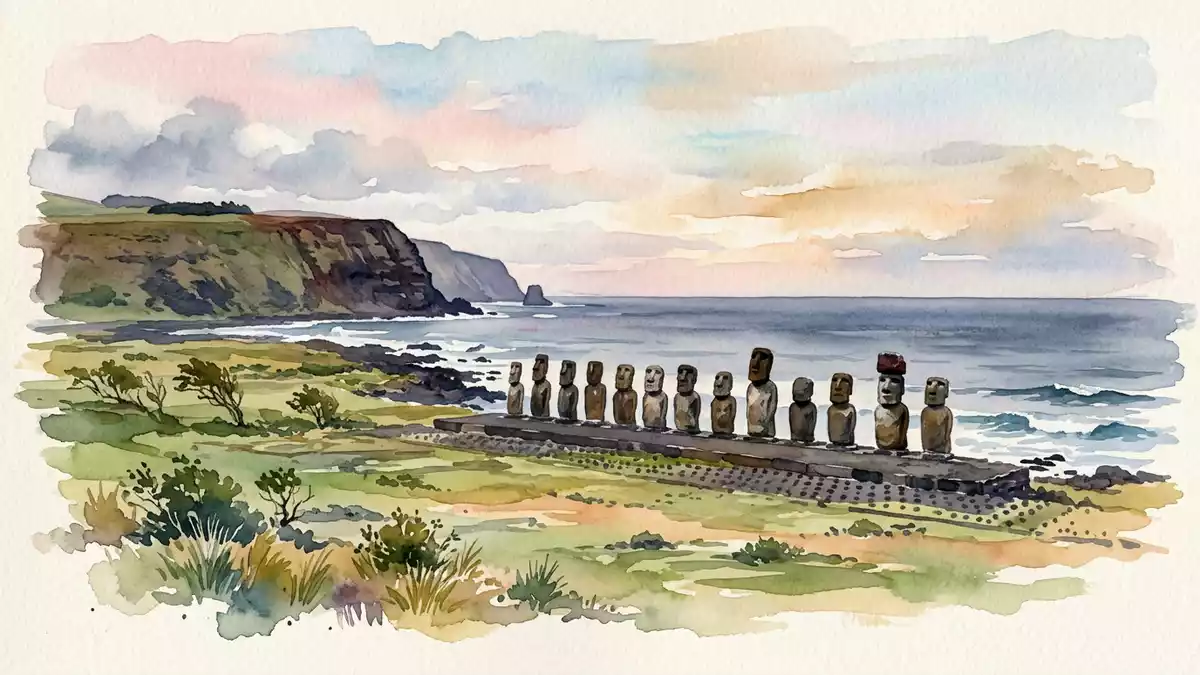
Rapa Nui National Park on Easter Island in Chile surrounds Hanga Roa with a landscape where volcanic ridges, coastal cliffs and fields of grass are punctuated by stone figures carved by the Rapa Nui people.
Recognised as a UNESCO World Heritage Site since the mid-1990s, the park preserves the most extensive concentration of moai statues and ceremonial platforms in Polynesia, set within an island that lies thousands of kilometres from continental South America.
Moai, ahu and a monumental stone landscape
The defining experience of Rapa Nui National Park is encountering moai, the monumental stone figures that stand on or near ceremonial platforms known as ahu across the island.
These statues, carved from volcanic rock by the Rapa Nui people between roughly the tenth and sixteenth centuries, form one of the most striking megalithic landscapes in the world, with many aligned along the coast and others still lying in quarries and on slopes.moai carved from volcanic rock
Across the park, ahu take the form of elongated stone platforms that anchor groups of statues and mark ceremonial sites within the wider terrain.
Some platforms carry restored moai standing upright, while others preserve figures that have fallen or remain partially buried, illustrating both the original ceremonial arrangement and the later history of collapse and conservation work.ahu ceremonial platforms
An isolated Polynesian island with World Heritage status
Easter Island, known in the Rapa Nui language as Rapa Nui, lies in the south-eastern Pacific Ocean and is regarded as one of the most remote inhabited islands on the planet, far to the west of mainland Chile.
Much of the island’s surface area falls within Rapa Nui National Park, which was created in 1935 as a protected area and later inscribed on the UNESCO World Heritage List in 1995 under cultural criteria that highlight its exceptional monumental sculpture and architecture.remote inhabited islandWorld Heritage inscription in 1995
The park is recognised internationally for preserving a dense concentration of archaeological remains, including hundreds of statues, numerous platforms, petroglyphs, dwellings and caves that together document a society of Polynesian origin developing monumental art largely without external influence.
Rapa Nui National Park also functions as a national monument under Chilean law and is managed under arrangements that involve the Rapa Nui community, reflecting the continuing cultural connection between island residents and the sites within the park.national monument protected by law
Volcanic terrain, coastal vistas and living culture
The physical setting of Rapa Nui National Park is defined by volcanic cones, undulating slopes and rugged coastline, with the Pacific driving against low cliffs and inlets below many of the ahu.
Several volcanic craters form key reference points in the landscape, including those with quarry sites where moai were carved and left in different stages, from partly separated figures to statues that appear to emerge from the ground.quarry sites for moai
Within this terrain, archaeological features sit beside contemporary infrastructure and grazing land, and the park forms a backdrop to Hanga Roa, the main settlement on the island.
The Rapa Nui language, ancestral customs and the continued significance of sites such as ahu and moai give the park a dual character as both a heritage landscape and a place where descendants of the original builders engage with their history in everyday life.living evidence of a unique civilisation
Visiting Rapa Nui National Park: what travellers from Western Europe should know
- Rapa Nui National Park covers much of Easter Island in the south-eastern Pacific, and Hanga Roa serves as the main settlement and arrival point for travellers.
- Terrain across the park includes slopes of volcanic ash and rock, coastal edges and uneven ground, and many archaeological sites are reached by walking on unpaved paths.
- Rapa Nui lies within Chile, where the official language is Spanish and the currency is the Chilean peso.
- Entry requirements depend on your nationality; UK travellers can check the FCDO travel advice at gov.uk/foreign-travel-advice, Irish travellers the Department of Foreign Affairs at ireland.ie.
Searching for Rapa Nui National Park on social platforms
These links open searches for Rapa Nui National Park on each platform.
Frequently asked questions about Rapa Nui National Park
Where is Rapa Nui National Park?
Rapa Nui National Park is on Easter Island in the south-eastern Pacific Ocean, within Chile, and surrounds the main settlement of Hanga Roa.
What can visitors expect inside the park?
Visitors encounter moai statues, ahu ceremonial platforms, petroglyphs and volcanic craters set in a windswept island landscape of grassland, slopes and coastal cliffs.
What makes Rapa Nui National Park distinctive?
The park preserves a dense concentration of monumental stone sculpture and architecture created by a Polynesian society in isolation, recognised internationally through its UNESCO World Heritage status.


