
Rapa Nui National Park and the stone figures of a remote Pacific island
Published on 08/24/2026 at 17:27 | Editorial responsibility: Rafael Müller, Editor-in-Chief AD HOC NEWS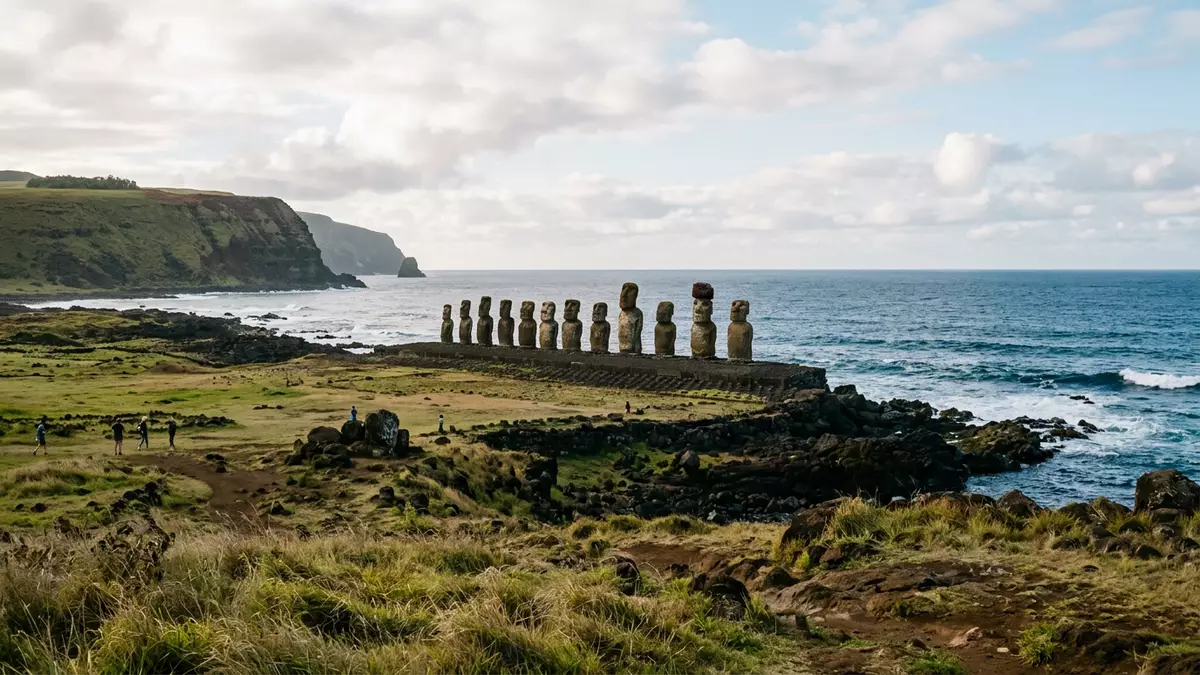
Rapa Nui National Park on Easter Island in Chile is a cultural landscape where stone figures, ceremonial platforms and volcanic craters shape almost half of a remote Pacific island. The park lies close to Hanga Roa, the island’s main settlement, and preserves archaeological remains that trace a Polynesian community from the first centuries AD through major building phases between the tenth and sixteenth centuries.
A World Heritage landscape at the edge of Polynesia
Rapa Nui National Park occupies a large part of Easter Island and includes several nearby islets in the eastern Pacific Ocean. Easter Island lies thousands of kilometres west of continental Chile and forms part of the wider Polynesian triangle, yet it is administratively part of South America.Easter Island’s isolation is a defining feature of how the park is understood as a cultural landscape.
The park is recognised as a UNESCO World Heritage Site under cultural criteria, with its inscription adopted at the nineteenth session of the World Heritage Committee in 1995.UNESCO’s listing for Rapa Nui National Park emphasises both archaeological richness and the way the remains blend with the island’s exposed grassland and volcanic relief. Nearly half of the island’s surface falls within the protected area, creating an extensive zone where archaeological sites sit among cliffs, ancient craters and open slopes.
Moai, ceremonial platforms and quarries
Rapa Nui National Park is best known for its concentration of moai, the large stone figures carved from volcanic rock and set above ceremonial platforms. Archaeological recording identifies close to 900 moai and several hundred platforms across the island, many within the boundaries of the park.Surveys by conservation organisations describe thousands of additional archaeological features, including stone dwellings, petroglyphs and caves.
The park is divided into several sectors that match major archaeological and geological features. Rano Raraku, a volcanic crater, functioned as the principal quarry for moai, and unfinished figures still lie on its slopes.Named sectors such as Rano Raraku, Rano Kau, Puna Pau, Anakena and Ahu Akivi reflect the variety of sites, from quarry zones to coastal platforms and inland complexes. At places like Anakena, archaeological structures stand near sand beaches, while Rano Kau combines a high crater with the remains of an ancient ceremonial village.
Polynesian origins and Chilean protection
The culture associated with Rapa Nui National Park has Polynesian roots, with settlement on the island beginning around the first centuries AD and major phases of statue building from the tenth to the sixteenth century. Over that period, communities developed monumental carving and platform construction on an island that remained geographically isolated from other centres of Polynesian population.UNESCO’s description of the site highlights how this isolation produced a particular tradition of sculpture and architecture.
Chile designated Rapa Nui as a national historic monument in 1935, and Rapa Nui National Park now protects archaeological remains across a large share of the island’s terrain.Historic monument status for Rapa Nui sits alongside the World Heritage listing and national park designation. The park is managed within Chile’s framework for national monuments and protected areas, while retaining the name Rapa Nui that reflects the language and identity of the island’s community.
Visiting Rapa Nui National Park: what travellers from Western Europe should know
- Rapa Nui National Park covers much of Easter Island, with archaeological sectors such as Rano Kau, Rano Raraku, Anakena and Ahu Akivi spread across the island’s coastline and interior.
- Many sites involve walking over uneven volcanic terrain and grassland, and approaches to crater rims or coastal platforms may include sections on slopes or rock.
- Hanga Roa lies within one of the named sectors of the park and functions as the main settlement, so archaeological areas are reached from roads and tracks that begin near the town.
- The official language is Spanish and the currency is the Chilean peso.
- Entry requirements depend on your nationality; UK travellers can check the FCDO travel advice at gov.uk/foreign-travel-advice, Irish travellers the Department of Foreign Affairs at ireland.ie.
Searching for Rapa Nui National Park on social platforms
These links open searches for Rapa Nui National Park on each platform.
Frequently asked questions about Rapa Nui National Park
Where is Rapa Nui National Park located?
Rapa Nui National Park is on Easter Island in the Pacific Ocean, part of Chile, with Hanga Roa as the main nearby settlement.
What can visitors expect to see inside the park?
Visitors encounter moai figures on ceremonial platforms, quarries such as Rano Raraku, crater landscapes like Rano Kau and coastal sites including Anakena and Ahu Akivi.
What makes Rapa Nui National Park distinctive among archaeological sites?
The park combines a dense concentration of monumental stone carving and ceremonial architecture with the isolation of a small Polynesian island far from other land.


