
Recife Antigo and the streets shaped by water
Published on 09/24/2026 at 01:16 | Editorial responsibility: Rafael Müller, Editor-in-Chief AD HOC NEWS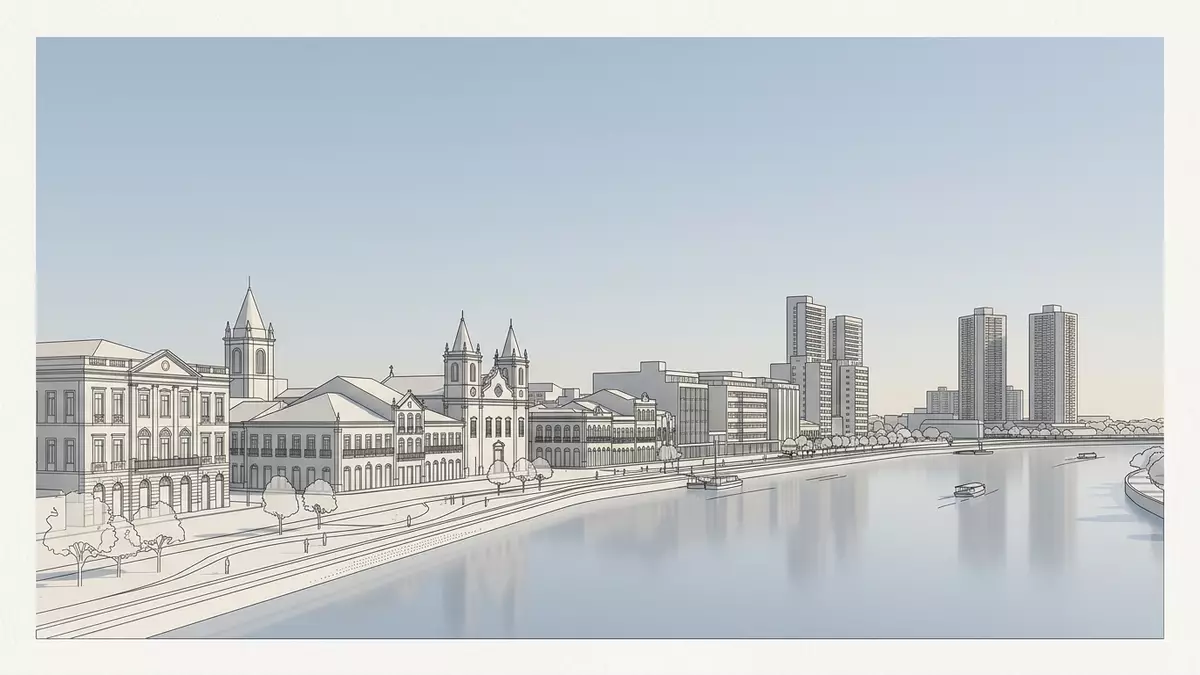
Recife Antigo is Recife’s historic island quarter, a district of cobbled streets, harbour façades and public squares framed by rivers and the Atlantic. Known officially as Bairro do Recife, it preserves the visible layers of a port settlement that emerged in the sixteenth century.
Water remains the defining presence: the Capibaribe and Beberibe rivers meet the harbour around the Island of Recife, while bridges connect the quarter with central Recife. Streets, warehouses and cultural buildings form a compact urban landscape in which maritime geography and city life remain closely linked.
Recife Antigo between rivers and the Atlantic
Recife Antigo occupies the eastern part of Recife’s historic centre. Its low-lying island setting places streets and quays between waterways, harbour basins and the ocean. Bridges link the district with neighbouring parts of the city, while the waterfront opens towards the larger port landscape.
The quarter grew around a sixteenth-century harbour settlement associated with Portuguese colonisation and the movement of goods from Pernambuco. Early streets and warehouses stood close to the docks, giving the district a practical maritime character that remains visible in its layout. The historic centre of Recife preserves colonial houses, baroque architecture and the district’s connection with the city’s formation.
Recife’s history also includes Portuguese, Dutch, African and other Atlantic influences. These histories appear in religious buildings, commercial streets, civic architecture and cultural institutions. Recife Antigo is therefore more than a waterfront promenade: it is an urban district where trade, migration, faith and public life occupy the same streets.
Marco Zero and the quarter’s changing façades
Praça Rio Branco, known as Marco Zero, forms the civic centre of Recife Antigo. A marker installed in 1938 identifies the reference point used for road distances in Pernambuco. The square faces the harbour and provides a clear meeting place between the historic streets and the water.
A bronze monument to the Barão do Rio Branco, created by Félix Charpentier, was inaugurated in 1917. The monument and the marker give Marco Zero two distinct historical references: one commemorates a statesman, while the other records a geographical starting point.
From the square, cobbled routes lead towards streets lined with colonial townhouses, merchants’ houses and early twentieth-century buildings. Rua do Bom Jesus and Rua da Moeda retain historic façades alongside museums, cultural centres and public spaces. Their architecture includes details associated with French-influenced urban design introduced during Recife’s twentieth-century transformation.
The quarter’s buildings do not belong to a single architectural period. Narrow streets meet broader avenues, older masonry stands beside later façades, and former commercial or harbour structures now contain cultural uses. The Marco Zero monument and marker express this mixture of civic history and port geography.
Harbour buildings, frevo and Atlantic memory
Along Avenida Alfredo Lisboa, former warehouses and customs buildings face the harbour basin. Their long façades, masonry walls, tall openings and cornices retain the proportions of port-related architecture. Inside and around these structures, Recife Antigo contains museums, craft spaces, exhibition venues and cultural institutions.
Paço do Frevo is dedicated to frevo, the music and dance associated with Recife and Pernambuco’s carnival culture. Its presence connects the district’s built heritage with a living artistic tradition. The Cais do Sertão museum explores the culture of Brazil’s north-eastern hinterland, placing regional music, landscape and social history within the harbour district.
Torre Malakoff is another prominent building near the waterfront. Its historic form belongs to Recife Antigo’s civic and port landscape, while nearby streets contain churches, commercial façades and public buildings. The Kahal Zur Israel Synagogue adds a further Atlantic dimension: its history reflects the Jewish community connected with Dutch Recife in the seventeenth century.
Across the basin, the Parque das Esculturas Francisco Brennand extends along a pier into the water. The sculptures form a visible counterpoint to the masonry façades of Recife Antigo. Together, the waterfront cultural institutions and the sculpture park show how the harbour setting continues to shape the district’s public identity.
Recife Antigo’s strongest impression comes from the coexistence of fixed geography and changing use. Rivers, quays, bridges and cobbles remain physically present, while warehouses, customs buildings and civic spaces hold museums, music, crafts and exhibitions. The quarter is read through its water, streets and buildings together.
Visiting Recife Antigo: what travellers from Western Europe should know
- Recife Antigo forms the eastern part of Recife’s historic centre on the Island of Recife. Bridges connect it with São José, Boa Vista and Santo Amaro.
- The Capibaribe and Beberibe rivers border the island quarter alongside the harbour basin. Marco Zero faces this waterside setting.
- Cobbled streets and open waterfront squares shape movement through the district. Uneven surfaces and stretches without shade are permanent features.
- The official language is Portuguese and the currency is the Brazilian real.
- Entry requirements depend on your nationality; UK travellers can check the FCDO travel advice at gov.uk/foreign-travel-advice, Irish travellers the Department of Foreign Affairs at ireland.ie.
Searching for Recife Antigo on social platforms
These links open searches for Recife Antigo on each platform.Frequently asked questions about Recife Antigo
Where is Recife Antigo?
Recife Antigo is Bairro do Recife, an island district forming the eastern part of Recife’s historic centre. It lies between the Capibaribe and Beberibe rivers, the harbour and the Atlantic.
What can visitors see in Recife Antigo?
The quarter contains Marco Zero, Rua do Bom Jesus, Rua da Moeda, former warehouses, customs buildings and cultural venues. Paço do Frevo, Cais do Sertão, Torre Malakoff and the Kahal Zur Israel Synagogue are among its named landmarks.
What makes Recife Antigo distinctive?
Its streets, buildings and public spaces remain closely connected with the water around the Island of Recife. A sixteenth-century port origin, Marco Zero and reused harbour buildings give the district its maritime character.


