
Researchers report intact burials at Göbekli Tepe on 21 September
Published on 09/27/2026 at 16:51 | Editorial responsibility: Rafael Müller, Editor-in-Chief AD HOC NEWS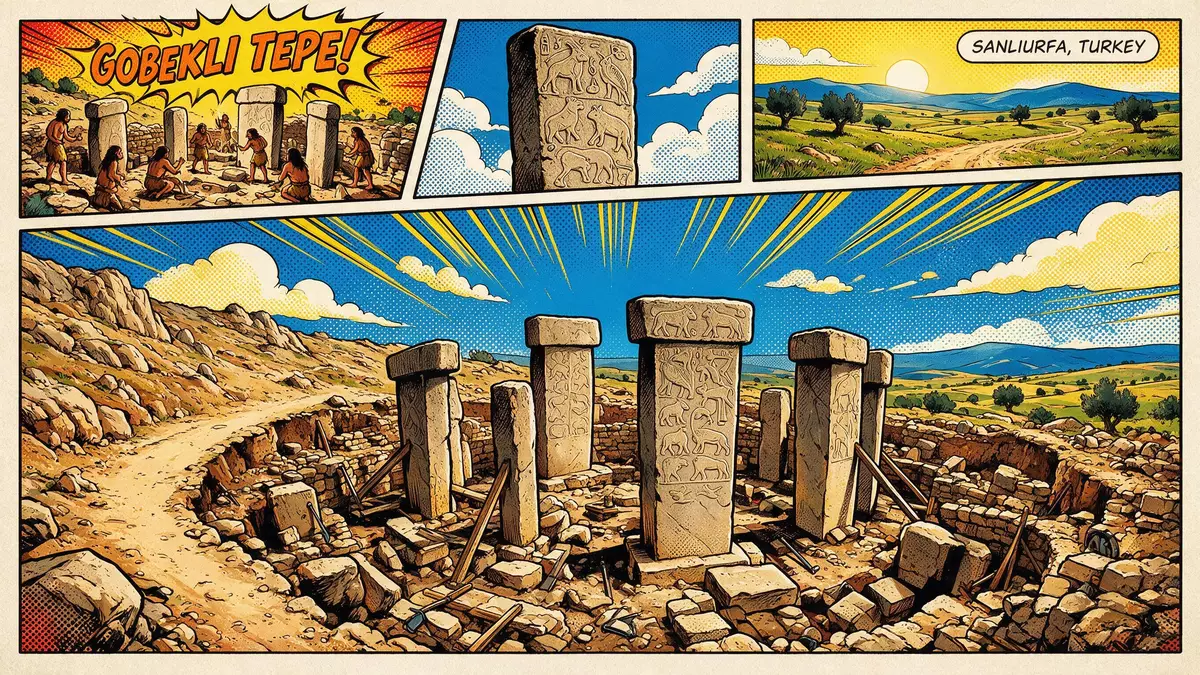
Researchers have reported the first intact burials at Göbekli Tepe (Göbeklitepe) in Sanliurfa, Turkey, in a publication dated 21 September 2026. The discovery adds new evidence to the debate over whether the Neolithic site served only as a ceremonial centre or also supported everyday life.
What the 21 September 2026 burial report says
The German Archaeological Institute announced a new study by Julia Gresky and Lee Clare in PLOS One. The research concerns two burials dated to the Pre-Pottery Neolithic B period in the middle of the ninth millennium BCE.
One grave contained the remains of an adult woman, a young man and an adolescent girl in a kidney-shaped pit. A second grave held a young woman whose body had been placed in a flexed position. The findings are described in the 21 September 2026 research publication.
The graves help researchers interpret hundreds of fragmented human bones previously recovered from the fill of monumental buildings. Analysis suggests that some fragments may have moved downhill from higher burials as settlement deposits slipped towards the lower structures, although the study does not rule out other mortuary practices.
How the new burials change the reading of the site
The result matters because earlier interpretations often presented the site mainly as a place where hunter-gatherer groups gathered for rituals. The intact graves indicate that burial activity occurred within the settlement area and give researchers a better comparison for the damaged remains found elsewhere.
The wider archaeological picture is still complex. The UNESCO World Heritage Centre describes monumental round, oval and rectangular structures built by hunter-gatherers between 9,600 and 8,200 BCE. Their distinctive limestone T-shaped pillars include carvings of wild animals, while later excavation has also identified non-monumental structures that appear to have been domestic buildings.
That combination makes the 21 September finding particularly relevant to the site itself: the new graves connect human burial with the same landscape that contains monumental architecture. The discovery does not turn an interpretation into a certainty, but it strengthens the case for a settlement with both domestic and ritual functions. The UNESCO site description records the protected area's architectural and archaeological context.
Why Göbekli Tepe matters for visitors in October 2026
The new burial report is a research announcement rather than a festival, exhibition or special access programme. Visitors therefore encounter the archaeological site and its established viewing arrangements, while the scientific importance of the September finding is explained through research rather than a separate event.
The German Archaeological Institute identifies the location as a UNESCO World Heritage Site in south-eastern Turkey and notes more than three decades of Turkish-German archaeological cooperation. The study was published as First burials give insights into mortuary rites at Göbeklitepe, Early Neolithic Türkiye in PLOS ONE.
Visiting Göbekli Tepe: what travellers from Western Europe should know
- The current news peg is the burial research announced on 21 September 2026. The two graves date from about 8700 to 8000 BCE.
- The announcement concerns archaeological findings and does not announce a closure, special opening or changed entrance for visitors.
- The official heritage listing places the site 18 kilometres north-east of Sanliurfa, near Örencik village, in south-eastern Turkey.
- The site occupies a limestone plateau with monumental enclosures and carved T-shaped pillars; the terrain is an archaeological landscape rather than an enclosed urban museum.
- Turkey's official language is Turkish and its national currency is the Turkish lira.
Searching for Göbekli Tepe on social platforms
These links open searches for Göbekli Tepe on each platform.
Frequently asked questions about Göbekli Tepe
When were the new burials reported at Göbekli Tepe?
The German Archaeological Institute announced the research on 21 September 2026. The study describes two intact burials from the Pre-Pottery Neolithic B period.
What is Göbekli Tepe?
It is a UNESCO World Heritage archaeological site with monumental structures built by hunter-gatherers between 9,600 and 8,200 BCE. Its T-shaped limestone pillars carry carvings of wild animals.
Where is Göbekli Tepe and how do you get there?
The site is near Örencik village, 18 kilometres north-east of Sanliurfa in south-eastern Turkey. The official heritage listing identifies it as part of the Germus mountain landscape.


