
Reserva Nacional de Paracas where desert meets the Pacific
Published on 08/30/2026 at 14:54 | Editorial responsibility: Rafael Müller, Editor-in-Chief AD HOC NEWS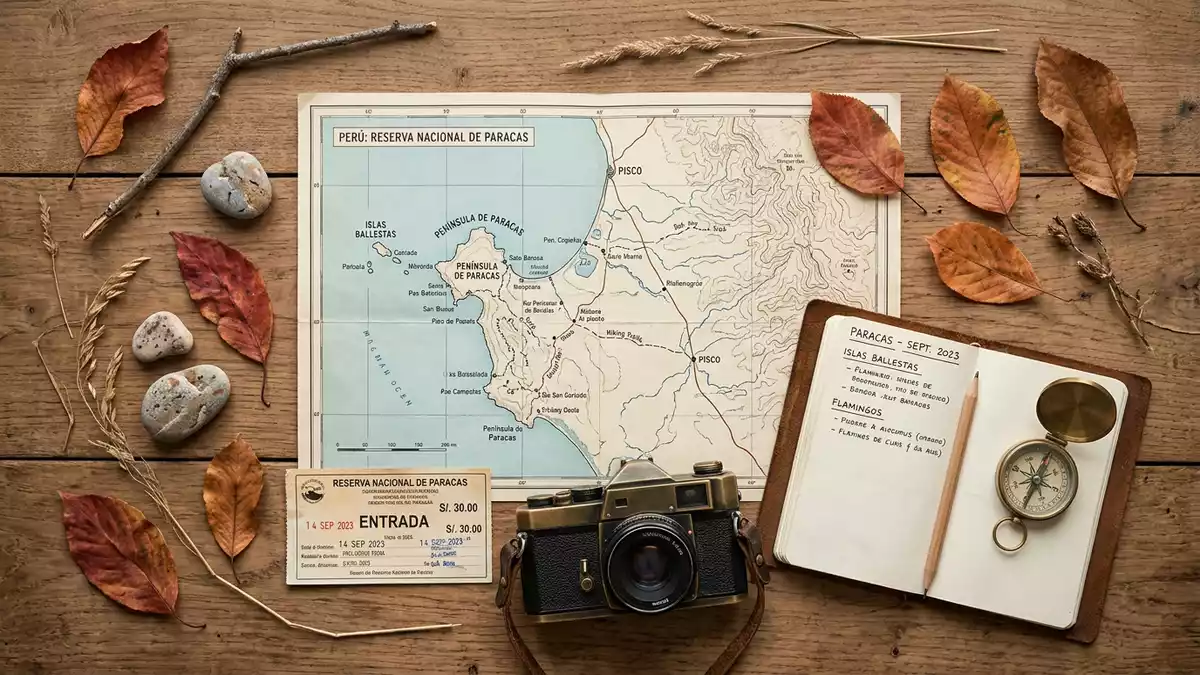
Reserva Nacional de Paracas on Peru’s south-central coast is a protected landscape where the Pacific Ocean meets the coastal desert in a single sweeping reserve of land and sea. Established as a national reserve in 1975, it spans a broad peninsula and surrounding waters in the department of Ica and protects both arid terrain and marine ecosystems in one continuous area.
Desert peninsula projecting into the Pacific
Reserva Nacional de Paracas occupies a peninsula and adjacent shoreline near Paracas in the region of Ica, extending into the Pacific Ocean south of Pisco. The reserve lies a few kilometres from the town of Pisco and roughly 250 km south of Lima along Peru’s coastal strip, so the transition from urban coast to desert headlands is direct once the peninsula begins.The reserve is located in the region of Ica
The protected area covers about 335,000 hectares (827,801 acres), combining extensive marine waters with land on the peninsula and nearby islands. A significant proportion of this surface corresponds to marine ecosystems, while the rest consists of mainland desert and rocky coastline shaped by wind and waves.It covers an area of 335,000 hectares On land, the scenery ranges from wide sandy plains to cliffs above bays, with low hills and headlands forming a chain of promontories towards the ocean.
A reserve built around land and sea together
Paracas National Reserve was officially created on 25 September 1975 as a protected area within the national system of natural reserves in Peru.It was created on 25 September 1975 Its status brings together territory in the provinces of Pisco and Ica, and it is managed as part of the country’s network of areas dedicated to conservation and sustainable use of natural resources.This reserve forms part of the national system of protected areas
Paracas stands out in Peru as a national reserve that includes both terrestrial desert and a substantial marine area within the same legal protection. Marine waters account for around 65% of its total surface, while the remainder covers coastal desert, beaches and islands rising from the Pacific.About 65% of the reserve corresponds to marine waters This combination of ecosystems makes the site important for both wildlife above the shoreline and species that depend on the cold sea of the Peruvian current.
Geology, desert landscapes and marine life
The geology of Reserva Nacional de Paracas reflects a long history of sedimentation and uplift along Peru’s Pacific margin. Rocks of different ages underlie the peninsula, including intrusive igneous formations associated with Precambrian and Palaeozoic periods and fossil-bearing Eocene deposits that form much of the surface known as the Paracas formation.The most extensive deposits correspond to Tertiary fossiliferous Eocene rocks Over these geological layers lie alluvial terraces and desert surfaces shaped by wind, creating a landscape of coloured cliffs and plains facing the sea.
Within this geological setting, the reserve protects a mosaic of bays, shallow marine waters, rocky shores, sandy beaches and offshore islands. The area is representative of the cold sea associated with the Peruvian current and of the Pacific coastal desert, and this mix of ocean and arid land supports seabirds, marine mammals and shorebirds that use the coastline as a staging area.It is representative of the cold Peruvian current and Pacific coastal desert The reserve has also been recognised within a hemispheric network of shorebird sites as a location of regional importance because of the diversity of Nearctic shorebirds that stop in its coastal environments.It was designated a WHSRN site of regional importance in 1991
Visiting Reserva Nacional de Paracas: what travellers from Western Europe should know
- Reserva Nacional de Paracas lies near the town of Paracas in the department of Ica on Peru’s south-central Pacific coast. It is reached overland from Lima along the Panamericana Sur highway and by local roads that lead to the peninsula and coastal viewpoints.
- On land, the reserve consists largely of desert terrain with unshaded stretches, exposed cliffs and sandy surfaces. Approaches to viewpoints and coastal areas can involve walking over uneven ground and low slopes in an open environment.
- The protected area combines coastal desert and Pacific waters beside the town of Paracas, so short journeys by boat are used to reach nearby islands and marine viewing areas from local piers.
- The official language is Spanish and the currency is the Peruvian sol.
- Entry requirements depend on your nationality; UK travellers can check the FCDO travel advice at gov.uk/foreign-travel-advice, Irish travellers the Department of Foreign Affairs at ireland.ie.
Searching for Reserva Nacional de Paracas on social platforms
These links open searches for Reserva Nacional de Paracas on each platform.
Frequently asked questions about Reserva Nacional de Paracas
Where is Reserva Nacional de Paracas located?
Reserva Nacional de Paracas is on Peru’s south-central Pacific coast in the department of Ica, near the town of Paracas and south of Pisco.
What can visitors expect on a visit to the reserve?
Visitors encounter coastal desert landscapes, cliffs and bays facing the Pacific, along with marine environments that support seabirds and shorebirds around the peninsula and nearby islands.
What makes Reserva Nacional de Paracas distinctive among Peru’s protected areas?
Paracas is distinctive for combining a large marine area with coastal desert in a single protected reserve, covering 335,000 hectares and representing both the cold Peruvian current and Pacific coastal desert.


