
Rijksmuseum and its grand stage for Dutch art
Published on 08/23/2026 at 11:45 | Editorial responsibility: Rafael Müller, Editor-in-Chief AD HOC NEWS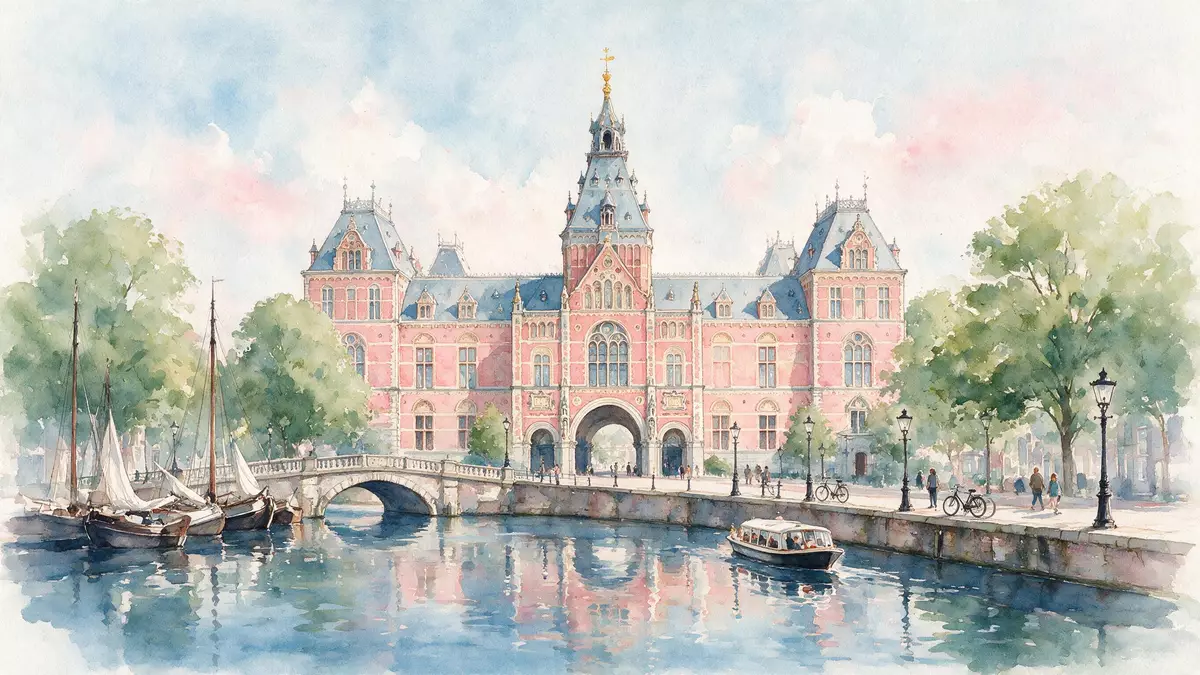
Rijksmuseum in Amsterdam is both a national museum of art and history and a monumental piece of architecture in its own right, designed to frame centuries of Dutch culture under one roof. Opened in the late nineteenth century, it stands on Museumplein in the city’s museum quarter, pairing historic collections with a richly ornamented brick and stone structure by architect Pierre Cuypers.
A national museum in a purpose-built palace
Rijksmuseum is the museum of the Netherlands, devoted to art, crafts and history from around the thirteenth century to the twentieth century. Inside, galleries present works from about 1200 to 2000, including paintings, decorative arts, prints and objects from everyday life and from Dutch maritime activity.art and history from 1200 to 2000 The institution traces its origins to a national collection established in 1798 on the French model, intended to bring together important works for public display.a national museum established in 1798
In the early nineteenth century the museum moved to Trippenhuis, a seventeenth-century city palace on Kloveniersburgwal in Amsterdam, where paintings and prints from the national collections were brought together. Later in that century the decision was taken to create a dedicated building for the museum, with Amsterdam providing land and works from its municipal painting collection as part of the arrangement.a dedicated building for the museum This shift from a city palace to a purpose-built museum forms a key part of Rijksmuseum’s identity: the building and the collection were planned to belong together.
Pierre Cuypers’s historicising architecture
The present Rijksmuseum building was designed by Dutch architect Pierre Cuypers and opened in 1885, taking a historicising approach that blends Gothic and Renaissance elements with national symbolism in its ornament.designed by Pierre Cuypers and opened in 1885 Cuypers, also known for Amsterdam Centraal station, created a structure with towers, vaulted interiors, murals and stained glass that led some contemporaries to see it as reminiscent of a cathedral, earning it the nickname “Cuypers’ Cathedral”.Cuypers’ Cathedral nickname The building incorporates extensive brickwork, stone detailing and sculpted decoration on its facades.
Cuypers organised the plan as two large squares with inner courtyards, surrounded and fronted by towers and linked by passageways, so visitors move through sequences of galleries around these enclosed spaces.two squares with inner courtyards He designed not only the main structure but also its ornamental programme and the museum gardens, which were laid out between the 1880s and early twentieth century and enclosed by a wrought-iron fence. The building has been a national monument since 1970, and a major renovation between 2003 and 2013 restored much of Cuypers’s original concept while updating the museum for contemporary use.renovation between 2003 and 2013
Collections, highlights and Museumplein setting
Rijksmuseum’s collection numbers about one million objects, with several thousand on display at any one time in its galleries. Among them are masterpieces by seventeenth-century painters such as Rembrandt, Frans Hals and Johannes Vermeer, including Rembrandt’s celebrated Night Watch, Vermeer’s Milkmaid and a self-portrait by Vincent van Gogh.works by Rembrandt, Vermeer and Van Gogh The museum also holds Asian art, sculpture, decorative arts and an extensive collection of prints, as well as the Cuypers Library, which is recognised as the largest and oldest art history library in the Netherlands.Cuypers Library art history collection
The building stands on Museumstraat at the edge of Museumplein, a public square in the Museumkwartier neighbourhood in Amsterdam-Zuid that also hosts the Van Gogh Museum, Stedelijk Museum and the Concertgebouw concert hall.Museumplein public square Rijksmuseum’s facades address both the square and the surrounding streets, and its gardens form a buffer of planted space around the main structure. The location places it close to Amsterdam’s canal belt and within walking distance of Vondelpark, so the museum sits directly within the city’s historic and cultural landscape.
Visiting Rijksmuseum: what travellers from Western Europe should know
- Rijksmuseum stands on Museumstraat at Museumplein in Amsterdam’s museum quarter, reachable by tram and other public transport that serve the Museumplein and Museumkwartier area.
- Inside the museum, visitors move through sequences of galleries arranged around inner courtyards, and staircases connect multiple levels of exhibition spaces.
- The surrounding Museumplein area is a broad public square with paved surfaces and lawns, and the museum’s own gardens form structured outdoor spaces around the building.
- The official language is Dutch and the currency is the euro.
Searching for Rijksmuseum on social platforms
These links open searches for Rijksmuseum on each platform.
Frequently asked questions about Rijksmuseum
Where is Rijksmuseum located?
Rijksmuseum is in Amsterdam’s museum quarter on Museumstraat, beside Museumplein in the Museumkwartier neighbourhood of the Amsterdam-Zuid borough.
What can visitors expect inside Rijksmuseum?
Visitors encounter galleries of Dutch and European art and history from around 1200 to 2000, including paintings by Rembrandt, Vermeer and other noted artists, together with Asian art and decorative objects.
What makes Rijksmuseum distinctive among museums?
Rijksmuseum combines a vast national collection with a historicising building by Pierre Cuypers, where towers, courtyards and rich ornament form an architectural setting for Dutch art and history.


