
Roatan Reef and the fringing corals of Honduras’s Bay Islands
Published on 08/18/2026 at 14:38 | Editorial responsibility: Rafael Müller, Editor-in-Chief AD HOC NEWS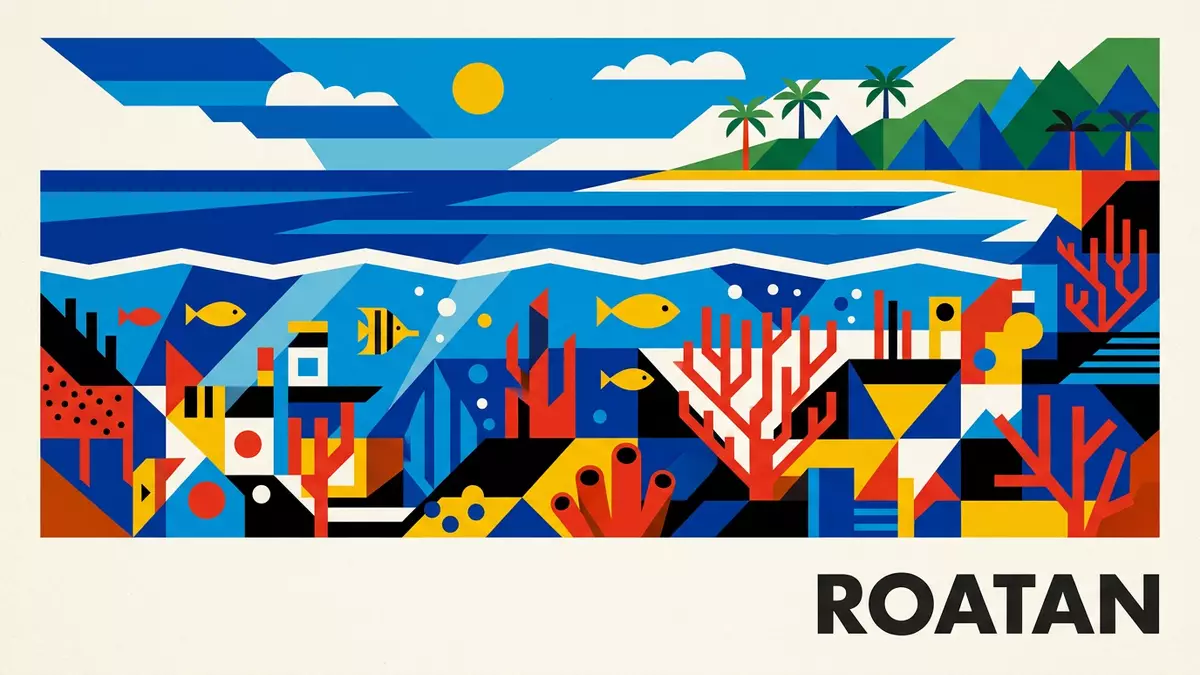
Roatan Reef is the fringing coral system that surrounds Roatan, an island in the Bay Islands of Honduras, forming part of the wider Mesoamerican Barrier Reef across the western Caribbean Sea. The reef lies close to Roatan’s shores, where coral formations drop away towards the deeper Cayman Trench and create a compact meeting of shallow reef and open sea.
Fringing reef at the edge of the Mesoamerican Barrier Reef
Roatan sits off the northern coast of Honduras, in the Caribbean Sea between Utila and Guanaja, and its surrounding reef marks the southern reach of the Mesoamerican Barrier Reef System, an interconnected chain of coral running along the coasts of Mexico, Belize, Guatemala and Honduras.Mesoamerican Barrier Reef This system is recognised as the second-largest barrier reef complex in the world after Australia’s Great Barrier Reef and stretches for hundreds of kilometres through the western Caribbean.second-largest coral formation
Along Roatan’s coastline the reef forms a band of coral that hugs the island and then falls away towards deeper water, with shallower formations, walls and drop-offs lying a short boat ride from shore.fringing reef positioned at the edge of the Cayman Trench The reef’s location at the transition between coastal shallows and the Cayman Trench gives Roatan a varied underwater topography, where sand flats, coral slopes and vertical walls sit within the same stretch of sea.
Coral habitats and marine life along Roatan Reef
Roatan Reef forms part of a wider mosaic of marine habitats in the Bay Islands National Marine Park, a protected area covering coral reefs, seagrass beds, wetlands and beaches around Roatan and its neighbouring islands.Bay Islands National Marine Park Within this seascape the reef provides the hard structure on which corals grow and around which fish, molluscs and other species move. The surrounding region hosts dozens of coral species and many hundreds of fish species, together with invertebrates such as the queen conch.more than 60 coral species and over 500 fish species
On the southwest side of Roatan, the Cordelia Banks Site of Wildlife Importance protects one of the healthier remaining patches of staghorn coral in the region, a branching species that creates tangled thickets and provides shelter for juvenile fish.Cordelia Banks Site of Wildlife Importance Elsewhere along Roatan Reef, divers and snorkellers encounter reef fish, hard and soft corals, sponges and the occasional larger visitor such as turtles moving between reef and open water.vast coral ecosystem shared with neighbouring coasts
Roatan Marine Park and reef protection
Part of Roatan Reef falls within the Roatan Marine Park, a community-based protected area established in 2005 to address reef degradation in the Sandy Bay–West End Marine Reserve.Roatan Marine Park The marine park sits inside the broader Bay Islands National Marine Park, which is recognised as the largest marine protected area in Honduras and covers hundreds of thousands of hectares of sea and coastal habitats.largest marine protected area in Honduras
Protection measures around Roatan Reef support conservation work on coral health, fisheries and clean water, together with community programmes focused on the wider Mesoamerican Reef.conservation, clean water and fisheries The reef’s status within these overlapping parks underlines its importance both as a habitat in its own right and as part of the longer chain of coral that runs from the Yucatán Peninsula in Mexico to the Bay Islands of Honduras.reef runs from Yucatán to Roatan
Visiting Roatan Reef: what travellers from Western Europe should know
- Roatan Reef lies off the island of Roatan in the Bay Islands of Honduras, reached by air via Juan Manuel Gálvez International Airport near Coxen Hole and onward travel to coastal communities.
- The reef is approached by boat from shore, with access points in areas such as Sandy Bay, West End and West Bay, and entering the water usually involves boarding small vessels and swimming over shallow coral and sand.
- Roatan is an island off the northern coast of mainland Honduras in the western Caribbean, and the official language is Spanish and the currency is the Honduran lempira.
- Entry requirements depend on your nationality; UK travellers can check the FCDO travel advice at gov.uk/foreign-travel-advice, Irish travellers the Department of Foreign Affairs at ireland.ie.
Searching for Roatan Reef on social platforms
These links open searches for Roatan Reef on each platform.
Frequently asked questions about Roatan Reef
Where is Roatan Reef located?
Roatan Reef surrounds the island of Roatan in the Bay Islands of Honduras, lying off the country’s northern Caribbean coast.
What can visitors expect when they reach Roatan Reef?
Visitors encounter a fringing coral system close to shore, with shallow reef, walls and deeper water meeting within a short distance of coastal communities.
What makes Roatan Reef distinctive among Caribbean reefs?
Roatan Reef forms part of the extensive Mesoamerican Barrier Reef, giving Roatan a combination of near-shore coral habitats and access to the longer reef system that runs through the western Caribbean.


