
Robben Island: a bleak island of exile off Kapstadt
Published on 08/20/2026 at 12:59 | Editorial responsibility: Rafael Müller, Editor-in-Chief AD HOC NEWS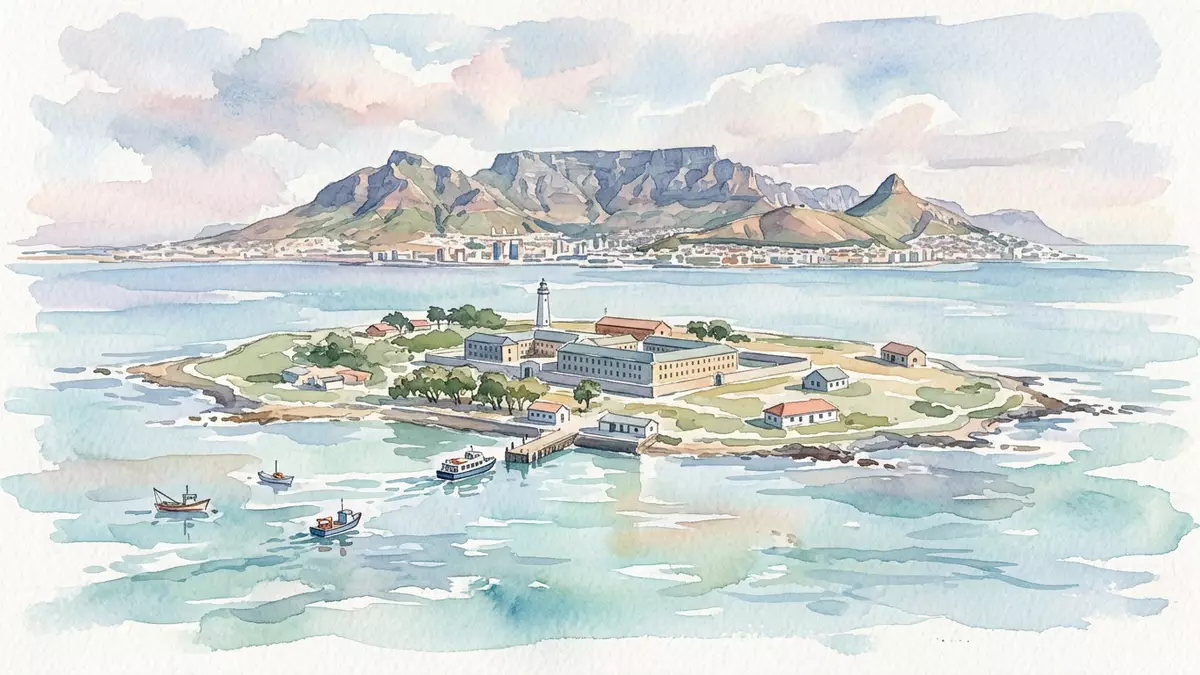
Robben Island lies in Table Bay off Kapstadt, an apparently modest low island whose long history as a place of exile and imprisonment has made it one of South Africa’s most charged landscapes. It is best known as the prison where Nelson Mandela spent many years during apartheid, yet the island’s story stretches back centuries, from early stopover for ships to leper colony and military base.
An island of confinement in Table Bay
Robben Island sits off the coast of Cape Town in Table Bay, a short distance out across the water from the city’s harbour and the skyline backed by Table Mountain. Its name comes from the Dutch word for seals, reflecting the animals that once gathered around its rocky shores.Dutch word for seals The island’s low profile and rough perimeter give it a stark, workmanlike appearance, more functional outpost than picturesque resort.
In the sixteenth and seventeenth centuries Robben Island served as a stopping point for passing ships on the sea route around the Cape, a place to take on fresh water and supplies away from the mainland. Over time, colonial authorities recognised its isolation and began using it to confine those they wished to keep at arm’s length, a role that would define the island for centuries.stopping point for passing ships
From leper colony to apartheid prison
Robben Island’s use as a place of confinement predates apartheid by generations. Under Dutch and later British rule it became a penal colony, where convicts and political prisoners were sent away from the mainland. In the nineteenth century it also housed a leper colony and facilities for people judged chronically or mentally ill, turning the island into a medical settlement where those considered “socially undesirable” were removed from Cape Town.leper colony and asylum A lighthouse was installed on the island in the 1860s, emphasising its dual role as navigational marker and place of exile.
The medical settlement closed in 1931 and Robben Island was reorganised as a military base, with fortifications and barracks playing a part in South Africa’s defence during the mid twentieth century.military base and fortifications In 1961 the Prisons Department converted parts of the island into a maximum-security prison for opponents of the apartheid regime, holding activists from organisations such as the African National Congress and the Pan Africanist Congress.maximum-security prison for political prisoners Nelson Mandela was imprisoned on Robben Island for 18 of his 27 years behind bars, and many other leaders of the struggle against apartheid spent long periods in its cells.Nelson Mandela’s imprisonment
Robben Island as museum and World Heritage Site
Robben Island’s era as a maximum-security prison came to an end in the early 1990s, when political prisoners were released as apartheid was dismantled. The island continued for a while as a medium-security prison for criminal offenders, but by 1996 the prison operations had closed. In 1997 the site was declared a national monument and Robben Island Museum was established to preserve the buildings and stories linked to centuries of confinement.national monument and museum
In 1999 Robben Island was inscribed on the UNESCO World Heritage List, recognised for its multi-layered history as prison, place of exile, hospital and military base and for its central role in South Africa’s twentieth-century political transformation.inscription on the UNESCO World Heritage List Visitors travel across Table Bay to explore former prison buildings, the limestone quarry where prisoners laboured and the small settlement linked to the island’s administrative past. Guided tours emphasise the contrast between the open sea and the confined spaces, and the way a low island visible from Cape Town became one of the country’s most potent symbols of both repression and resilience.
Visiting Robben Island: what travellers from Western Europe should know
- Robben Island lies off Kapstadt in Table Bay, reached by passenger boats that depart from the city’s waterfront and cross to the island’s small harbour.
- The terrain on the island is low and windswept, with paved areas around the harbour and prison complex and longer walks on level roads and tracks between buildings and the quarry.
- Robben Island forms part of South Africa, where the official currency is the South African rand and the official languages include Afrikaans and English.
- Entry requirements depend on your nationality; UK travellers can check the FCDO travel advice at gov.uk/foreign-travel-advice, Irish travellers the Department of Foreign Affairs at ireland.ie.
Searching for Robben Island on social platforms
These links open searches for Robben Island on each platform.
Frequently asked questions about Robben Island
Where is Robben Island in relation to Kapstadt?
Robben Island lies in Table Bay off Kapstadt, reached by boat from the city’s waterfront across the short stretch of sea between harbour and island.
What can visitors expect on a visit to Robben Island?
Visitors travel by boat to the island’s harbour, then explore former prison buildings, the quarry and other structures linked to its long history as a place of confinement.
What makes Robben Island distinctive among South African heritage sites?
Robben Island is distinctive for its layered history as penal colony, leper settlement, military base and apartheid-era maximum-security prison, and for its recognition as a UNESCO World Heritage Site.


