
Rose Hall Great House and the White Witch legend
Published on 08/22/2026 at 20:51 | Editorial responsibility: Rafael Müller, Editor-in-Chief AD HOC NEWS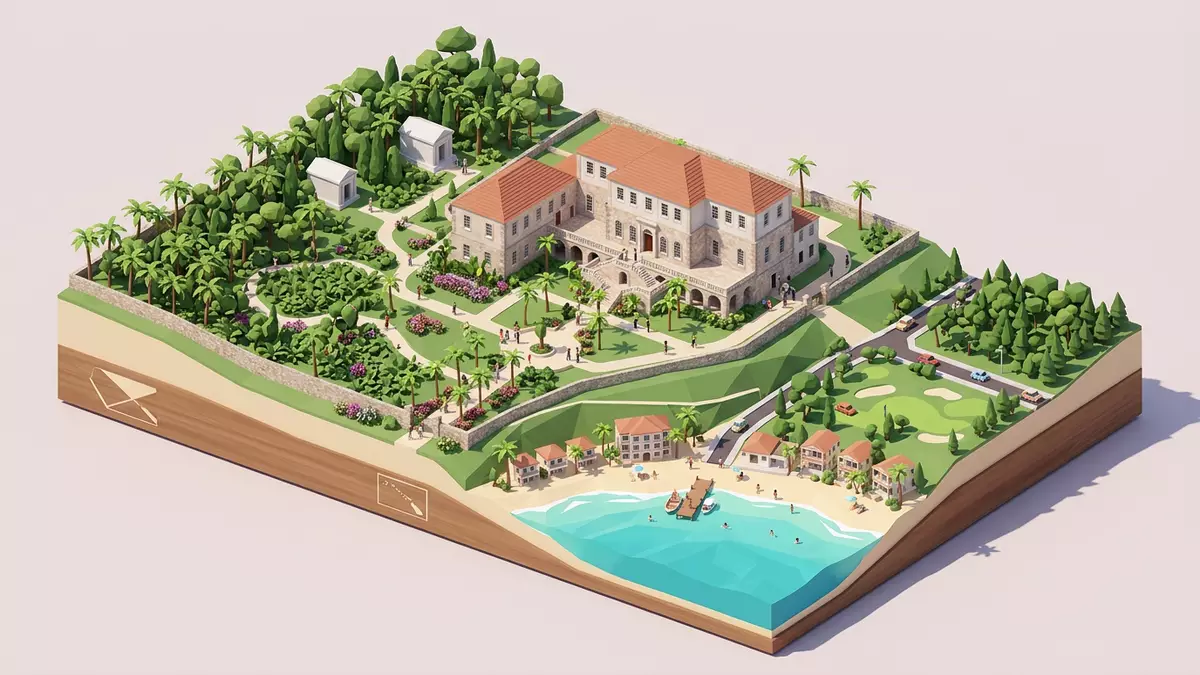
Rose Hall Great House near Montego Bay in Jamaica is a Georgian plantation mansion where elegant architecture and the enduring “White Witch” legend sit directly over the island’s sugar?era history. Built in the eighteenth century as the centrepiece of a large estate worked by enslaved people, it has been restored as a museum and attraction that makes both the grandeur and the brutality of that period visible inside one house.
A Georgian great house above the Caribbean
Rose Hall Great House stands on rising ground east of Montego Bay, overlooking what was once the Rose Hall Sugar Estate and the Caribbean Sea beyond. Jamaica National Heritage Trust describes it as a Georgian mansion with cut stone on the lower levels, stucco above, sash windows, quoins, a hip roof and a grand stone staircase leading to the main entrance, a composition that reads as textbook late eighteenth?century British colonial architecture in the Caribbean.Georgian mansion with cut stone Inside, wide verandas, high?ceilinged rooms and timber floors frame views across former plantation lands, a reminder that this house was designed both as a residence and as an administrative centre for a large agricultural enterprise.
The estate around Rose Hall grew during the eighteenth century into a substantial sugar property. Frommers describes the plantation at its peak as covering around 6,521 acres, with more than 2,000 enslaved people forced to work the cane fields and associated operations.6,521?acre plantation with enslaved labour The scale of the landholding and the labour force generated the wealth that paid for carved mahogany interiors, imported furnishings and formal entertaining, elements that visitors encounter today in the restored rooms.
From eighteenth?century plantation house to twentieth?century restoration
The story of Rose Hall Great House begins in the mid?eighteenth century, when land on Jamaica’s north coast was assembled for a sugar estate. Jamrock Museum notes that Rose Hall Plantation was established in the mid?eighteenth century by planter George Ash and named after his wife Rosa, the estate encompassing thousands of acres devoted to cane and pasture.Rose Hall Plantation established in the mid?eighteenth century The current great house, a substantial Georgian mansion, was built around 1770, and during the late eighteenth century it became the residence of John Palmer, a wealthy British planter whose fortunes were tied directly to sugar and slavery.1770s mansion associated with John Palmer
Rose Hall Great House did not remain intact through the nineteenth century. Lonely Planet records that enslaved people destroyed the house during the 1831 Christmas Rebellion, a major uprising on plantations in Jamaica, and that the building lay in ruins for more than a century.Destroyed in the 1831 Christmas Rebellion In the 1960s, American businessman John Rollins and his wife Michele bought the property and undertook a full restoration, rebuilding the three?storey structure, refitting interiors with period?style furniture and reintegrating the great house into a wider resort and golf development along the coast.Restoration by John and Michele Rollins in the 1960s The result is a mansion that reads visually as an eighteenth?century plantation house while functioning as a heritage site embedded in modern tourism.
Annie Palmer and the White Witch folklore
Rose Hall Great House is closely associated with the legend of Annie Palmer, the so?called “White Witch of Rose Hall”, whose story is layered onto the documented plantation history. Travel guides summarise the tale as that of a young woman, Annie Palmer, who married John Rose Palmer in 1820 and lived at Rose Hall, where folklore claims she murdered three husbands and several enslaved lovers and practised black magic.White Witch legend centred on Annie Palmer Ghost stories around her supposed haunting of the house, particularly an upstairs bedroom identified with her, have become part of guided tours and popular culture.
Historians and local researchers have pointed out that the Annie Palmer narrative blends fragments of real people with Gothic invention. Barnard College’s history project stresses that Rose Hall Plantation was a site where hundreds of men, women and children were enslaved between the eighteenth century and the early nineteenth century, and that the ghost tale sits on top of this documented exploitation.Plantation where hundreds were enslaved Visitors moving through the restored rooms therefore encounter both the polished surfaces of the legend and, through exhibits and interpretation, the harder historical record of sugar, slavery and rebellion that gave the house its original reason for being.
Visiting Rose Hall Great House: what travellers from Western Europe should know
- Rose Hall Great House stands east of Montego Bay on Jamaica’s north coast, reached by road along the coastal corridor that connects the city with resort districts and the airport.
- The house rises above former plantation lands on a hillside, with stone staircases, interior stair runs and uneven historic floors that require secure footwear and care on steps.
- The surrounding area today includes resort hotels and a golf course on former estate land, so the approach combines restored eighteenth?century architecture with landscaped grounds and modern leisure development.
- English is the official language and the currency is the Jamaican dollar.
- Entry requirements depend on your nationality; UK travellers can check the FCDO travel advice at gov.uk/foreign-travel-advice, Irish travellers the Department of Foreign Affairs at ireland.ie.
Searching for Rose Hall Great House on social platforms
These links open searches for Rose Hall Great House on each platform.
Frequently asked questions about Rose Hall Great House
Where is Rose Hall Great House located?
Rose Hall Great House is on Jamaica’s north coast east of Montego Bay, set on a hillside above former sugar estate lands overlooking the Caribbean Sea.
What should visitors expect on a visit?
Visitors encounter a restored eighteenth?century plantation mansion with furnished rooms, historical interpretation about sugar and slavery, and guided storytelling centred on the White Witch folklore.
What makes Rose Hall Great House distinctive?
The house combines Georgian architecture, a documented plantation history involving large?scale enslaved labour and a powerful ghost legend around Annie Palmer, all contained within one coastal estate.


