
Schloss Schonbrunn and its great baroque axis in Wien
Published on 08/18/2026 at 14:30 | Editorial responsibility: Rafael Müller, Editor-in-Chief AD HOC NEWS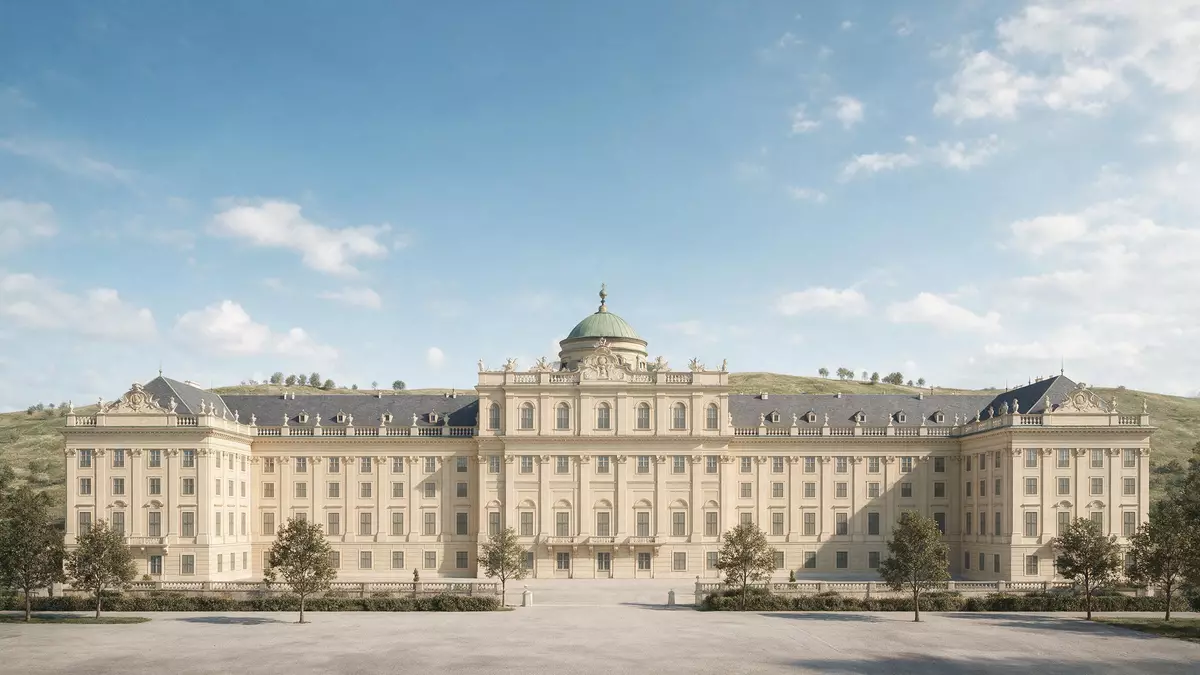
Schloss Schonbrunn in Wien is a baroque palace and garden ensemble where a long, straight axis runs from the main façade through formal parterres to the hilltop Gloriette. From the eighteenth century to 1918 the complex served as a residence of the Habsburg rulers, and since 1996 it has formed part of the UNESCO World Heritage List as one of the Palace and Gardens of Schönbrunn.
A Habsburg summer residence in baroque style
The estate that became Schloss Schonbrunn entered Habsburg ownership in the sixteenth century, and its development as a residence accelerated under Emperor Leopold I in the late seventeenth century.The Habsburg estate The palace in its baroque form grew from an imperial hunting lodge and summer seat on the western edge of Vienna, in what is now the district of Hietzing.Hietzing district location
In 1690 the architect Johann Bernhard Fischer von Erlach prepared a design for a princely residence here, and construction followed towards the end of that decade.Fischer von Erlach design The palace took its present appearance under Empress Maria Theresa in the mid eighteenth century, when Nicolaus Pacassi directed substantial extensions and refitting campaigns between the 1740s and 1760s.Mid eighteenth-century remodelling
The palace façades and interiors
Seen from the city side, Schloss Schonbrunn presents a long, three-winged baroque block with a central projection and cour d'honneur, built in rendered masonry with pale façades and regular rows of windows.Baroque three-winged layout The composition follows a Rococo-inflected vocabulary, with moulded window surrounds and a roofline marked by chimneys and modest decorative elements rather than heavy classical orders.Rococo summer palace
Inside, suites of state rooms run en enfilade along the principal floors, their walls lined with panelling, stucco ornament and gilt. Several interiors retain ceiling paintings, chandeliers and parquet floors characteristic of eighteenth-century court taste, while later furnishings trace the continued use of the residence into the nineteenth century.Imperial state rooms
The gardens, axis and Gloriette
Behind the palace a broad terrace leads into formal gardens laid out in geometric beds, gravel paths and clipped hedges, forming what is often described as the Great Parterre.Great Parterre description Statues line the main avenues, and the long central axis rises gently towards the hill where the Gloriette crowns the composition.
The Gloriette, completed in 1775 to designs by Johann Ferdinand Hetzendorf von Hohenberg, is a monumental garden pavilion with arcades and a central hall, topped by an imperial eagle on a globe.Gloriette construction in 1775 Standing on the crest above the gardens, it provides a framed view back down over the parterre, the palace and the built-up city of Vienna beyond.
Visiting Schloss Schonbrunn: what travellers from Western Europe should know
- Schloss Schonbrunn lies in Wien’s Hietzing district to the west of the historic centre, on the route of the U4 underground line and several tram and bus services.
- The palace complex includes extended gardens and a hill; visiting the Gloriette from the palace terrace involves a sustained uphill walk on gravel paths.
- Within the grounds stands the Tiergarten Schönbrunn, a historic zoo founded in the eighteenth century as part of the imperial estate.
- Schloss Schonbrunn is in Austria, where the official language is German and the currency is the euro.
Searching for Schloss Schonbrunn on social platforms
These links open searches for Schloss Schonbrunn on each platform.
Frequently asked questions about Schloss Schonbrunn
Where is Schloss Schonbrunn located?
Schloss Schonbrunn stands in the Hietzing district of Wien, to the west of the historic centre, within the built-up urban area of Austria’s capital.
What can visitors expect at Schloss Schonbrunn?
Visitors encounter a baroque palace with decorated state rooms and an extensive formal garden, including the Great Parterre, statues, fountains and the hilltop Gloriette.
What makes Schloss Schonbrunn distinctive among European palaces?
The combination of a long baroque axis, the elevated Gloriette and an intact ensemble of palace, gardens and zoo gives Schloss Schonbrunn a characteristic silhouette and layout.


