
Schloss Schonbrunn and its palace of gardens
Published on 09/22/2026 at 21:23 | Editorial responsibility: Rafael Müller, Editor-in-Chief AD HOC NEWS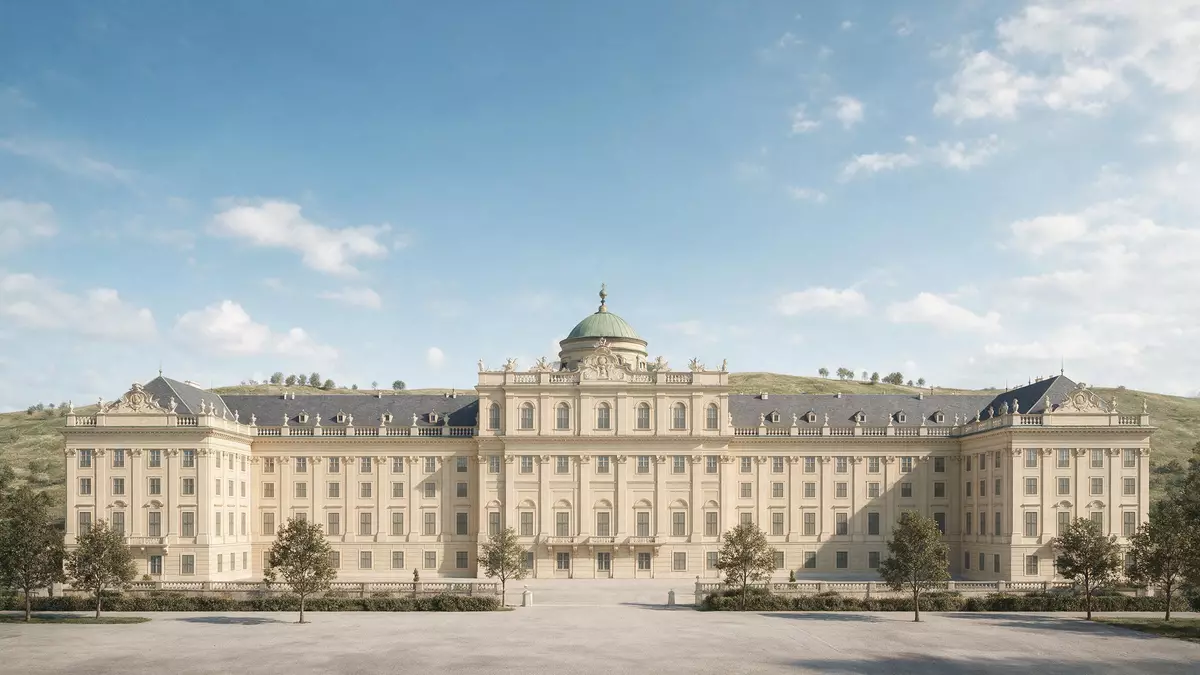
Schloss Schonbrunn spreads across palace rooms, formal gardens and wooded parkland in Wien. Its ochre façade belongs to a Habsburg residence shaped through the eighteenth century, while the Gloriette crowns the grounds above the main axis.
Schloss Schonbrunn: a palace set within gardens
The palace stands in Hietzing, in the western part of Wien. Its long Baroque façade faces a formal garden axis extending towards the Gloriette, a colonnaded structure on the hill behind the palace.
The ensemble includes terraces, sculptures, fountains, clipped planting and broad paths. The gardens connect the palace with the Palm House, the Neptune Fountain and the historic Tiergarten, whose grounds form part of the wider cultural landscape.
From Leopold I to Maria Theresa
Emperor Leopold I commissioned Johann Bernhard Fischer von Erlach to prepare plans for a grand residence. Construction began in 1696, and the palace was substantially complete by 1711.
The building reached its present form during the reign of Empress Maria Theresa. Nikolaus Pacassi reshaped the interiors in the Rococo style, while the residence became the Habsburg court’s principal summer palace. Its history is closely linked with the dynasty that ruled Austria and much of Central Europe.
The palace and gardens received their UNESCO World Heritage designation in 1996. The protected ensemble records the architectural, decorative and horticultural culture of the Habsburg period through buildings, rooms, gardens and associated structures.
Rooms, collections and the long garden axis
Inside, ceremonial rooms stand beside private apartments and working spaces associated with the imperial household. The decoration includes gilded surfaces, painted ceilings, mirrors, stucco and furniture from different phases of the palace’s history.
The garden axis gives the estate its clearest spatial feature. From the palace, paths and planting lead towards the Neptune Fountain and the Gloriette, while side gardens and park buildings broaden the composition. The result is a place where architecture and landscape remain physically connected.
Schloss Schonbrunn also preserves links with figures such as Maria Theresa, Emperor Franz Joseph and Empress Elisabeth. Mozart performed at the palace as a child, adding a musical association to the political and dynastic history of the residence.
Visiting Schloss Schonbrunn: what travellers from Western Europe should know
- Schloss Schonbrunn is in Hietzing, Wien. The U4 underground line reaches Schönbrunn station, and trams and buses serve the surrounding streets.
- The estate combines indoor rooms with long outdoor paths, terraces and a hill leading to the Gloriette. Comfortable walking footwear suits the mixture of paved routes and garden ground.
- The formal grounds contain the Neptune Fountain, the Gloriette, the Palm House and Tiergarten Schönbrunn. Each belongs to the wider historic ensemble but has a distinct character.
- The official language is German and the currency is the euro.
Searching for Schloss Schonbrunn on social platforms
These links open searches for Schloss Schonbrunn on each platform.Frequently asked questions about Schloss Schonbrunn
Where is Schloss Schonbrunn?
Schloss Schonbrunn is in Hietzing, the western part of Wien. The palace and its gardens occupy a large historic estate within the city.
What does a visit to Schloss Schonbrunn include?
A visit can combine decorated palace rooms with formal gardens, fountains, park buildings and the route to the Gloriette. The estate presents indoor and outdoor parts of the same imperial residence.
What makes Schloss Schonbrunn distinctive?
Its defining feature is the connection between a Baroque palace and a long formal garden axis. The Gloriette, Neptune Fountain and palace façade remain linked within one Habsburg ensemble.


