

Sensoji Temple hosts ASAKUSA CULTURE & LIGHTS from 30 October
Published on 10/11/2026 at 05:05 | Editorial responsibility: Rafael Müller, Editor-in-Chief AD HOC NEWSKey points in brief
- ASAKUSA CULTURE & LIGHTS 2026 takes place at Sensoji Temple in Tokyo from 30 October to 3 November 2026.
- Projection mapping is scheduled for the temple Main Hall and Hozo-mon Gate from 6pm to 9.30pm during the event.
- A five-day special viewing opens Denboin Garden and the Ema Hall alongside the light programme from 30 October 2026.
- Sensoji Temple is Tokyo's oldest temple, with origins traced by its custodian to a Kannon statue found in 628.
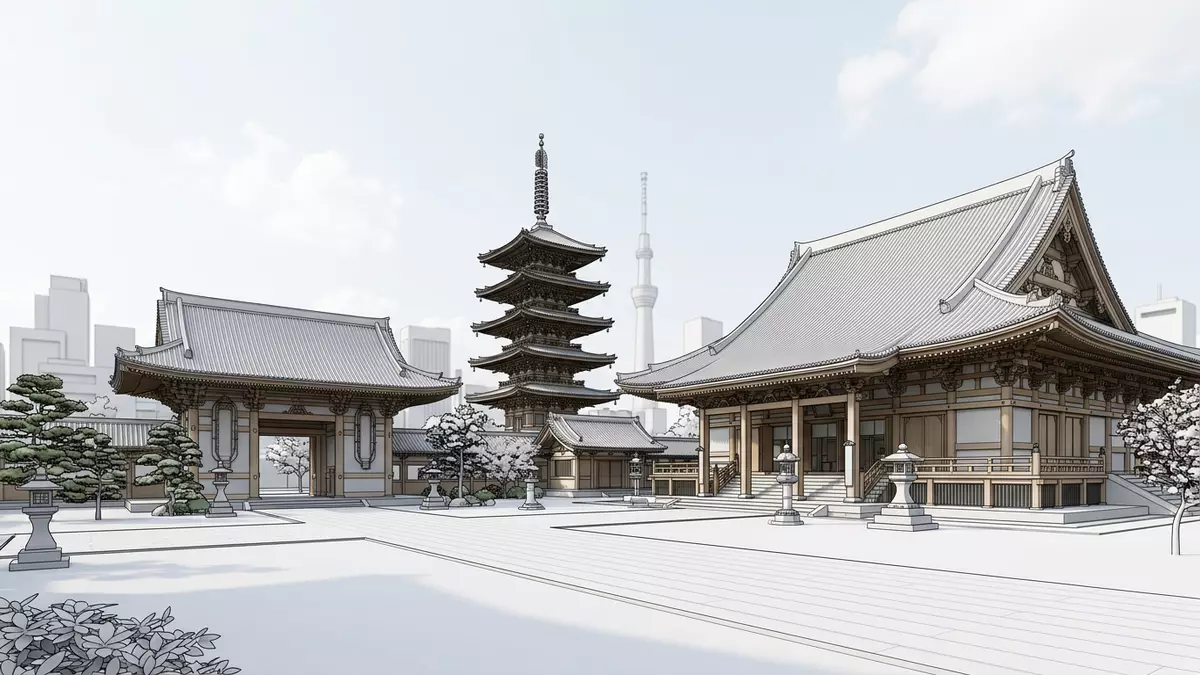
Sensoji Temple and ASAKUSA CULTURE & LIGHTS 2026 will bring a five-day programme to Tokyo from 30 October to 3 November 2026. The event combines projection mapping on the Main Hall and Hozo-mon Gate with special access to Denboin Garden and the Ema Hall.
ASAKUSA CULTURE & LIGHTS brings five nights to Sensoji
The projection mapping is scheduled for the south sides of the Main Hall and Hozo-mon Gate each evening from 6pm to 9.30pm. The organiser says the Main Hall will receive projection mapping for the first time, while the gate programme returns after its earlier presentation.
The visuals draw on the temple's 1,400 years of history and culture. The stated themes include large votive paintings, the Kanbun Engi picture scroll about the temple's founding legend, and ukiyo-e prints linked with the site. The organiser's official event programme confirms Tokyo as the venue and 30 October to 3 November 2026 as the event dates.
Sensoji's garden and votive paintings join the light programme
The same programme opens Denboin Garden and the Ema Hall for special viewing from 30 October to 3 November. The garden is normally closed to the public, while the hall contains around 50 large votive paintings by historic artists including Utagawa Kuniyoshi, Hasegawa Settan and Henmi Kazunobu.
The daytime and evening access gives the light event a direct connection with the temple's less accessible cultural spaces. The organiser lists a sea-of-clouds presentation in the garden, the evening Kinryu Yakai programme, and an original dance inspired by the temple's Golden Dragon Dance.
The event also includes a preservation and repair work viewing programme at Denboin on 31 October and 1 November 2026. It is separate from the main projection mapping and concerns normally closed areas of the Important Cultural Property.
Tokyo's oldest temple supplies the historical setting
Sensoji Temple's custodian describes it as Tokyo's oldest temple and traces its origin to 18 March 628. According to the temple's history, brothers fishing in the Sumida River found a statue of Avalokitesvara Bodhisattva, known as Kannon.
The custodian says a Buddhist priest named Shokai built a hall for Kannon in 645. The present Main Hall was rebuilt in 1958 after destruction during the Great Tokyo Air Raid in 1945, giving the 2026 projection programme a modern structure with a long recorded history.
The temple's own history and visitor information places the complex at 2-3-1 Asakusa, Taito-ku, Tokyo. It also identifies Denboin Garden as a National Scenic Beauty site and records the Main Hall, Hozo-mon Gate, Kaminari-mon Gate and five-storied pagoda among the principal parts of the precinct.
Visiting Sensoji Temple: what travellers from Western Europe should know
- ASAKUSA CULTURE & LIGHTS 2026 runs from 30 October to 3 November 2026. Projection mapping is at the Main Hall and Hozo-mon Gate from 6pm to 9.30pm, while the special viewing covers Denboin Garden and the Ema Hall.
- The projection mapping is free and requires no advance registration. The garden and Ema Hall are separate special-viewing areas, with the Ema Hall available during daytime hours.
- The venue is at 2-3-1 Asakusa in Tokyo. Asakusa Station serves the Tobu Skytree Line, Tokyo Metro Ginza Line, Toei Asakusa Line and Tsukuba Express.
- Denboin Garden has gravel paths and stepping stones. The Ema Hall contains numerous stairs and steps, and the organiser states that barrier-free facilities are not available there.
- Japan's official language is Japanese and its national currency is the yen.
- Entry requirements depend on your nationality; UK travellers can check the FCDO travel advice at gov.uk/foreign-travel-advice, Irish travellers the Department of Foreign Affairs at ireland.ie.
Searching for Sensoji Temple on social platforms
These links open searches for Sensoji Temple on each platform.
Frequently asked questions about Sensoji Temple
When does ASAKUSA CULTURE & LIGHTS take place at Sensoji Temple?
It runs from 30 October to 3 November 2026. Projection mapping is scheduled for 6pm to 9.30pm each evening.
What is Sensoji Temple?
It is a Buddhist temple in Asakusa, Tokyo, and its custodian describes it as the city's oldest temple. Its history is traced to a Kannon statue found in 628.
Where is Sensoji Temple and how do you get there?
The temple is at 2-3-1 Asakusa, Taito-ku, Tokyo. Asakusa Station is served by four rail lines, including the Tokyo Metro Ginza Line and Toei Asakusa Line.


