
Seongsan Ilchulbong, Jeju’s sea-facing volcanic crater
Published on 09/05/2026 at 08:33 | Editorial responsibility: Rafael Müller, Editor-in-Chief AD HOC NEWS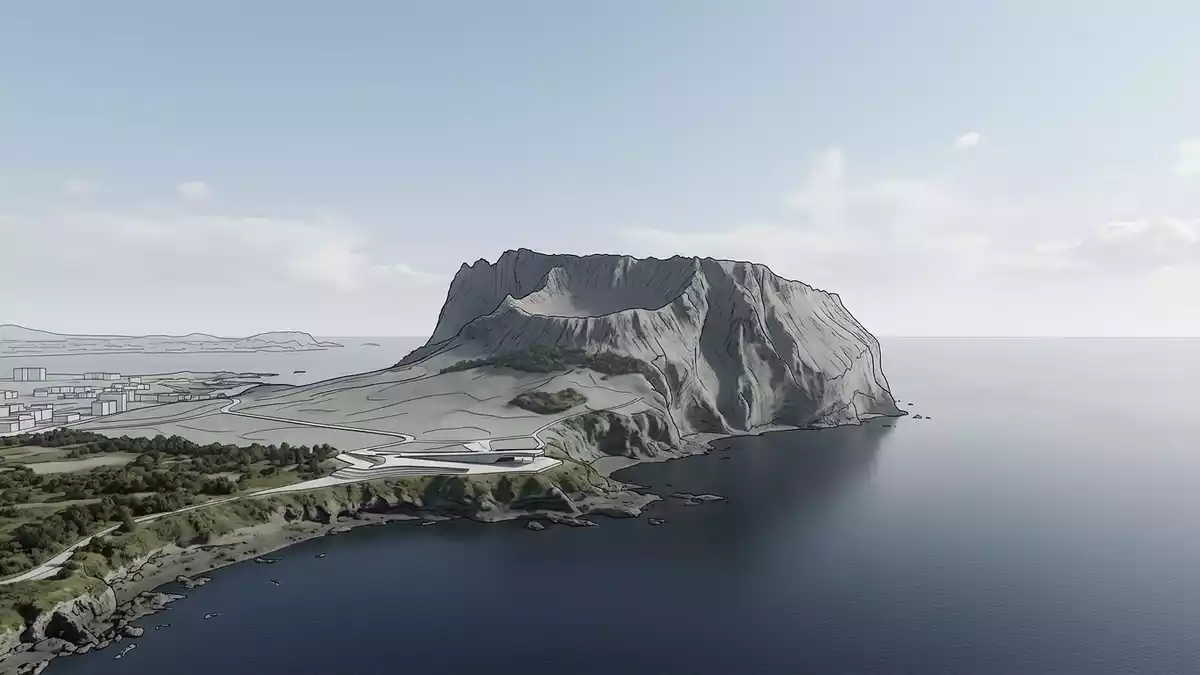
Seongsan Ilchulbong, also known in English as Sunrise Peak, is a coastal volcanic crater on the eastern tip of Jeju in South Korea, rising directly above the sea and forming one of the island’s most recognisable landforms. Its summit holds a broad, bowl-like crater ringed by jagged cliffs, and the whole cone stands as part of the wider Jeju Volcanic Island and Lava Tubes World Heritage site inscribed by UNESCO in 2007.
A fortress-like tuff cone above the sea
Seen from the surrounding shoreline, Seongsan Ilchulbong has the outline of a low fortress rising from the water, its outer slopes dropping steeply towards rocky coastal shallows and waves. Geologically, it is a tuff cone, a type of volcanic edifice built from compacted ash and fragmented rock produced by explosive interaction between rising magma and seawater.tuff cone rising out of the ocean The cone reaches roughly 180 m (590 ft) above sea level, giving its rim and crater walls a clear profile against the sky even from some distance along the coast.rose 180 metres above sea level
The summit crater of Seongsan Ilchulbong forms a wide hollow with a diameter of around 600 m (1,969 ft), enclosed on most sides by steep rock walls shaped by marine erosion and weathering.crater about 600 metres in diameter Within this hollow, gentler inner slopes lead up towards the rim, contrasting with the abrupt drop on the outer faces where the landform meets the sea cliffs. The combination of crater interior and seaward walls makes the volcano legible as a single structure, and from the higher points the view extends across the open ocean and the eastern coast of Jeju.
Part of Jeju’s volcanic island story
Seongsan Ilchulbong belongs to the volcanic landscape of Jeju Island, a region shaped by eruptions that produced lava fields, cones and tubes across the island. The tuff cone was formed by a Surtseyan-type eruption, where magma rising underwater interacted explosively with shallow seawater and built up layers of ash and debris around a single vent.Surtseyan-type eruption Over time these layers consolidated into tuff, and marine erosion cut into the outer slopes, exposing the internal bedding and structure along the coastal cliffs.
In recognition of this geological record, Seongsan Ilchulbong was designated a Natural Monument in South Korea on 19 July 2000 and later included in the Jeju Volcanic Island and Lava Tubes property when it was added to the UNESCO World Heritage List on 2 July 2007.designated a Natural Monument in 2000Jeju Volcanic Island and Lava Tubes inscription The World Heritage property groups Seongsan Ilchulbong with Mount Halla, the highest mountain in Korea, and the Geomunoreum lava tubes, underlining how the cone’s exposed ash layers and coastal cliffs contribute to a wider understanding of Surtseyan-type volcanic eruptions in an island setting.
Crater paths, sea cliffs and surrounding landscapes
Approaching Seongsan Ilchulbong from the landward side, the cone is connected to the main body of Jeju by ground built up from sand and soil, so the volcano projects into the sea while remaining reachable on foot from the coastal settlement of Seongsan-eup.connected to the main island by sand and soil Paths ascend the slopes towards the rim, crossing vegetation that clings to the tuff and gradually opening wider views over the shore, nearby islets and the broader volcanic skyline of eastern Jeju.
From the upper sections of Seongsan Ilchulbong, the geometry of the crater is clear: a broad hollow enclosed by uneven rock edges that drop towards the sea and frame the seaward horizon. The coastal cliffs around the cone expose distinct layers of tuff and other volcanic materials, which appear as bands of contrasting colour and texture in the rock faces.exceptional exposures of structural characteristics Below, waves break against the base of the cliffs, and the cone’s position at the tip of a low peninsula makes it a natural vantage point for observing how the island’s volcanic forms meet the surrounding sea.
Visiting Seongsan Ilchulbong: what travellers from Western Europe should know
- Seongsan Ilchulbong stands on the eastern end of Jeju Island in South Korea, near the coastal settlement of Seongsan-eup, and is reached overland from Jeju City and the island’s main transport hubs.
- The ascent to the crater rim involves climbing a sustained sequence of steps and sloping paths on the cone’s flank, with sections that feel exposed above sea cliffs and require steady footing.
- The area around the cone includes rocky shoreline and low coastal grassland, so footwear suited to uneven ground is advantageous when moving between the approach paths and viewpoints near the sea.
- The official language is Korean and the currency is the South Korean won.
- Entry requirements depend on your nationality; UK travellers can check the FCDO travel advice at gov.uk/foreign-travel-advice, Irish travellers the Department of Foreign Affairs at ireland.ie.
Searching for Seongsan Ilchulbong on social platforms
These links open searches for Seongsan Ilchulbong on each platform.
Frequently asked questions about Seongsan Ilchulbong
Where is Seongsan Ilchulbong located?
Seongsan Ilchulbong stands on the eastern tip of Jeju Island in South Korea, near Seongsan-eup, projecting into the sea as a low peninsula connected to the main island.
What can visitors expect on a visit to Seongsan Ilchulbong?
Visitors encounter a steep-sided volcanic cone with paths leading up towards a wide summit crater, along slopes and viewpoints that overlook sea cliffs, offshore shallows and the volcanic landscapes of eastern Jeju.
What makes Seongsan Ilchulbong distinctive among Jeju’s landscapes?
Its combination of fortress-like tuff cone rising above the sea, large bowl-shaped crater and exposed ash layers along coastal cliffs, together with its status within the Jeju Volcanic Island and Lava Tubes World Heritage property, gives Seongsan Ilchulbong a character distinct from other parts of the island.


