
Sirmione: a limestone peninsula on Lake Garda
Published on 08/16/2026 at 14:09 | Editorial responsibility: Rafael Müller, Editor-in-Chief AD HOC NEWS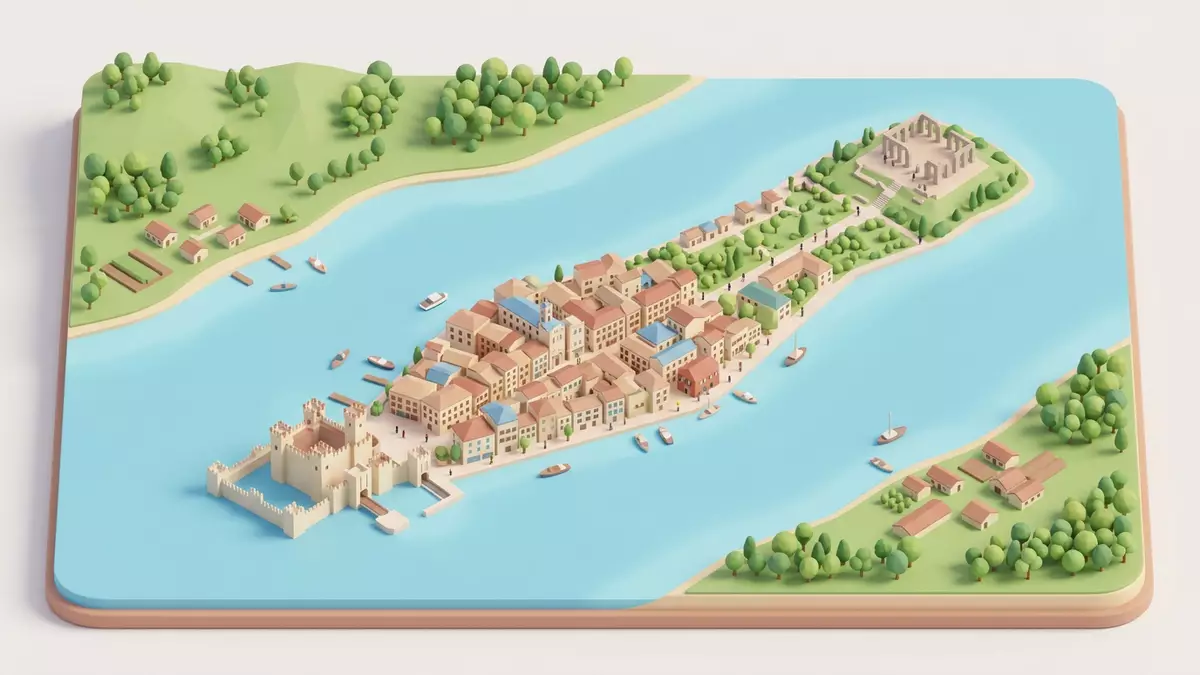
Sirmione is a lakeside town in Lombardy whose historic centre occupies a long limestone peninsula projecting into the southern reaches of Lake Garda. The settlement belongs to the province of Brescia and forms part of northern Italy’s lake district, with its built fabric gathered along the narrow spine of the Sirmione peninsula.historic centre on a peninsula
A peninsula of rock, water and walls
The defining feature of Sirmione is the peninsula itself, a band of carbonate rock that extends into Lake Garda and divides the lake’s southern shore into two distinct stretches.peninsula of limestone reaching into the lake The land tapers northwards, with houses, small squares and lanes crowded onto the ridge between the open water on either side.
At the southern end of the old town, stout stone fortifications encircle the entrance and frame the harbour basin. These walls belong to the Scaliger Castle, a medieval stronghold whose towers rise directly from the lake and whose enclosed dock once served as a sheltered mooring for boats on Garda.Scaliger family castle dominating the town Passing through the gateway leads into streets lined with low-rise buildings, many with balconies, arcades or loggias facing towards the water.
Layers of history from Bronze Age to Venetian rule
Archaeological evidence indicates human presence on and around the Sirmione peninsula since the Bronze Age, with pile-dwelling settlements recorded in the wider area of the southern lake basin.Bronze Age lake-dwelling sites in the area In the Roman period the location became a retreat for the elite linked to nearby Verona, and substantial remains of a lakeside villa survive at the tip of the promontory.
During the early Middle Ages Sirmione held a strategic role as the centre of the judiciaria sermionensis under Lombard rule, administering territory that extended around large parts of the lake and southwards towards Mantua.Lombard administrative district based at Sirmione In the thirteenth century power passed to the della Scala family of Verona, also known as the Scaligeri, who strengthened the fortifications and created the castle that still commands the entrance to the town.Scaliger control and castle construction From 1405 Sirmione was incorporated into the domains of the Republic of Venice, remaining under Venetian rule until the end of the eighteenth century.transition from Scaliger to Venetian rule
Roman villa, thermal springs and lakeside life
At the northern tip of the peninsula stand the extensive ruins known as the Grottoes of Catullus, the remains of a Roman villa dating between the first century BC and the first century AD.Roman villa at the tip of the peninsula The site covers a broad area above the lake, with fragments of walls, terraces and internal spaces arranged around courtyards and overlooking the water. Paths wind through the ruins, and from the edges of the complex the views reach along the length of the Garda shoreline.
Sirmione is also known for its sulphurous thermal springs, which have been used for spa treatments and bathing complexes drawing on water emerging from beneath the lake.sulphurous thermal waters in Sirmione Around the old town, promenades follow the shoreline, and small pebbly beaches give direct access to the clear lake water, with jetties and quays extending into Garda. The combination of historic fortifications, Roman archaeology, spa facilities and lakeside walks shapes the experience of Sirmione as both an architectural and natural setting.
Visiting Sirmione: what travellers from Western Europe should know
- Sirmione lies in Lombardy on the southern shore of Lake Garda, with the historic centre reached along the peninsula from the mainland district of Colombare.access along the Colombare road
- Road access leads to car parks outside the historic walls, after which entry to the old town is on foot across the bridge by the Scaliger Castle.parking outside the walled centre
- The terrain in the centre involves narrow streets and short gradients, while approaches to viewpoints and the Roman villa at the tip include paths and some uneven ground.
- The nearest railway stop carrying Sirmione in its name is Desenzano del Garda–Sirmione on the Milan–Venice line, with onward travel by local transport or boat.Desenzano del Garda–Sirmione station on the Milan–Venice route
- The official language is Italian and the currency is the euro.
Searching for Sirmione on social platforms
These links open searches for Sirmione on each platform.
Frequently asked questions about Sirmione
Where is Sirmione in Italy?
Sirmione is in Lombardy on the southern shore of Lake Garda, within the province of Brescia, with its old town on a peninsula that projects into the lake.Lombard location and provincial affiliation
What can visitors expect on a visit to Sirmione?
Visitors encounter a fortified medieval entrance, lakeside promenades, spa facilities, small beaches and the extensive Roman villa remains at the tip of the peninsula, all set amid Garda’s waters.
What makes Sirmione distinctive among Lake Garda towns?
The town combines a narrow limestone peninsula setting with the Scaliger Castle at its gateway, sulphurous thermal springs and the Grottoes of Catullus Roman villa overlooking the lake.


