
Souq Waqif: Doha’s restored maze of Qatari tradition
Published on 08/16/2026 at 14:21 | Editorial responsibility: Rafael Müller, Editor-in-Chief AD HOC NEWS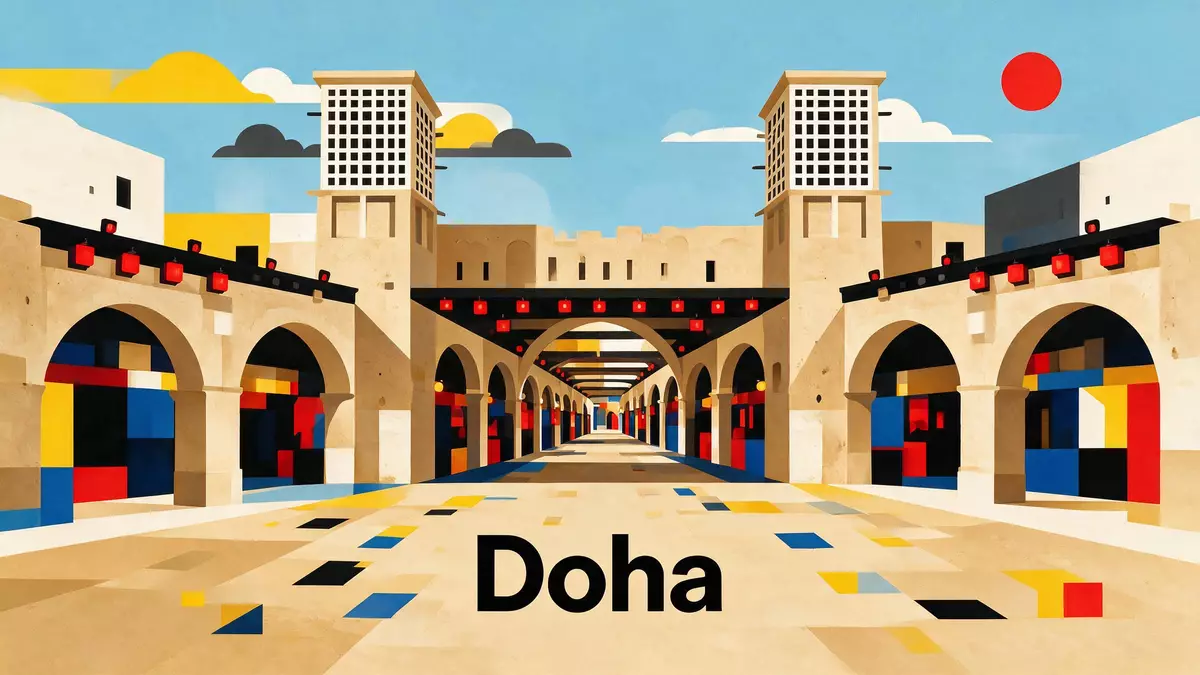
Souq Waqif in Doha is a traditional market district whose restored mud-rendered alleys carry a century of Qatari trading life into a contemporary cityscape. It stands in central Doha near the dry riverbed known as Wadi Musheireb, where merchants and Bedouin once met to trade livestock and goods.
A standing market shaped by trade and water
The name Souq Waqif is rooted in Arabic, where “waqif” means “standing”, a reference to traders who conducted business on their feet along the banks of a shallow wadi that could flood.“waqif” means “standing” The souq emerged over a century ago when Doha was still a small settlement divided by Wadi Musheireb, and people from both sides gathered on its banks to buy and sell everyday goods.emerged over a century ago
For generations, the market functioned as a weekend trading centre where Bedouin brought sheep, goats and wool to exchange for essentials, reinforcing its role as the commercial heart of old Doha.weekend trading centre Set close to the shoreline and the wadi, the site linked maritime routes with desert caravans, making Souq Waqif a meeting ground for different trading cultures along the Gulf.
Traditional Qatari architecture in a restored urban quarter
The built fabric of Souq Waqif is an example of traditional Qatari architecture dating to the late nineteenth or early twentieth century, with low-rise buildings clustered along narrow lanes.late nineteenth or early twentieth century Shops and passageways are constructed with clay and mud-rendered walls, exposed timber beams and roofs using wood and bamboo bound with clay and straw, creating a textured, earth-toned streetscape.whitewashed mud-rendered buildings
During a major restoration programme between 2006 and 2008, many structures were rebuilt or repaired using traditional Qatari building techniques, including mangrove wood roofs and clay-based insulation that echo historic construction methods.traditional Qatari building techniques Modern concrete additions were removed, and the market’s original street pattern was retained, giving the district a coherent historic character while functioning as a contemporary urban quarter supervised by Qatari authorities.renovation project
From livestock souq to cultural hub
Souq Waqif grew out of a marketplace where livestock, spices, fish, pearls and woven goods changed hands, and this commercial heritage still shapes what is sold there.livestock, fish, pearls, spices Traditional garments, jewellery, handicrafts and textiles line its lanes, alongside shops dedicated to incense and spices, continuing its role as a place where everyday items and more ceremonial goods share shelf space.traditional garments, spices, handicrafts
A major fire in 2003 damaged large sections of the market, after a period of decline linked to the rise of air-conditioned shopping centres elsewhere in Doha.fire in 2003 In response, the Qatari government initiated a comprehensive restoration in 2006, supported by Emir Sheikh Hamad bin Khalifa Al Thani and Sheikha Moza bint Nasser, which revived the souq’s historic identity and reaffirmed its status as a heritage-focused urban district.restoration backed by Sheikh Hamad bin Khalifa Al Thani and Sheikha Moza bint Nasser
Souq Waqif in the fabric of central Doha
Souq Waqif lies in the Al Souq district of central Doha, near the Corniche and within walking distance of landmarks such as the Museum of Islamic Art and the Msheireb redevelopment.Al Souq district near the Corniche The lanes and courtyards open onto plazas where cafes and restaurants occupy restored buildings, forming a transition between the historic market core and adjacent modern streets.
Many structures house majlis-style interiors, shisha lounges and dining rooms that sit above or behind ground-floor shopfronts, blending commercial uses with hospitality and social spaces.restaurants and Shisha lounges As a result, Souq Waqif functions both as a working market and as a venue where visitors encounter traditional materials, architectural forms and long-established trading patterns in the midst of Doha’s wider urban development.
Visiting Souq Waqif: what travellers from Western Europe should know
- Souq Waqif stands in the Al Souq district of central Doha near the Corniche, with access from streets such as Grand Hamed Street and Abdullah Bin Jassim Street.
- The market quarter consists of narrow alleys and arcaded walkways with uneven stone and packed-earth surfaces, so visiting involves walking on hard ground and occasionally climbing steps between different levels.
- The official language is Arabic and the currency is the Qatari riyal.
- Entry requirements depend on your nationality; UK travellers can check the FCDO travel advice at gov.uk/foreign-travel-advice, Irish travellers the Department of Foreign Affairs at ireland.ie.
Searching for Souq Waqif on social platforms
These links open searches for Souq Waqif on each platform.
Frequently asked questions about Souq Waqif
Where is Souq Waqif located in Doha?
Souq Waqif is in the Al Souq district of central Doha, close to the Corniche and near landmarks such as the Museum of Islamic Art and the Msheireb area.
What can visitors expect when walking through Souq Waqif?
Visitors encounter narrow alleys lined with mud-rendered shops selling textiles, spices, garments and handicrafts, alongside cafes, restaurants and shisha lounges housed in restored traditional buildings.
What makes Souq Waqif distinctive among Doha’s market areas?
Souq Waqif combines a trading history dating back more than a century with architecture rebuilt using traditional Qatari materials and techniques, creating a heritage-focused market quarter within a rapidly modernised city.


