
Souq Waqif: Doha’s restored mud-brick marketplace
Published on 08/18/2026 at 14:14 | Editorial responsibility: Rafael Müller, Editor-in-Chief AD HOC NEWS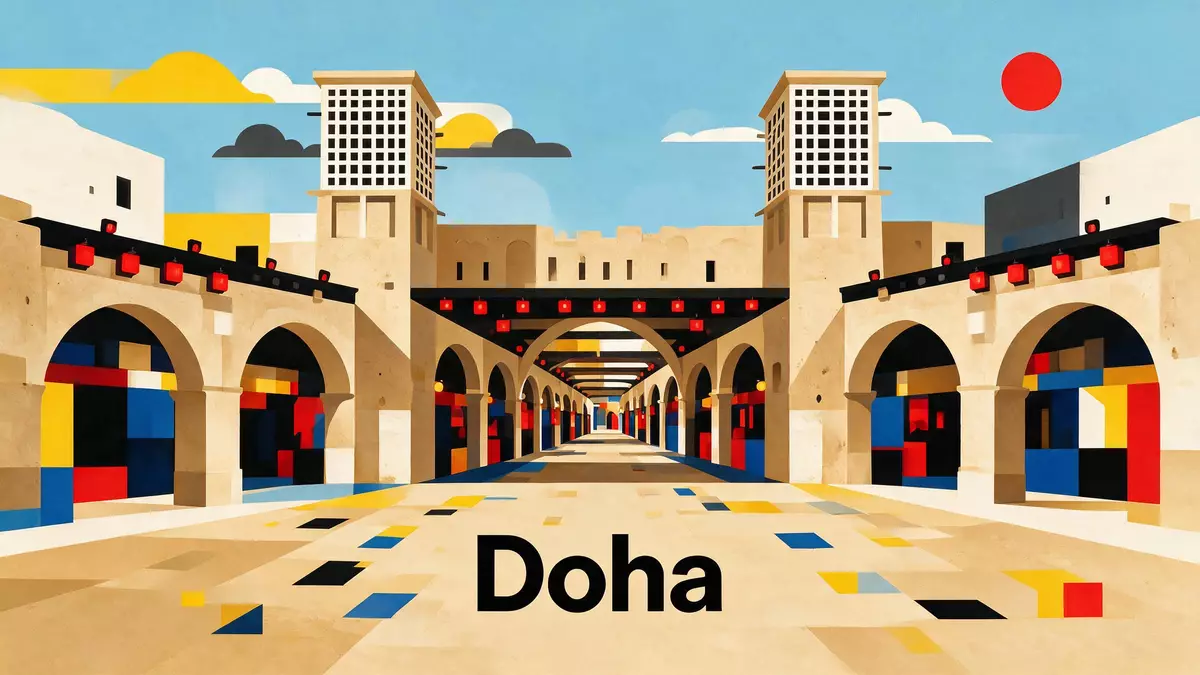
Souq Waqif is Doha’s historic marketplace, rebuilt in traditional materials after a major restoration in the mid-2000s and laid out as a maze of alleys, courtyards and caravanserai-style buildings that recall Qatar’s trading past.
From riverside village market to historic souq
Souq Waqif stands in the Al Souq district of central Doha, on ground once shaped by the dry river bed known as Wadi Musheireb and the city’s shoreline.Wadi Musheireb and the shoreline In the late nineteenth and early twentieth centuries, when Doha was still a small coastal settlement, local residents and Bedouin traders gathered here to exchange livestock, wool, dates and other staples in an open market exposed to the elements.early trading traditions
The souq’s name reflects those origins: “waqif” means “standing” in Arabic, a reference to merchants who conducted business on their feet beside ground that could flood during high tides or winter rains.meaning of the name As Doha grew through the twentieth century, the once-informal gathering on the banks of the wadi developed into a more permanent souq, with simple shops and storage rooms lining packed-earth lanes and small open squares.
Reconstruction in traditional Qatari materials
By the late twentieth century the historic market had fallen into disrepair, and in 2003 a fire destroyed a large part of the quarter, prompting a government-backed restoration that began in 2006.fire in 2003 and restoration from 2006 The project, supported by Sheikh Hamad bin Khalifa Al Thani and Sheikha Moza bint Nasser, sought to recover traditional building forms and construction methods rather than replace them with concrete blocks and modern finishes.role of Sheikh Hamad bin Khalifa Al Thani and Sheikha Moza bint Nasser
Across the district, new and surviving structures were given whitewashed mud-rendered walls, heavy timber beams and roofs built from mangrove or other wood, with bamboo poles covered in clay and straw.traditional materials and techniques The result is a streetscape that frames narrow shaded passageways, sudden wider lanes and stepped facades, creating a continuous run of small shops and guesthouses that present an older Qatari architectural language within a rapidly modernising city centre.
What visitors find in the alleys and courtyards
Souq Waqif functions as a traditional market for everyday goods, craft items and souvenirs, with stalls selling textiles, spices, perfumes, metalwork, regional handicrafts and household items.traditional garments, spices and handicrafts Between the shops, small squares open out with restaurants and cafés serving regional dishes, tea and coffee, while shisha lounges occupy terraces and arcades that look onto the main pedestrian routes.
The market’s layout combines long straight lanes stocked with similar goods and smaller side alleys where workshops and specialist traders cluster in tighter spaces.layout of the traditional souq Buildings rise only a few storeys, so the skyline remains low, and from many points within the souq it is possible to see the contrast between the mud-rendered walls and the glass and steel towers of central Doha beyond the Corniche.
Visiting Souq Waqif: what travellers from Western Europe should know
- Souq Waqif lies in the Al Souq district of central Doha, a short walk inland from the Corniche and within sight of the Museum of Islamic Art across the main roads.
- The ground inside the market is level but paved with a mixture of stone and cobblestones, and some passages narrow between projecting shopfronts and low arcades.
- Souq Waqif Metro Station on the Gold Line serves the area, with entrances close to Abdullah Bin Jassim Street on the eastern side of the market quarter.
- The official language is Arabic and the currency is the Qatari riyal.
- Entry requirements depend on your nationality; UK travellers can check the FCDO travel advice at gov.uk/foreign-travel-advice, Irish travellers the Department of Foreign Affairs at ireland.ie.
Searching for Souq Waqif on social platforms
These links open searches for Souq Waqif on each platform.
Frequently asked questions about Souq Waqif
Where is Souq Waqif located in Doha?
Souq Waqif stands in the Al Souq district of central Doha, close to the Corniche and within walking distance of the Museum of Islamic Art and Msheireb Downtown Doha.
What can visitors expect to find at Souq Waqif?
Visitors encounter a traditional-style market quarter with mud-rendered buildings, alleys lined with shops selling regional goods, and numerous cafés, restaurants and shisha lounges around its courtyards.
What makes Souq Waqif distinctive among Doha’s districts?
The combination of restored traditional Qatari architecture, low-rise mud-rendered streetscapes and an active trading market gives Souq Waqif a historical character that contrasts with the surrounding high-rise waterfront.


